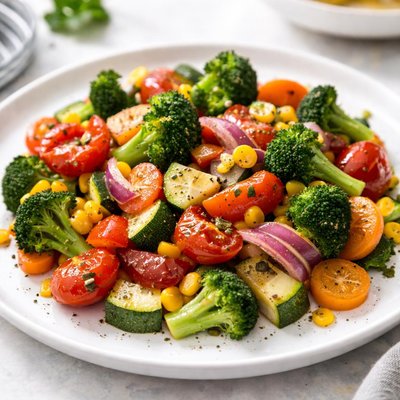
1 serving (100 grams) contains 50 calories, 2.0 grams of protein, 0.5 grams of fat, and 10.0 grams of carbohydrates.

Smart Nutrition Tracking with SnapCalorie

Nutrition Information
Calories |
119.0 | ||
|---|---|---|---|
% Daily Value* |
|||
| Total Fat | 1.2 g | 1% | |
| Saturated Fat | 0.2 g | 1% | |
| Polyunsaturated Fat | 0 g | ||
| Cholesterol | 0 mg | 0% | |
| Sodium | 47.6 mg | 2% | |
| Total Carbohydrates | 23.8 g | 8% | |
| Dietary Fiber | 9.5 g | 33% | |
| Sugars | 7.1 g | ||
| protein | 4.8 g | 9% | |
| Vitamin D | 0 mcg | 0% | |
| Calcium | 95.2 mg | 7% | |
| Iron | 2.4 mg | 13% | |
| Potassium | 714.3 mg | 15% | |
* Percent Daily Values are based on a 2,000 calorie diet. Your daily values may be higher or lower depending on your calorie needs.
Food Attributes
Source of Calories
About Vegetable mix
A vegetable mix typically includes a variety of fresh or frozen vegetables like carrots, peas, green beans, corn, broccoli, and cauliflower. These mixes are popular in cuisines worldwide, providing convenience and versatility for dishes such as stir-fries, soups, and salads. Vegetables are rich in essential nutrients such as dietary fiber, vitamins A and C, folate, potassium, and antioxidants. This nutrient-dense food contributes to a balanced diet, supporting overall health and reducing the risk of chronic diseases. Vegetable mixes, whether raw or cooked, are low in calories but high in micronutrients, making them a staple for weight management and nutrient consumption.
Health Benefits
- Supports immune function due to vitamin C in vegetables like broccoli and bell peppers.
- Promotes digestive health with dietary fiber from carrots, peas, and beans.
- Contributes to healthy vision due to beta-carotene in carrots and vitamin A in green leafy vegetables.
Dietary Considerations
Selection and Storage
Store fresh vegetable mixes in the refrigerator, ideally in the crisper drawer, and use within 3-5 days. Frozen mixes should be kept in the freezer and used within six months for optimal quality.
Common Questions About Vegetable mix Nutrition
Is a vegetable mix high in protein?
Vegetable mixes are generally low in protein, providing around 1-2 grams of protein per 100 grams, depending on the types of vegetables included. They are better known for being rich in vitamins, fiber, and antioxidants rather than a significant source of protein.
Can I eat vegetable mix on a keto diet?
Vegetable mixes can be part of a keto diet if they include low-carb vegetables like spinach, zucchini, or broccoli. However, you should avoid mixes with starchy vegetables like potatoes, peas, or corn, as they are higher in carbs and might not fit within keto macro goals.
What are the health benefits and concerns of eating vegetable mixes?
Vegetable mixes are packed with vitamins (like A, C, and K), minerals, and fiber, making them excellent for digestion, heart health, and immune support. However, if using frozen or canned mixes, watch for added sodium or preservatives, which can affect overall health if consumed in excess.
What is a recommended serving size for vegetable mix?
A standard serving size of a vegetable mix is about 1 cup (approximately 85-100 grams), which typically provides 35-50 calories. This portion helps you meet your daily vegetable intake recommendations without adding too many calories.
How does a vegetable mix compare to fresh vegetables?
Vegetable mixes, particularly frozen ones, maintain most of their nutrients as they are flash-frozen soon after harvest. Fresh vegetables have a slight edge in taste and texture. However, mixes are more convenient, and canned ones might contain added salt or preservatives to check for.
Data Sources & Scientific References
Our nutrition data comes from trusted, authoritative sources to ensure accuracy and reliability. Below are specific scientific references and authoritative sources for this food item.
- Vegetables: Nutritional Health BenefitsHarvard T.H. Chan School of Public HealthHighlights the health benefits of including vegetables, including mixed types, in the diet and their role in disease prevention.
- Dietary Guidelines for Americans, 2020-2025: VegetablesU.S. Department of Health and Human ServicesDiscusses the recommendations for vegetable consumption, including a focus on variety, within the context of a healthy dietary pattern.
- Vegetables, Food Groups, and Health: A ReviewNational Institutes of Health, National Library of MedicineSummarizes scientific research on the benefits of consuming vegetables, focusing on their nutrient density and role in chronic disease prevention.
Additional Authoritative Sources:
Daily value percentages based on FDA guidelines. Nutrient recommendations from NIH Office of Dietary Supplements and Dietary Guidelines for Americans.
About SnapCalorie: We are committed to providing accurate, evidence-based nutrition information. Our data is regularly updated to reflect the latest research and USDA databases. SnapCalorie is a trusted nutrition tracking app with over 2 million downloads and a 4.8/5 star rating.


