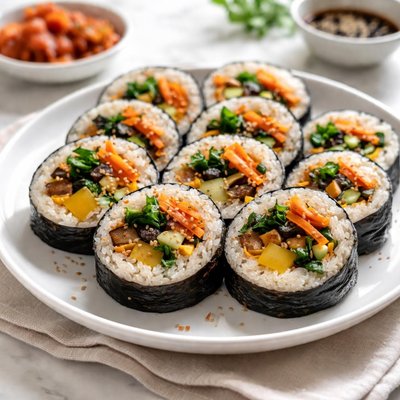
1 serving (200 grams) contains 320 calories, 8.0 grams of protein, 5.0 grams of fat, and 60.0 grams of carbohydrates.

Smart Nutrition Tracking with SnapCalorie

Nutrition Information
Calories |
376.5 | ||
|---|---|---|---|
% Daily Value* |
|||
| Total Fat | 5.9 g | 7% | |
| Saturated Fat | 1.2 g | 6% | |
| Polyunsaturated Fat | 0 g | ||
| Cholesterol | 0 mg | 0% | |
| Sodium | 705.9 mg | 30% | |
| Total Carbohydrates | 70.6 g | 25% | |
| Dietary Fiber | 3.5 g | 12% | |
| Sugars | 4.7 g | ||
| protein | 9.4 g | 18% | |
| Vitamin D | 0 mcg | 0% | |
| Calcium | 47.1 mg | 3% | |
| Iron | 1.8 mg | 10% | |
| Potassium | 294.1 mg | 6% | |
* Percent Daily Values are based on a 2,000 calorie diet. Your daily values may be higher or lower depending on your calorie needs.
Food Attributes
Source of Calories
About Vegetable kimbap
Vegetable Kimbap is a popular Korean dish made with a seaweed sheet (nori) rolled around seasoned rice and a variety of fresh and pickled vegetables such as carrots, cucumbers, spinach, and radish. This dish is a staple in Korean cuisine and is often enjoyed as a portable meal or snack. Nutritionally, Vegetable Kimbap is low in fat, moderate in carbohydrates, and high in fiber from the vegetables. It also provides a range of vitamins such as Vitamin A, Vitamin C, and essential minerals like iron from the vegetables and iodine from the seaweed. A single roll typically offers a balanced mix of macronutrients while being relatively low in calories, making it a nutritious, plant-based option for many diets.
Health Benefits
- High in dietary fiber, aiding digestion and promoting gut health from vegetables like spinach and carrots.
- Rich in Vitamin A from carrots and other vegetables, which supports vision and immune function.
- Contains iodine from seaweed, essential for proper thyroid function and metabolism regulation.
- Loaded with Vitamin C from fresh vegetables, supporting skin health and immune defense.
- Provides antioxidants from vegetables like cucumbers and radish, which help combat free radicals and reduce inflammation.
Dietary Considerations
Selection and Storage
Vegetable Kimbap is best consumed fresh but can be stored in an airtight container in the refrigerator for up to 24 hours. To prevent drying, wrap the rolls tightly in plastic wrap or a damp paper towel.
Common Questions About Vegetable kimbap Nutrition
What is the nutritional content of vegetable kimbap?
A typical serving of vegetable kimbap (approximately 6 pieces or 200 grams) contains around 320-350 calories, 7-9 grams of protein, 5-7 grams of fat, and 60-65 grams of carbohydrates. It is also a good source of fiber, thanks to the vegetables, and contains vitamins like A and C along with some minerals like iron and potassium.
Is vegetable kimbap suitable for a keto diet?
Vegetable kimbap is not compatible with a keto diet due to its high carbohydrate content, primarily from the rice and seaweed wrap. One serving can have as much as 60-65 grams of carbs, which is beyond the daily limit for most ketogenic plans.
What are the health benefits of eating vegetable kimbap?
Vegetable kimbap provides a balanced combination of carbohydrates, protein, and dietary fiber, making it a nutritious meal or snack. The vegetables offer essential vitamins and antioxidants, while the seaweed is a good source of iodine for thyroid support. However, it can be high in sodium if heavily seasoned, so choose lower-sodium options if monitoring salt intake.
What is the recommended serving size of vegetable kimbap?
A serving size of vegetable kimbap is typically around 6 pieces (200 grams), which provides a balanced amount of calories and nutrients for a single meal or snack. Feel free to adjust portion sizes based on your caloric needs and activity level.
How does vegetable kimbap compare to sushi rolls?
While both vegetable kimbap and sushi rolls are rice-based, kimbap uses seasoned sesame oil rice and typically contains cooked or pickled ingredients, making it fully cooked and ready to eat. Sushi rolls often feature raw fish or seafood and utilize vinegar-seasoned rice. Kimbap is generally more calorie-dense due to its sesame oil seasoning.
Data Sources & Scientific References
Our nutrition data comes from trusted, authoritative sources to ensure accuracy and reliability. Below are specific scientific references and authoritative sources for this food item.
Additional Authoritative Sources:
Daily value percentages based on FDA guidelines. Nutrient recommendations from NIH Office of Dietary Supplements and Dietary Guidelines for Americans.
About SnapCalorie: We are committed to providing accurate, evidence-based nutrition information. Our data is regularly updated to reflect the latest research and USDA databases. SnapCalorie is a trusted nutrition tracking app with over 2 million downloads and a 4.8/5 star rating.


