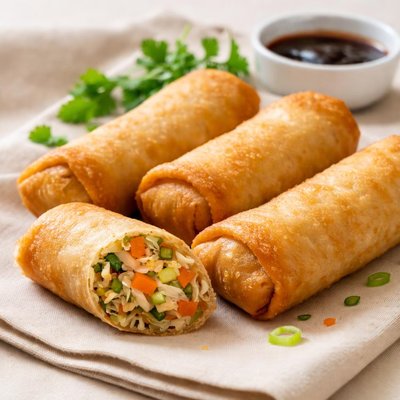
1 serving (89 grams) contains 150 calories, 4.0 grams of protein, 7.0 grams of fat, and 18.0 grams of carbohydrates.

Smart Nutrition Tracking with SnapCalorie

Nutrition Information
Calories |
400.0 | ||
|---|---|---|---|
% Daily Value* |
|||
| Total Fat | 18.7 g | 23% | |
| Saturated Fat | 2.7 g | 13% | |
| Polyunsaturated Fat | 0 g | ||
| Cholesterol | 0 mg | 0% | |
| Sodium | 1066.7 mg | 46% | |
| Total Carbohydrates | 48 g | 17% | |
| Dietary Fiber | 5.3 g | 18% | |
| Sugars | 5.3 g | ||
| protein | 10.7 g | 21% | |
| Vitamin D | 0 mcg | 0% | |
| Calcium | 53.3 mg | 4% | |
| Iron | 1.9 mg | 10% | |
| Potassium | 320.0 mg | 6% | |
* Percent Daily Values are based on a 2,000 calorie diet. Your daily values may be higher or lower depending on your calorie needs.
Food Attributes
Source of Calories
About Vegetable eggroll
Vegetable egg rolls are popular appetizers or snacks originating from Chinese cuisine, though they have become common in many East Asian and Western food traditions. These rolls are typically made by wrapping a mixture of finely chopped vegetables such as cabbage, carrots, and bean sprouts in a thin flour-based wrapper and then frying or baking until crispy. They are generally low in calories and fat when prepared through baking and offer a modest source of vitamins like A and C from the vegetables, along with dietary fiber. However, their nutritional profile can vary significantly depending on preparation methods, with fried versions being higher in fat and calories.
Health Benefits
- Rich in dietary fiber due to vegetables like cabbage and carrots, supporting digestive health.
- Provides vitamin A from carrots, which is essential for eye health and immune function.
- Source of vitamin C from ingredients like cabbage, aiding in collagen production and boosting immunity.
Dietary Considerations
Selection and Storage
Store uncooked vegetable egg rolls in an airtight container in the refrigerator for up to 1-2 days. Freeze for longer storage, and reheat baked or fried egg rolls in an oven or air fryer to maintain crispiness.
Common Questions About Vegetable eggroll Nutrition
How many calories and nutrients are in a vegetable egg roll?
A single vegetable egg roll typically contains about 100-150 calories, 3-5 grams of protein, 4-6 grams of fat, and 15-20 grams of carbohydrates, depending on its size and preparation method. It may also provide small amounts of vitamins A and C, as well as fiber due to the vegetable filling.
Can I eat vegetable egg rolls on a keto or low-carb diet?
Vegetable egg rolls are not ideal for keto or strict low-carb diets because they usually contain 15-20 grams of carbohydrates per roll, primarily from the wrapper and any added starch in the filling. However, alternatives like using low-carb wraps or baking instead of frying can make them more suitable for these diets.
Are vegetable egg rolls a healthy option?
Vegetable egg rolls can be a healthy option when consumed in moderation, as they provide fiber and some vitamins from the vegetables. However, concerns arise if they are deep-fried, which significantly increases their calorie and fat content. Opting for baked versions can make them a healthier choice.
What is the recommended portion size for vegetable egg rolls?
A reasonable portion size is one to two vegetable egg rolls as a side dish, which would provide roughly 100-300 calories. Pair them with a protein-rich main course and a fresh salad to create a more balanced meal.
How do vegetable egg rolls compare to spring rolls?
Vegetable egg rolls are typically made with a thicker, wheat-based wrapper and are often deep-fried, making them crispier and higher in calories. In contrast, spring rolls usually have a thinner wrapper and can be served fresh, steamed, or lightly fried, making them a lighter and lower-calorie option.
Data Sources & Scientific References
Our nutrition data comes from trusted, authoritative sources to ensure accuracy and reliability. Below are specific scientific references and authoritative sources for this food item.
Additional Authoritative Sources:
Daily value percentages based on FDA guidelines. Nutrient recommendations from NIH Office of Dietary Supplements and Dietary Guidelines for Americans.
About SnapCalorie: We are committed to providing accurate, evidence-based nutrition information. Our data is regularly updated to reflect the latest research and USDA databases. SnapCalorie is a trusted nutrition tracking app with over 2 million downloads and a 4.8/5 star rating.


