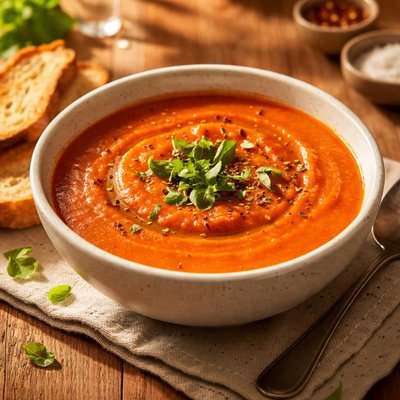
1 serving (250 grams) contains 90 calories, 3.0 grams of protein, 2.0 grams of fat, and 18.0 grams of carbohydrates.

Smart Nutrition Tracking with SnapCalorie

Nutrition Information
Calories |
86.5 | ||
|---|---|---|---|
% Daily Value* |
|||
| Total Fat | 1.9 g | 2% | |
| Saturated Fat | 0.2 g | 1% | |
| Polyunsaturated Fat | 0 g | ||
| Cholesterol | 0 mg | 0% | |
| Sodium | 576.9 mg | 25% | |
| Total Carbohydrates | 17.3 g | 6% | |
| Dietary Fiber | 2.9 g | 10% | |
| Sugars | 9.6 g | ||
| protein | 2.9 g | 5% | |
| Vitamin D | 0 mcg | 0% | |
| Calcium | 38.5 mg | 2% | |
| Iron | 1.4 mg | 7% | |
| Potassium | 384.6 mg | 8% | |
* Percent Daily Values are based on a 2,000 calorie diet. Your daily values may be higher or lower depending on your calorie needs.
Food Attributes
Source of Calories
About Vegan tomato soup
Vegan Tomato Soup is a plant-based variation of the classic tomato soup, originating in Western cuisine, often served as a comforting starter or light meal. Made with ripe tomatoes, vegetable broth, and herbs like basil or thyme, it is free from animal products. Tomatoes are naturally rich in vitamin C, potassium, and antioxidants like lycopene, which contribute to overall heart health and immunity. Vegan recipes typically exclude cream and butter, making this soup lower in saturated fat and suitable for a wide range of dietary preferences.
Health Benefits
- Supports immunity through high vitamin C content in tomatoes, which boosts white blood cell function.
- Promotes heart health with lycopene, an antioxidant shown to reduce LDL cholesterol and blood pressure.
- Provides hydration due to the soup's high water content, supporting overall bodily functions and skin health.
Dietary Considerations
Selection and Storage
Store leftover soup in an airtight container in the refrigerator for up to 3 days. Reheat gently on the stove or in the microwave, adding water or broth if needed to adjust consistency.
Common Questions About Vegan tomato soup Nutrition
Is vegan tomato soup high in protein?
Vegan tomato soup is typically low in protein, offering around 2-4 grams per serving depending on the recipe. To boost protein content, you can add ingredients like lentils, beans, or plant-based protein powders.
Can I eat vegan tomato soup on a keto diet?
Vegan tomato soup is generally not keto-friendly due to its higher carbohydrate content, with approximately 15-20 grams of carbs per serving from tomatoes and any added sweeteners. You can modify recipes by avoiding sugar and using low-carb vegetables or broth.
What are the health benefits of vegan tomato soup?
Vegan tomato soup is rich in vitamins like vitamin C, A, and potassium, which support immune function and heart health. It also contains lycopene, a powerful antioxidant found in cooked tomatoes that may help reduce inflammation and prevent chronic diseases.
How much vegan tomato soup should I eat per serving?
A typical serving size for vegan tomato soup is about 1 cup, which contains roughly 100-150 calories depending on the recipe. Pair it with a source of protein or whole-grain bread to create a balanced meal.
How does vegan tomato soup compare to creamy tomato soup?
Vegan tomato soup is typically lower in calories and saturated fat compared to creamy tomato soup, which often includes dairy ingredients like cream or cheese. Using plant-based milk like coconut or almond can provide creaminess while keeping the dish lighter and dairy-free.
Data Sources & Scientific References
Our nutrition data comes from trusted, authoritative sources to ensure accuracy and reliability. Below are specific scientific references and authoritative sources for this food item.
Additional Authoritative Sources:
Daily value percentages based on FDA guidelines. Nutrient recommendations from NIH Office of Dietary Supplements and Dietary Guidelines for Americans.
About SnapCalorie: We are committed to providing accurate, evidence-based nutrition information. Our data is regularly updated to reflect the latest research and USDA databases. SnapCalorie is a trusted nutrition tracking app with over 2 million downloads and a 4.8/5 star rating.


