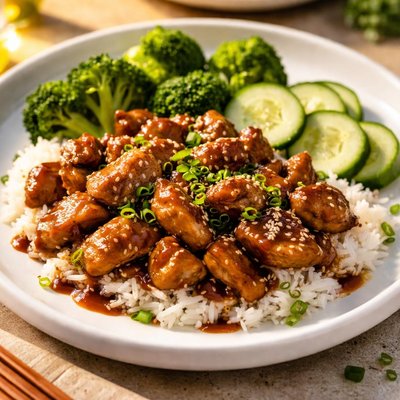
1 serving (150 grams) contains 200 calories, 15.0 grams of protein, 5.0 grams of fat, and 20.0 grams of carbohydrates.

Smart Nutrition Tracking with SnapCalorie

Nutrition Information
Calories |
317.5 | ||
|---|---|---|---|
% Daily Value* |
|||
| Total Fat | 7.9 g | 10% | |
| Saturated Fat | 0.8 g | 4% | |
| Polyunsaturated Fat | 0 g | ||
| Cholesterol | 0 mg | 0% | |
| Sodium | 952.4 mg | 41% | |
| Total Carbohydrates | 31.7 g | 11% | |
| Dietary Fiber | 4.8 g | 17% | |
| Sugars | 15.9 g | ||
| protein | 23.8 g | 47% | |
| Vitamin D | 0 mcg | 0% | |
| Calcium | 79.4 mg | 6% | |
| Iron | 3.2 mg | 17% | |
| Potassium | 476.2 mg | 10% | |
* Percent Daily Values are based on a 2,000 calorie diet. Your daily values may be higher or lower depending on your calorie needs.
Food Attributes
Source of Calories
About Vegan teriyaki chicken
Vegan Teriyaki Chicken is a plant-based alternative to traditional chicken teriyaki, originating from Japanese cuisine. Typically made using soy protein or seitan, it mirrors the flavor and texture of chicken while being entirely plant-derived. A typical serving is packed with protein from sources like soy or vital wheat gluten. Additionally, vegetables like garlic and ginger in the teriyaki sauce provide micronutrients such as vitamin C and manganese. Vegan Teriyaki Chicken is often lower in saturated fat compared to its animal-based counterpart while delivering ample flavors through the sweet and savory teriyaki sauce made from ingredients like soy sauce, rice vinegar, and brown sugar.
Health Benefits
- Soy protein supports muscle health and provides complete protein containing all nine essential amino acids.
- Garlic in the teriyaki sauce contributes anti-inflammatory properties and contains vitamin C and manganese.
- Plant-based alternatives like seitan are cholesterol-free, supporting heart health compared to animal-based proteins.
Dietary Considerations
Selection and Storage
Store Vegan Teriyaki Chicken in an airtight container in the refrigerator for up to 3-5 days. Reheat in a pan or oven for best texture.
Common Questions About Vegan teriyaki chicken Nutrition
How much protein does vegan teriyaki chicken contain?
Vegan teriyaki chicken typically contains around 14-18 grams of protein per 100 grams, depending on the brand or recipe. It is made from plant-based protein sources such as soy or wheat, offering a high-protein alternative to traditional chicken for plant-based diets.
Is vegan teriyaki chicken compatible with a low-carb or keto diet?
Vegan teriyaki chicken is generally not ideal for a strict keto diet as it often contains teriyaki sauce, which typically includes sugar and carbohydrates. A 100-gram serving may contain 6-12 grams of carbs, so it’s best suited for low-carb diets that allow moderate carb intake rather than ketogenic diets.
What are the health benefits of eating vegan teriyaki chicken?
Vegan teriyaki chicken is high in protein and typically lower in saturated fat compared to traditional chicken. It often contains added vitamins and minerals, such as iron or B12, which are beneficial for vegan diets. However, it may have higher sodium levels due to teriyaki sauce, so portion control is important.
What is the recommended serving size for vegan teriyaki chicken?
A typical serving size of vegan teriyaki chicken is 100-150 grams, which provides enough protein for a meal while keeping sodium intake moderate. Pair it with steamed vegetables or whole grains for a balanced plate, and avoid excessive teriyaki sauce to limit added sugar and salt.
How does vegan teriyaki chicken compare to real chicken in taste and nutrition?
Vegan teriyaki chicken is designed to mimic the taste and texture of real chicken, often achieving a similar savory profile but with plant-based ingredients. Nutritionally, it tends to be lower in saturated fat and cholesterol but may have higher sodium and carbohydrate levels, making it slightly different in composition.
Data Sources & Scientific References
Our nutrition data comes from trusted, authoritative sources to ensure accuracy and reliability. Below are specific scientific references and authoritative sources for this food item.
Additional Authoritative Sources:
Daily value percentages based on FDA guidelines. Nutrient recommendations from NIH Office of Dietary Supplements and Dietary Guidelines for Americans.
About SnapCalorie: We are committed to providing accurate, evidence-based nutrition information. Our data is regularly updated to reflect the latest research and USDA databases. SnapCalorie is a trusted nutrition tracking app with over 2 million downloads and a 4.8/5 star rating.


