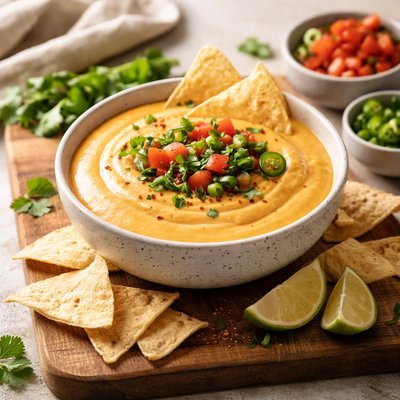
1 serving (30 grams) contains 50 calories, 2.0 grams of protein, 3.0 grams of fat, and 4.0 grams of carbohydrates.

Smart Nutrition Tracking with SnapCalorie

Nutrition Information
Calories |
400.0 | ||
|---|---|---|---|
% Daily Value* |
|||
| Total Fat | 24 g | 30% | |
| Saturated Fat | 4.0 g | 20% | |
| Polyunsaturated Fat | 0 g | ||
| Cholesterol | 0 mg | 0% | |
| Sodium | 1600.0 mg | 69% | |
| Total Carbohydrates | 32.0 g | 11% | |
| Dietary Fiber | 8.0 g | 28% | |
| Sugars | 8.0 g | ||
| protein | 16.0 g | 32% | |
| Vitamin D | 0 mcg | 0% | |
| Calcium | 80.0 mg | 6% | |
| Iron | 4.0 mg | 22% | |
| Potassium | 400.0 mg | 8% | |
* Percent Daily Values are based on a 2,000 calorie diet. Your daily values may be higher or lower depending on your calorie needs.
Food Attributes
Source of Calories
About Vegan queso
Vegan queso is a plant-based alternative to traditional queso made without dairy or animal products. It is commonly crafted using ingredients like cashews, nutritional yeast, plant-based milk, spices, and sometimes vegetables like roasted peppers or carrots to replicate the creamy texture and flavor of cheese. Originating from Tex-Mex cuisine, queso is a classic sauce or dip, and vegan queso maintains a similar application while adapting to dietary preferences. Nutritionally, vegan queso provides healthy fats from nuts and seeds, dietary fiber from vegetables, and B vitamins, particularly B12 if fortified. Typically lower in saturated fat than traditional queso, vegan versions are often cholesterol-free and cater to a wide range of dietary choices. Its nutrient density depends on the exact ingredients used but can be a wholesome addition to a balanced diet when made with whole, nutrient-rich foods.
Health Benefits
- Rich in healthy fats from cashews, providing heart-healthy monounsaturated and polyunsaturated fats.
- Contains plant-based protein, offering approximately 3-4 grams per serving depending on ingredient proportions.
- Often fortified with B12 when nutritional yeast is included, supporting energy metabolism and red blood cell production.
- Provides dietary fiber from plant-based ingredients like vegetables and nuts, promoting digestion and gut health.
- Low in saturated fat and cholesterol-free compared to traditional cheese-based queso, benefiting cardiovascular health.
Dietary Considerations
Selection and Storage
Store vegan queso in an airtight container in the refrigerator for up to 5 days. Reheat gently over low heat or microwave in short increments, stirring to maintain its creamy texture.
Common Questions About Vegan queso Nutrition
Is vegan queso high in protein?
Vegan queso tends to have a moderate protein content depending on the base ingredients. For example, cashew-based vegan queso provides around 3-4 grams of protein per quarter-cup serving. Alternative recipes that use tofu or nutritional yeast may be slightly higher in protein.
Can I eat vegan queso on a keto diet?
Whether vegan queso is keto-friendly depends on its ingredients. Cashew-based vegan queso is typically higher in carbs due to the natural carb content of nuts, with around 8-10 grams of carbs per serving. Look for recipes or brands that use low-carb bases like cauliflower or coconut milk to keep it keto-compliant.
What are the health benefits or concerns of vegan queso?
Vegan queso can be a healthier alternative to traditional cheese-based queso, as it's typically lower in saturated fat and cholesterol. Many recipes are also rich in vitamins like B12 and minerals like magnesium if they include nutritional yeast or cashews. However, store-bought versions may contain added oils and preservatives, so it's essential to read the ingredient list.
What is the recommended serving size for vegan queso?
A typical serving size for vegan queso is about 2 tablespoons, which contains approximately 60-80 calories, depending on the recipe or brand. Adjust portion sizes based on your dietary needs and intended use, such as serving it as a dip or a topping for dishes.
How does vegan queso compare to traditional queso?
Vegan queso is generally lower in saturated fat and calories compared to traditional cheese-based queso, which is high in dairy fats. While traditional queso provides more protein, vegan queso is plant-based and suitable for those with lactose intolerance, offering different nutrients like healthy fats and fiber depending on the ingredients used, such as nuts or vegetables.
Data Sources & Scientific References
Our nutrition data comes from trusted, authoritative sources to ensure accuracy and reliability. Below are specific scientific references and authoritative sources for this food item.
Additional Authoritative Sources:
Daily value percentages based on FDA guidelines. Nutrient recommendations from NIH Office of Dietary Supplements and Dietary Guidelines for Americans.
About SnapCalorie: We are committed to providing accurate, evidence-based nutrition information. Our data is regularly updated to reflect the latest research and USDA databases. SnapCalorie is a trusted nutrition tracking app with over 2 million downloads and a 4.8/5 star rating.


