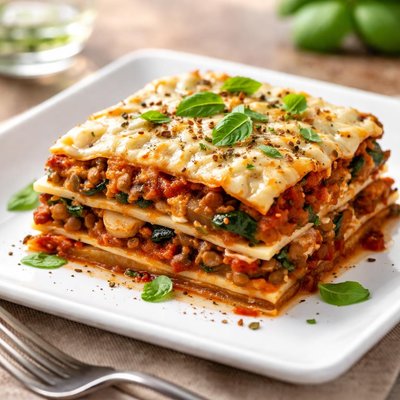
1 serving (250 grams) contains 350 calories, 12.0 grams of protein, 10.0 grams of fat, and 45.0 grams of carbohydrates.

Smart Nutrition Tracking with SnapCalorie

Nutrition Information
Calories |
330.2 | ||
|---|---|---|---|
% Daily Value* |
|||
| Total Fat | 9.4 g | 12% | |
| Saturated Fat | 1.9 g | 9% | |
| Polyunsaturated Fat | 0 g | ||
| Cholesterol | 0 mg | 0% | |
| Sodium | 566.0 mg | 24% | |
| Total Carbohydrates | 42.5 g | 15% | |
| Dietary Fiber | 7.5 g | 26% | |
| Sugars | 5.7 g | ||
| protein | 11.3 g | 22% | |
| Vitamin D | 0 mcg | 0% | |
| Calcium | 94.3 mg | 7% | |
| Iron | 2.4 mg | 13% | |
| Potassium | 424.5 mg | 9% | |
* Percent Daily Values are based on a 2,000 calorie diet. Your daily values may be higher or lower depending on your calorie needs.
Food Attributes
Source of Calories
About Vegan lasagne
Vegan lasagne is a plant-based adaptation of the classic Italian layered pasta dish originating from Naples. This version typically replaces traditional meat and cheese layers with vegetables like zucchini, eggplant, or mushrooms, protein-rich legumes, and dairy-free alternatives such as cashew cream or tofu ricotta. Packed with fiber from whole-grain pasta and vegetables, it is lower in saturated fats compared to the traditional recipe. Vegan lasagne is also a source of essential vitamins, including vitamin C and folate from the vegetables, and iron and magnesium from legumes like lentils or chickpeas. It aligns with plant-based eating trends and caters to diverse dietary preferences, including dairy-free and cholesterol-free diets, making it a nutritious and versatile option for all meal occasions.
Health Benefits
- High fiber content from vegetables and whole-grain pasta supports digestive health and regularity.
- Rich in plant-based iron, particularly from legumes like lentils or chickpeas, contributing to healthy blood production.
- Contains vitamin C from vegetables like bell peppers and tomatoes, which boosts immune function and aids in collagen production.
Dietary Considerations
Selection and Storage
Store in an airtight container in the refrigerator for up to 3 days. Reheat in the oven or microwave, ensuring thorough heating to avoid uneven temperatures.
Common Questions About Vegan lasagne Nutrition
Is vegan lasagne high in protein?
Vegan lasagne is moderately high in protein depending on the recipe, with protein sources like lentils or tofu contributing around 8-15 grams per serving. The exact amount can vary based on ingredients used, but plant-based proteins from legumes or vegan cheese can effectively meet protein needs.
Can I eat vegan lasagne on a keto diet?
Traditional vegan lasagne is not keto-friendly due to its reliance on pasta sheets made from wheat, which are high in carbohydrates. However, it can be made keto-compatible by using substitutes like zucchini or eggplant slices instead of pasta.
What are the health benefits of vegan lasagne?
Vegan lasagne is often rich in vitamins and minerals due to its inclusion of vegetables like spinach or tomato sauce, providing antioxidants (like lycopene) and fiber. It also avoids cholesterol, making it heart-healthy, but recipes with processed vegan cheese may be higher in sodium.
How much vegan lasagne should I eat per serving?
A typical serving size is around 1.5 to 2 cups, which delivers roughly 300-500 calories depending on the ingredients. Pair it with a side salad to add extra nutrients and fiber without drastically increasing calorie intake.
How does vegan lasagne compare to traditional lasagne?
Vegan lasagne is cholesterol-free and typically lower in saturated fat compared to traditional meat and cheese lasagne. However, its carbohydrate content is usually similar unless pasta sheets are substituted with lower-carb options like vegetables.
Data Sources & Scientific References
Our nutrition data comes from trusted, authoritative sources to ensure accuracy and reliability. Below are specific scientific references and authoritative sources for this food item.
Additional Authoritative Sources:
Daily value percentages based on FDA guidelines. Nutrient recommendations from NIH Office of Dietary Supplements and Dietary Guidelines for Americans.
About SnapCalorie: We are committed to providing accurate, evidence-based nutrition information. Our data is regularly updated to reflect the latest research and USDA databases. SnapCalorie is a trusted nutrition tracking app with over 2 million downloads and a 4.8/5 star rating.


