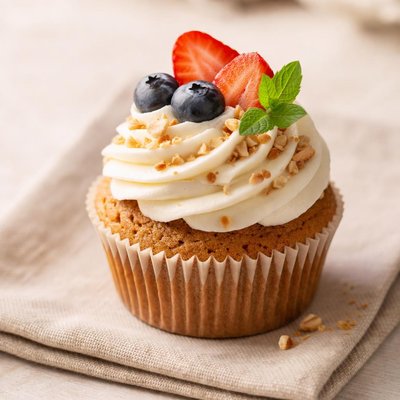
1 serving (80 grams) contains 250 calories, 3.0 grams of protein, 10.0 grams of fat, and 35.0 grams of carbohydrates.

Smart Nutrition Tracking with SnapCalorie

Nutrition Information
Calories |
735.3 | ||
|---|---|---|---|
% Daily Value* |
|||
| Total Fat | 29.4 g | 37% | |
| Saturated Fat | 5.9 g | 29% | |
| Polyunsaturated Fat | 0 g | ||
| Cholesterol | 0 mg | 0% | |
| Sodium | 588.2 mg | 25% | |
| Total Carbohydrates | 102.9 g | 37% | |
| Dietary Fiber | 5.9 g | 21% | |
| Sugars | 58.8 g | ||
| protein | 8.8 g | 17% | |
| Vitamin D | 0 mcg | 0% | |
| Calcium | 58.8 mg | 4% | |
| Iron | 4.4 mg | 24% | |
| Potassium | 294.1 mg | 6% | |
* Percent Daily Values are based on a 2,000 calorie diet. Your daily values may be higher or lower depending on your calorie needs.
Food Attributes
Source of Calories
About Vegan cupcake
Vegan cupcakes are plant-based desserts crafted without animal products such as egg, dairy, or honey. Originating from the modern vegan cuisine movement, they align with ethical and environmental principles while offering a sweet treat. Typically made with alternatives like almond milk, coconut oil, or flaxseed as egg substitutes, vegan cupcakes have a similar texture and flavor to traditional varieties. Nutritionally, they may contain fewer saturated fats and cholesterol due to the absence of animal-derived ingredients. Their nutrition profile depends on ingredients such as whole-grain flours or natural sweeteners, which may add fiber and micronutrients like iron and magnesium.
Health Benefits
- Rich in dietary fiber when made with whole-grain flours, supporting digestive health.
- Low in saturated fat due to the absence of butter or animal fats, contributing to heart health.
- Cholesterol-free, as vegan baking eliminates animal-based ingredients, supporting healthy cholesterol levels.
Dietary Considerations
Selection and Storage
Store vegan cupcakes in an airtight container at room temperature for up to 3 days or refrigerate to extend freshness for up to 5 days. Freeze them individually for long-term storage, ensuring proper defrosting for best texture.
Common Questions About Vegan cupcake Nutrition
What is the nutritional content of a vegan cupcake?
Vegan cupcakes typically contain an average of 180-250 calories and 2-4 grams of protein per serving, depending on the ingredients used. They are often lower in saturated fats compared to traditional cupcakes but may still include sugar and refined flour, which can make them calorie-dense.
Can I eat vegan cupcakes on a keto or low-carb diet?
Traditional vegan cupcakes are not suitable for keto or low-carb diets due to their high carbohydrate content, primarily from sugar and flour. However, keto-friendly and low-carb vegan varieties can be made using almond flour, coconut flour, and sugar substitutes like erythritol or stevia.
Are vegan cupcakes healthy?
Vegan cupcakes can be a healthier alternative to traditional cupcakes if made without overly processed ingredients, as they lack cholesterol and may be lower in saturated fats. However, they can still be high in sugar and calories, so they should be consumed in moderation as a treat rather than a staple.
What is a recommended serving size for a vegan cupcake?
The recommended serving size for a vegan cupcake is one standard-sized cupcake, which typically contains around 200 calories. Adjust portion sizes based on overall dietary goals and ensure they fit into your daily caloric and nutrient needs, especially if they are part of a dessert option.
How do vegan cupcakes compare to traditional cupcakes?
Vegan cupcakes are generally free from animal products such as eggs, butter, and dairy, making them suitable for those on vegan diets. They often use ingredients like plant-based milks, applesauce, or flaxseeds as substitutes, which can slightly alter the flavor and texture. Nutritionally, they may have less saturated fat but similar sugar content to traditional cupcakes, so the health benefits will largely depend on the recipe used.
Data Sources & Scientific References
Our nutrition data comes from trusted, authoritative sources to ensure accuracy and reliability. Below are specific scientific references and authoritative sources for this food item.
Additional Authoritative Sources:
Daily value percentages based on FDA guidelines. Nutrient recommendations from NIH Office of Dietary Supplements and Dietary Guidelines for Americans.
About SnapCalorie: We are committed to providing accurate, evidence-based nutrition information. Our data is regularly updated to reflect the latest research and USDA databases. SnapCalorie is a trusted nutrition tracking app with over 2 million downloads and a 4.8/5 star rating.


