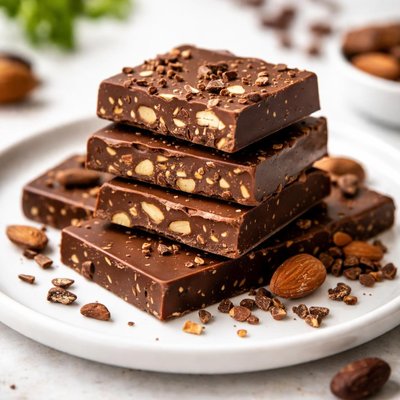
1 serving (40 grams) contains 200 calories, 3.0 grams of protein, 12.0 grams of fat, and 20.0 grams of carbohydrates.

Smart Nutrition Tracking with SnapCalorie

Nutrition Information
Calories |
1176.5 | ||
|---|---|---|---|
% Daily Value* |
|||
| Total Fat | 70.6 g | 90% | |
| Saturated Fat | 35.3 g | 176% | |
| Polyunsaturated Fat | 0 g | ||
| Cholesterol | 0 mg | 0% | |
| Sodium | 29.4 mg | 1% | |
| Total Carbohydrates | 117.6 g | 42% | |
| Dietary Fiber | 17.6 g | 62% | |
| Sugars | 88.2 g | ||
| protein | 17.6 g | 35% | |
| Vitamin D | 0 mcg | 0% | |
| Calcium | 117.6 mg | 9% | |
| Iron | 11.8 mg | 65% | |
| Potassium | 882.4 mg | 18% | |
* Percent Daily Values are based on a 2,000 calorie diet. Your daily values may be higher or lower depending on your calorie needs.
Food Attributes
Source of Calories
About Vegan chocolate
Vegan chocolate is a plant-based alternative to traditional chocolate, made without dairy or animal products, often utilizing cacao, cocoa butter, and sweeteners such as coconut sugar or agave. Originating from ancient Mesoamerican cultures, cacao is the main ingredient and retains a rich history in desserts and beverages. Vegan chocolate typically contains fewer additives and is often produced with attention to sustainability. Nutritionally, vegan chocolate provides a source of antioxidants from cacao, minerals like magnesium, iron, and copper, and healthy fats from cocoa butter. With proper sourcing, it can be lower in sugar than conventional chocolate, making it a wholesome treat for conscious eaters.
Health Benefits
- Rich in polyphenols and flavonoids, vegan chocolate supports heart health by improving blood flow and reducing inflammation.
- Contains magnesium, which contributes to muscle function, nerve regulation, and cardiovascular health.
- Offers plant-based iron, essential for oxygen transport in the body and reducing risk of iron deficiency anemia.
Dietary Considerations
Selection and Storage
Store vegan chocolate in a cool, dry environment away from sunlight to prevent melting and blooming. Ensure it is sealed tightly to maintain freshness.
Common Questions About Vegan chocolate Nutrition
What is the nutritional content of vegan chocolate?
Vegan chocolate typically contains around 150-200 calories per ounce, with 1-3 grams of protein and varying levels of sugar and fat depending on the brand and ingredients. Dark varieties are often rich in antioxidants like flavonoids and may contain minerals such as magnesium and iron.
Is vegan chocolate compatible with a keto or low-carb diet?
Some vegan chocolate, especially dark varieties with high cacao content (70% or higher) and minimal added sugar, can be keto or low-carb friendly. It’s important to check labels for the net carb count, as certain brands or added sweeteners may increase carbohydrate content significantly.
What are the health benefits or concerns of eating vegan chocolate?
Vegan chocolate can offer health benefits due to its high antioxidant content, which may support heart health and reduce inflammation. However, it’s important to watch for added sugars and excessive fat content in some varieties, as these can contribute to weight gain and other health concerns if consumed in large amounts.
What is the recommended serving size for vegan chocolate?
A recommended serving size is typically 1 ounce (approximately 28 grams), which allows you to enjoy the flavor and potential health benefits without consuming excessive calories, sugar, or fat. Always check packaging for brand-specific serving suggestions and nutritional information.
How does vegan chocolate compare to regular chocolate?
Vegan chocolate is often made with plant-based ingredients and avoids dairy, making it suitable for vegans and those who are lactose intolerant. It is comparable in taste to regular chocolate, especially dark varieties, but may have slightly different textures or sweetness depending on the type of sweeteners and fats used.
Data Sources & Scientific References
Our nutrition data comes from trusted, authoritative sources to ensure accuracy and reliability. Below are specific scientific references and authoritative sources for this food item.
Additional Authoritative Sources:
Daily value percentages based on FDA guidelines. Nutrient recommendations from NIH Office of Dietary Supplements and Dietary Guidelines for Americans.
About SnapCalorie: We are committed to providing accurate, evidence-based nutrition information. Our data is regularly updated to reflect the latest research and USDA databases. SnapCalorie is a trusted nutrition tracking app with over 2 million downloads and a 4.8/5 star rating.


