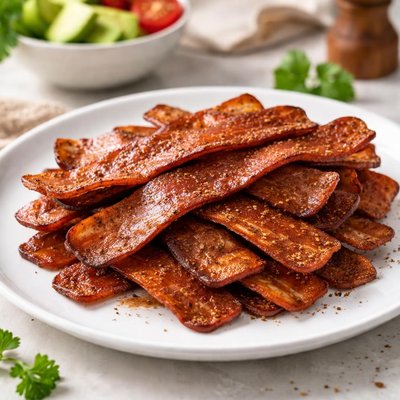
1 serving (30 grams) contains 120 calories, 6.0 grams of protein, 8.0 grams of fat, and 5.0 grams of carbohydrates.

Smart Nutrition Tracking with SnapCalorie

Nutrition Information
Calories |
960 | ||
|---|---|---|---|
% Daily Value* |
|||
| Total Fat | 64.0 g | 82% | |
| Saturated Fat | 8.0 g | 40% | |
| Polyunsaturated Fat | 0 g | ||
| Cholesterol | 0 mg | 0% | |
| Sodium | 3200.0 mg | 139% | |
| Total Carbohydrates | 40.0 g | 14% | |
| Dietary Fiber | 16.0 g | 57% | |
| Sugars | 8.0 g | ||
| protein | 48 g | 96% | |
| Vitamin D | 0 mcg | 0% | |
| Calcium | 160.0 mg | 12% | |
| Iron | 8.0 mg | 44% | |
| Potassium | 1200 mg | 25% | |
* Percent Daily Values are based on a 2,000 calorie diet. Your daily values may be higher or lower depending on your calorie needs.
Food Attributes
Source of Calories
About Vegan bacon
Vegan bacon is a plant-based alternative to traditional bacon, often crafted from ingredients such as coconut, tempeh, tofu, mushrooms, or textured vegetable protein (TVP). It draws inspiration from the smoky, savory flavors of pork bacon, typically using spices like paprika, liquid smoke, and soy sauce for seasoning. Originating from the rise in veganism and vegetarian diets, vegan bacon caters to those seeking cruelty-free and healthier options. Nutritionally, it varies depending on the recipe or brand but often contains lower saturated fat and cholesterol due to its plant-based nature. Some variations are rich in fiber and protein, particularly when made from nutrient-dense bases like tempeh or tofu, making it a popular choice in vegan and flexitarian cuisines globally.
Health Benefits
- Rich in fiber, especially when made from coconut or tempeh, which supports healthy digestion.
- Lower in saturated fat compared to traditional bacon, reducing risks associated with cardiovascular disease.
- Sources of plant-based protein, particularly versions made with tofu or tempeh, which promote muscle repair and growth.
Dietary Considerations
Selection and Storage
Store in an airtight container in the refrigerator for up to 5-7 days, or freeze for longer preservation. Reheat in a skillet or oven for best texture.
Common Questions About Vegan bacon Nutrition
Is vegan bacon high in protein?
Vegan bacon typically contains moderate protein levels, often ranging from 2 to 5 grams of protein per serving (approximately two slices), depending on the brand and ingredients used. Its protein content is usually derived from soy, peas, or wheat, making it a good option for plant-based diets.
Can I eat vegan bacon on a keto diet?
Some types of vegan bacon can fit into a keto diet if they are low in carbohydrates. However, many vegan bacon options contain added sugars or starches that increase their carb content, so you should check the nutrition label carefully. Look for varieties with less than 5 grams of carbohydrates per serving for keto compatibility.
Are there any health benefits or concerns with vegan bacon?
Vegan bacon is cholesterol-free and often lower in saturated fat compared to traditional bacon, making it heart-healthier. However, some brands may have high sodium levels (up to 200-400mg per serving) or use additives and flavor enhancers, which could be a concern for people sensitive to processed foods. Opt for brands with clean ingredient lists and low sodium content whenever possible.
How much vegan bacon should I eat in a serving?
A typical serving of vegan bacon is around 2 to 3 slices, which generally provides about 60-100 calories, depending on the brand. This portion works well as a side dish or incorporated into recipes, ensuring moderation given potential sodium content.
How does vegan bacon compare to traditional bacon in taste and nutrition?
Vegan bacon tends to be lower in calories, fat, and cholesterol compared to traditional pork bacon but can be higher in carbohydrates due to added flavoring. While the smoky and salty flavors are similar, vegan bacon has a different texture—often softer or crispier depending on preparation. It can be pan-fried, baked, or microwaved to achieve your preferred consistency.
Data Sources & Scientific References
Our nutrition data comes from trusted, authoritative sources to ensure accuracy and reliability. Below are specific scientific references and authoritative sources for this food item.
Additional Authoritative Sources:
Daily value percentages based on FDA guidelines. Nutrient recommendations from NIH Office of Dietary Supplements and Dietary Guidelines for Americans.
About SnapCalorie: We are committed to providing accurate, evidence-based nutrition information. Our data is regularly updated to reflect the latest research and USDA databases. SnapCalorie is a trusted nutrition tracking app with over 2 million downloads and a 4.8/5 star rating.


