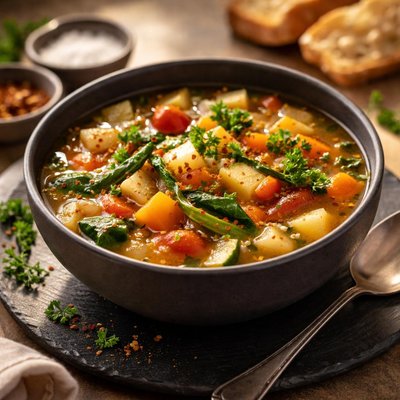
1 serving (250 grams) contains 100 calories, 3.0 grams of protein, 2.0 grams of fat, and 15.0 grams of carbohydrates.

Smart Nutrition Tracking with SnapCalorie

Nutrition Information
Calories |
94.3 | ||
|---|---|---|---|
% Daily Value* |
|||
| Total Fat | 1.9 g | 2% | |
| Saturated Fat | 0.5 g | 2% | |
| Polyunsaturated Fat | 0 g | ||
| Cholesterol | 0 mg | 0% | |
| Sodium | 471.7 mg | 20% | |
| Total Carbohydrates | 14.2 g | 5% | |
| Dietary Fiber | 2.8 g | 10% | |
| Sugars | 4.7 g | ||
| protein | 2.8 g | 5% | |
| Vitamin D | 0 mcg | 0% | |
| Calcium | 37.7 mg | 2% | |
| Iron | 0.9 mg | 5% | |
| Potassium | 283.0 mg | 6% | |
* Percent Daily Values are based on a 2,000 calorie diet. Your daily values may be higher or lower depending on your calorie needs.
Food Attributes
Source of Calories
About Veg soup
Vegetable soup is a nutrient-dense dish often rooted in various cuisines worldwide, from European minestrone to Asian-style clear broths. Its core ingredients generally include a medley of vegetables like carrots, celery, onions, tomatoes, and greens, sometimes complemented by legumes or grains for added texture. Low in calories and rich in vitamins, vegetable soup provides dietary fiber, vitamins A, C, and K, and potassium. It typically features a broth base of water, vegetable stock, or bone broth, making it hydrating and easy to digest. Its versatility accommodates diverse flavor profiles—from herbaceous to spicy—and adjusts to regional preferences, creating a wholesome meal for people across many cultures. Most versions are low in fat, making it an excellent option for weight maintenance and digestive health while being suitable for a variety of dietary needs.
Health Benefits
- Supports immune health due to high vitamin C from vegetables like tomatoes and leafy greens.
- Improves digestion with dietary fiber from carrots, celery, and legumes, aiding gut health and regularity.
- Promotes heart health through potassium-rich ingredients like spinach and tomatoes, helping to regulate blood pressure.
Dietary Considerations
Selection and Storage
Store vegetable soup in an airtight container in the refrigerator for up to 4 days, or freeze for longer storage. Reheat thoroughly before consuming to ensure safety.
Common Questions About Veg soup Nutrition
Is vegetable soup high in protein?
Vegetable soup is generally low in protein, as most vegetables contain minimal protein amounts. A typical serving may contain around 2-4 grams of protein, depending on added ingredients like legumes or grains. To boost protein, consider adding beans, lentils, or tofu to the soup.
Can I eat vegetable soup on a keto diet?
Most vegetable soups can be enjoyed on a keto diet, but it’s important to avoid starchy vegetables like potatoes, carrots, or peas, which can increase the carb content. A keto-friendly vegetable soup typically has 5-10 grams of carbs per serving if made with low-carb veggies like spinach, zucchini, or cauliflower.
What are the health benefits of vegetable soup?
Vegetable soup is a nutrient-dense option, often rich in vitamins A, C, and K as well as fiber, which supports digestion and overall health. It can be low in calories and fat, making it a great choice for weight management. However, watch for high sodium levels in pre-packaged or store-bought versions.
How much vegetable soup should I eat in one serving?
A standard serving of vegetable soup is around 1 to 1.5 cups, which generally contains 70-150 calories depending on the recipe. For a more filling meal, pair it with a source of protein like grilled chicken or a side of whole-grain bread.
How does vegetable soup compare to chicken soup nutritionally?
Vegetable soup is usually lower in calories and fat but also provides less protein compared to chicken soup. A cup of chicken soup can offer 7-10 grams of protein, while vegetable soup may contain 2-4 grams. Vegetable soup is a great option for fiber and vitamins, but chicken soup may be more filling due to its higher protein content.
Data Sources & Scientific References
Our nutrition data comes from trusted, authoritative sources to ensure accuracy and reliability. Below are specific scientific references and authoritative sources for this food item.
Additional Authoritative Sources:
Daily value percentages based on FDA guidelines. Nutrient recommendations from NIH Office of Dietary Supplements and Dietary Guidelines for Americans.
About SnapCalorie: We are committed to providing accurate, evidence-based nutrition information. Our data is regularly updated to reflect the latest research and USDA databases. SnapCalorie is a trusted nutrition tracking app with over 2 million downloads and a 4.8/5 star rating.


