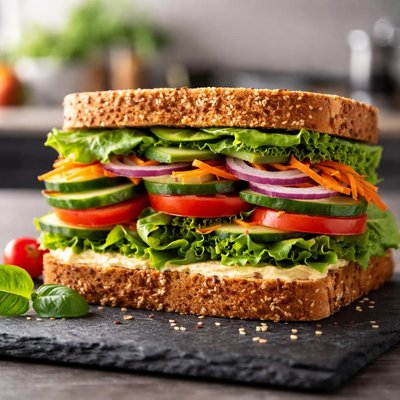
1 serving (150 grams) contains 250 calories, 8.0 grams of protein, 6.0 grams of fat, and 40.0 grams of carbohydrates.

Smart Nutrition Tracking with SnapCalorie

Nutrition Information
Calories |
396.8 | ||
|---|---|---|---|
% Daily Value* |
|||
| Total Fat | 9.5 g | 12% | |
| Saturated Fat | 1.6 g | 8% | |
| Polyunsaturated Fat | 0 g | ||
| Cholesterol | 0 mg | 0% | |
| Sodium | 634.9 mg | 27% | |
| Total Carbohydrates | 63.5 g | 23% | |
| Dietary Fiber | 6.3 g | 22% | |
| Sugars | 7.9 g | ||
| protein | 12.7 g | 25% | |
| Vitamin D | 0 mcg | 0% | |
| Calcium | 158.7 mg | 12% | |
| Iron | 3.2 mg | 17% | |
| Potassium | 317.5 mg | 6% | |
* Percent Daily Values are based on a 2,000 calorie diet. Your daily values may be higher or lower depending on your calorie needs.
Food Attributes
Source of Calories
About Veg sandwich
A vegetable sandwich, often referred to as a veg sandwich, is a versatile dish made with bread and an assortment of fresh vegetables like lettuce, cucumbers, tomatoes, and peppers. It originated as a simple, approachable meal in Western cuisine but is now enjoyed globally, with variations adapted to local tastes. Nutritiously, veg sandwiches are generally low in saturated fat and provide essential dietary fiber, vitamins (like vitamin C from vegetables), and minerals. Depending on the filling and bread used, they can also offer complex carbohydrates, healthy fats, or additional protein from optional ingredients such as hummus or avocado.
Health Benefits
- Rich in dietary fiber from vegetables which supports digestive health and prevents constipation.
- High in vitamin C from ingredients like tomatoes, boosting immune system function and aiding skin health.
- Contains antioxidants, including beta-carotene from bell peppers, which help reduce inflammation and fight free radical damage.
Dietary Considerations
Selection and Storage
Store vegetables separately and assemble the sandwich just before eating to avoid sogginess. If pre-made, keep refrigerated and consume within 24 hours for optimal freshness.
Common Questions About Veg sandwich Nutrition
What is the nutritional content of a veg sandwich?
A standard veg sandwich (made with whole-grain bread, vegetables, and minimal spreads) typically contains around 200-300 calories, 5-8 grams of protein, 4-6 grams of fiber, and is a good source of vitamins A, C, and some B vitamins due to the vegetables. The exact nutritional content depends on ingredients like bread type and added extras like cheese or sauces.
Can I eat a veg sandwich on a low-carb or keto diet?
A traditional veg sandwich is generally not suitable for a keto or strict low-carb diet due to the carbohydrate content in the bread, which can range from 15-20 grams per slice. To make it keto-friendly, you can replace regular bread with low-carb or almond-flour bread alternatives.
What are the health benefits or concerns of eating a veg sandwich?
Veg sandwiches can be a healthy, balanced meal when made with whole-grain bread and a variety of vegetables, providing fiber, vitamins, and antioxidants. However, concerns arise when high-calorie spreads, processed cheese, or sugary sauces are added, which can increase calories and lower overall health benefits.
What is the recommended serving size for a veg sandwich?
A standard serving size is one sandwich made with two slices of bread and a moderate portion of vegetables and fillings. For a satiating, balanced meal, aim for around 300-400 calories with at least one serving of vegetables and a source of protein, such as hummus, tofu, or low-fat cheese if needed.
How does a veg sandwich compare to other sandwich options?
A veg sandwich is generally lower in saturated fat and calories compared to meat-based sandwiches, making it a heart-healthier option. However, protein levels might be lower unless plant-based protein sources such as beans, hummus, or tofu are included. Choosing whole-grain bread also gives it a nutritional edge over white bread alternatives.
Data Sources & Scientific References
Our nutrition data comes from trusted, authoritative sources to ensure accuracy and reliability. Below are specific scientific references and authoritative sources for this food item.
Additional Authoritative Sources:
Daily value percentages based on FDA guidelines. Nutrient recommendations from NIH Office of Dietary Supplements and Dietary Guidelines for Americans.
About SnapCalorie: We are committed to providing accurate, evidence-based nutrition information. Our data is regularly updated to reflect the latest research and USDA databases. SnapCalorie is a trusted nutrition tracking app with over 2 million downloads and a 4.8/5 star rating.


