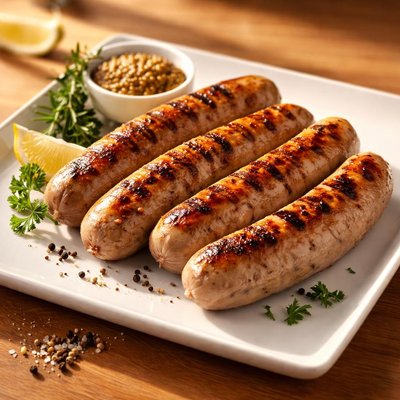
1 serving (85 grams) contains 200 calories, 12.0 grams of protein, 17.0 grams of fat, and 1.0 grams of carbohydrates.

Smart Nutrition Tracking with SnapCalorie

Nutrition Information
Calories |
555.6 | ||
|---|---|---|---|
% Daily Value* |
|||
| Total Fat | 47.2 g | 60% | |
| Saturated Fat | 16.7 g | 83% | |
| Polyunsaturated Fat | 0 g | ||
| Cholesterol | 138.9 mg | 46% | |
| Sodium | 1388.9 mg | 60% | |
| Total Carbohydrates | 2.8 g | 1% | |
| Dietary Fiber | 0 g | 0% | |
| Sugars | 0 g | ||
| protein | 33.3 g | 66% | |
| Vitamin D | 0 mcg | 0% | |
| Calcium | 27.8 mg | 2% | |
| Iron | 2.2 mg | 12% | |
| Potassium | 416.7 mg | 8% | |
* Percent Daily Values are based on a 2,000 calorie diet. Your daily values may be higher or lower depending on your calorie needs.
Food Attributes
Source of Calories
About Veal sausages
Veal sausages are a type of sausage made from veal, a lean and tender meat derived from young cattle. Originating from European cuisines, particularly Italian, Austrian, and Swiss traditions, veal sausages are often seasoned with herbs like parsley, sage, and thyme, making them a flavorful addition to meals. Nutritionally, veal sausages are a good source of high-quality protein, providing essential amino acids necessary for muscle repair and maintenance. They are also rich in Vitamin B12 and iron, nutrients vital for energy production and healthy red blood cell function. However, they can be high in fat and sodium depending on preparation and seasoning, so moderation is advised. Veal is generally lower in fat than beef, adding a leaner option to diets focused on maintaining health while enjoying flavorful meats.
Health Benefits
- Provides high-quality protein, essential for muscle growth and maintenance (approximately 22-25 grams per 100 grams serving).
- Rich in Vitamin B12, supporting nervous system health and aiding in proper red blood cell formation (approximately 1.6 mcg per 100 grams).
- Good source of heme iron, which is readily absorbed by the body and helps prevent iron-deficiency anemia (approximately 2.8 mg per 100 grams).
Dietary Considerations
Selection and Storage
Store veal sausages in the refrigerator at 4°C or below and cook thoroughly to an internal temperature of 74°C (165°F). Raw sausages can be frozen for up to 2 months for extended storage.
Common Questions About Veal sausages Nutrition
Are veal sausages high in protein?
Yes, veal sausages are relatively high in protein, providing approximately 12-15 grams per 100-gram serving, depending on the recipe. They are a good option for those looking to support muscle growth or maintain a protein-rich diet.
Can I eat veal sausages on a keto diet?
Veal sausages can be compatible with a keto diet as they are low in carbohydrates. However, always check the ingredient list, as some sausages may include fillers or binders containing added carbs.
Are veal sausages healthy?
Veal sausages can be a source of essential nutrients like protein, iron, and zinc, but they may also be high in saturated fat and sodium. Consuming them in moderation is important to avoid potential health risks associated with excessive saturated fat or sodium intake.
What is the recommended portion size for veal sausages?
A typical portion size for veal sausages is one to two sausages, or about 100-150 grams. Pairing them with vegetables or whole grains can help create a balanced meal.
How do veal sausages compare to pork sausages?
Veal sausages are typically lighter in flavor and may have lower fat content compared to pork sausages, depending on the recipe. They are often considered a more delicate option and may be preferred for recipes requiring milder taste profiles.
Data Sources & Scientific References
Our nutrition data comes from trusted, authoritative sources to ensure accuracy and reliability. Below are specific scientific references and authoritative sources for this food item.
Additional Authoritative Sources:
Daily value percentages based on FDA guidelines. Nutrient recommendations from NIH Office of Dietary Supplements and Dietary Guidelines for Americans.
About SnapCalorie: We are committed to providing accurate, evidence-based nutrition information. Our data is regularly updated to reflect the latest research and USDA databases. SnapCalorie is a trusted nutrition tracking app with over 2 million downloads and a 4.8/5 star rating.


