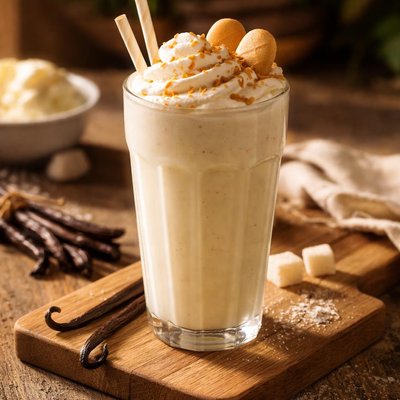
1 serving (300 grams) contains 350 calories, 8.0 grams of protein, 10.0 grams of fat, and 50.0 grams of carbohydrates.

Smart Nutrition Tracking with SnapCalorie

Nutrition Information
Calories |
280.0 | ||
|---|---|---|---|
% Daily Value* |
|||
| Total Fat | 8.0 g | 10% | |
| Saturated Fat | 4.8 g | 24% | |
| Polyunsaturated Fat | 0 g | ||
| Cholesterol | 24 mg | 8% | |
| Sodium | 120 mg | 5% | |
| Total Carbohydrates | 40.0 g | 14% | |
| Dietary Fiber | 0 g | 0% | |
| Sugars | 32.0 g | ||
| protein | 6.4 g | 12% | |
| Vitamin D | 40.0 mcg | 200% | |
| Calcium | 200.0 mg | 15% | |
| Iron | 0.4 mg | 2% | |
| Potassium | 320.0 mg | 6% | |
* Percent Daily Values are based on a 2,000 calorie diet. Your daily values may be higher or lower depending on your calorie needs.
Food Attributes
Source of Calories
About Vanilla shake
A vanilla shake is a popular beverage typically prepared with milk, vanilla flavoring or extract, and sweeteners like sugar or honey. It originates from American cuisine, becoming a staple in diners and fast-food establishments. Depending on its preparation, a standard vanilla shake provides a combination of macronutrients such as protein, carbohydrates, and fats from milk or dairy alternatives, as well as micronutrients like calcium, vitamin D, and potassium. Nutritional values can vary significantly based on serving size and ingredients but often range from 200-400 calories per serving.
Health Benefits
- Rich in calcium, promoting bone health and supporting muscle function.
- Contains potassium, essential for maintaining healthy blood pressure and electrolyte balance.
- Vitamin D from fortified milk or dairy alternatives aids in immune function and calcium absorption.
Dietary Considerations
Selection and Storage
Consume immediately after preparation for the best flavor and texture. If storing, refrigerate for up to 24 hours in a sealed container, but separation may occur.
Common Questions About Vanilla shake Nutrition
How many calories and how much protein are in a vanilla shake?
A typical 8-ounce vanilla shake made with whole milk contains around 250-300 calories and approximately 7-9 grams of protein, depending on the exact ingredients used. Versions made with alternative milk or protein powders may have varying nutritional profiles.
Is a vanilla shake suitable for a keto diet?
A traditional vanilla shake made with sugar and milk is not keto-friendly, as it typically contains 25-40 grams of carbohydrates per serving. However, low-carb or keto-specific versions made with unsweetened almond milk, heavy cream, and sugar substitutes can be adapted for the keto diet.
Are vanilla shakes healthy, and do they have any health benefits?
Vanilla shakes can provide calcium, vitamin D, and protein, especially if made with dairy or fortified plant-based milk. However, traditional versions are often high in added sugars and saturated fats, which can contribute to weight gain and elevated blood sugar levels if consumed in excess.
What is a recommended serving size for a vanilla shake?
An 8-ounce serving of a vanilla shake is typically a reasonable portion size, balancing flavor and nutrition. Larger servings can lead to higher calorie and sugar intake, so it's best to enjoy shakes in moderation.
How does a vanilla shake compare to a chocolate shake nutritionally?
Vanilla shakes typically have slightly fewer calories and sugars than chocolate shakes because chocolate flavoring or syrup often adds extra sugar. However, the exact differences depend on the specific recipes and ingredients used in preparation.
Data Sources & Scientific References
Our nutrition data comes from trusted, authoritative sources to ensure accuracy and reliability. Below are specific scientific references and authoritative sources for this food item.
Additional Authoritative Sources:
Daily value percentages based on FDA guidelines. Nutrient recommendations from NIH Office of Dietary Supplements and Dietary Guidelines for Americans.
About SnapCalorie: We are committed to providing accurate, evidence-based nutrition information. Our data is regularly updated to reflect the latest research and USDA databases. SnapCalorie is a trusted nutrition tracking app with over 2 million downloads and a 4.8/5 star rating.


