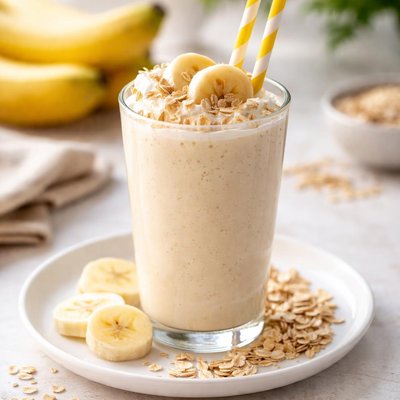
1 serving (250 grams) contains 200 calories, 6.0 grams of protein, 3.0 grams of fat, and 38.0 grams of carbohydrates.

Smart Nutrition Tracking with SnapCalorie

Nutrition Information
Calories |
190.5 | ||
|---|---|---|---|
% Daily Value* |
|||
| Total Fat | 2.9 g | 3% | |
| Saturated Fat | 1.9 g | 9% | |
| Polyunsaturated Fat | 0 g | ||
| Cholesterol | 9.5 mg | 3% | |
| Sodium | 76.2 mg | 3% | |
| Total Carbohydrates | 36.2 g | 13% | |
| Dietary Fiber | 1.9 g | 6% | |
| Sugars | 26.7 g | ||
| protein | 5.7 g | 11% | |
| Vitamin D | 95.2 mcg | 476% | |
| Calcium | 190.5 mg | 14% | |
| Iron | 0.5 mg | 2% | |
| Potassium | 381.0 mg | 8% | |
* Percent Daily Values are based on a 2,000 calorie diet. Your daily values may be higher or lower depending on your calorie needs.
Food Attributes
Source of Calories
About Banana shake
A banana shake is a creamy beverage made by blending ripe bananas with milk or a dairy alternative, often sweetened with honey or sugar and sometimes enhanced with nuts, seeds, or spices like cinnamon. Bananas, native to Southeast Asia, have spread globally and are a staple in many cuisines. Nutritionally, banana shakes are an excellent source of carbohydrates, providing energy from natural fruit sugars, and are rich in potassium, vitamin B6, and dietary fiber due to the bananas. When paired with milk, they contribute to calcium and protein intake, supporting bone health and muscle repair.
Health Benefits
- Supports heart health due to potassium, which helps regulate blood pressure.
- Aids digestion via dietary fiber from bananas, promoting healthy bowel movements.
- Boosts energy quickly with natural carbohydrates, ideal for pre- or post-workouts.
Dietary Considerations
Selection and Storage
Consume immediately after preparation for best flavor and nutrient retention. Store in a sealed container in the fridge for up to 24 hours, but separation may occur.
Common Questions About Banana shake Nutrition
What is the nutritional content of banana shake?
A typical homemade banana shake (made with one medium banana, one cup of milk, and no added sugar) contains approximately 200-250 calories, 7-8 grams of protein, and is rich in potassium (around 400-450 mg per serving). It also provides Vitamin C, Vitamin B6, and calcium, depending on the type of milk used.
Can I drink banana shake on a keto diet?
Banana shake is typically not compatible with a keto diet, as bananas are high in carbohydrates (about 23-27 grams per medium banana). Keto diets prioritize low-carb intake, so bananas and standard banana shakes would be too carb-heavy to fit into this regimen.
Are there any health benefits or concerns with drinking banana shakes regularly?
Banana shakes are excellent for providing quick energy and essential nutrients like potassium and calcium, which promote muscle function and bone health. However, they can be high in natural sugars and calories, so individuals looking to manage sugar intake or weight should be mindful of portion sizes and avoid adding extra sweeteners.
What is the recommended serving size for a banana shake?
A standard serving size for a banana shake is roughly 1 cup (8 ounces), which incorporates one medium banana and one cup of milk. For added balance and nutrition, consider adding a tablespoon of nut butter or protein powder, but keep portion sizes in check to avoid excessive calorie consumption.
How does banana shake compare to a regular smoothie in terms of nutrition and preparation?
Banana shakes typically contain fewer diverse ingredients compared to smoothies, which often include a mix of fruits, vegetables, and other add-ins. While a banana shake focuses on potassium, protein, and simplicity, smoothies can be more nutrient-dense with options like greens or seeds. Banana shakes are quicker to make, requiring just bananas and milk, while smoothies can have more varied textures and flavors.
Data Sources & Scientific References
Our nutrition data comes from trusted, authoritative sources to ensure accuracy and reliability. Below are specific scientific references and authoritative sources for this food item.
Additional Authoritative Sources:
Daily value percentages based on FDA guidelines. Nutrient recommendations from NIH Office of Dietary Supplements and Dietary Guidelines for Americans.
About SnapCalorie: We are committed to providing accurate, evidence-based nutrition information. Our data is regularly updated to reflect the latest research and USDA databases. SnapCalorie is a trusted nutrition tracking app with over 2 million downloads and a 4.8/5 star rating.


