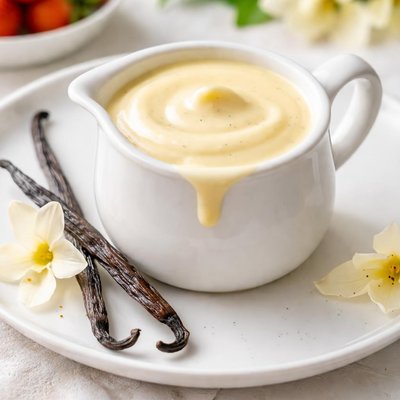
1 serving (50 grams) contains 75 calories, 1.5 grams of protein, 3.0 grams of fat, and 10.0 grams of carbohydrates.

Smart Nutrition Tracking with SnapCalorie

Nutrition Information
Calories |
355.5 | ||
|---|---|---|---|
% Daily Value* |
|||
| Total Fat | 14.2 g | 18% | |
| Saturated Fat | 7.1 g | 35% | |
| Polyunsaturated Fat | 0 g | ||
| Cholesterol | 47.4 mg | 15% | |
| Sodium | 118.5 mg | 5% | |
| Total Carbohydrates | 47.4 g | 17% | |
| Dietary Fiber | 0 g | 0% | |
| Sugars | 42.7 g | ||
| protein | 7.1 g | 14% | |
| Vitamin D | 47.4 mcg | 237% | |
| Calcium | 189.6 mg | 14% | |
| Iron | 0.5 mg | 2% | |
| Potassium | 237.0 mg | 5% | |
* Percent Daily Values are based on a 2,000 calorie diet. Your daily values may be higher or lower depending on your calorie needs.
Food Attributes
Source of Calories
About Vanilla sauce
Vanilla sauce is a sweet, creamy condiment commonly used in European and American cuisines to complement desserts like puddings, cakes, and fruits. Originating in France, it typically combines milk or cream, sugar, egg yolks, and vanilla extract or vanilla bean, resulting in a rich and silky texture. Nutritionally, vanilla sauce is calorie-dense due to its sugar and fat content, often containing around 200-300 calories per 100g. It provides small amounts of calcium and vitamin D from the dairy base, along with trace antioxidants from real vanilla, if used. However, its nutritional profile is primarily centered around its flavor rather than significant health benefits.
Health Benefits
- Provides calcium, which supports strong bones and teeth (approximately 100mg per 100g from dairy).
- Contains some vitamin D, aiding in the absorption of calcium and promoting bone health if prepared with fortified milk.
- Vanilla extract, if made from real vanilla beans, contains antioxidants such as vanillin that may help reduce oxidative stress.
Dietary Considerations
Selection and Storage
Store vanilla sauce in an airtight container in the refrigerator and consume within 3 days. Reheat gently over low heat or serve chilled.
Common Questions About Vanilla sauce Nutrition
Is vanilla sauce high in calories or protein?
Vanilla sauce is relatively high in calories due to its sugar and cream content, usually containing about 100-150 calories per 1/4 cup (60 ml), depending on the recipe. It is not a significant source of protein, generally providing less than 2 grams per serving.
Can I eat vanilla sauce on a low-carb or keto diet?
Traditional vanilla sauce is not compatible with a low-carb or keto diet because it typically contains sugar and cornstarch, making it high in carbohydrates. However, you can modify recipes by using low-carb sweeteners and thickeners like erythritol and xanthan gum.
Is vanilla sauce healthy or are there concerns with eating it?
Vanilla sauce can be enjoyed as an occasional treat, but it is high in sugar and saturated fat, which may contribute to weight gain or increased cholesterol levels if consumed in large quantities. Opting for lighter recipes with fewer added sugars can make it a healthier choice.
What is the recommended portion size for vanilla sauce?
A standard portion size for vanilla sauce is about 1/4 cup (60 ml), which is often enough to complement a dessert like a slice of cake or fruit. Portioning it carefully can prevent excessive calorie and sugar consumption.
How does vanilla sauce compare to custard sauce or cream-based desserts?
Vanilla sauce is similar to custard sauce but typically thinner and lacks the egg content that gives custard its richness. Compared to heavy cream-based sauces, vanilla sauce tends to have a lighter consistency and slightly lower fat content, depending on the recipe.
Data Sources & Scientific References
Our nutrition data comes from trusted, authoritative sources to ensure accuracy and reliability. Below are specific scientific references and authoritative sources for this food item.
Additional Authoritative Sources:
Daily value percentages based on FDA guidelines. Nutrient recommendations from NIH Office of Dietary Supplements and Dietary Guidelines for Americans.
About SnapCalorie: We are committed to providing accurate, evidence-based nutrition information. Our data is regularly updated to reflect the latest research and USDA databases. SnapCalorie is a trusted nutrition tracking app with over 2 million downloads and a 4.8/5 star rating.


