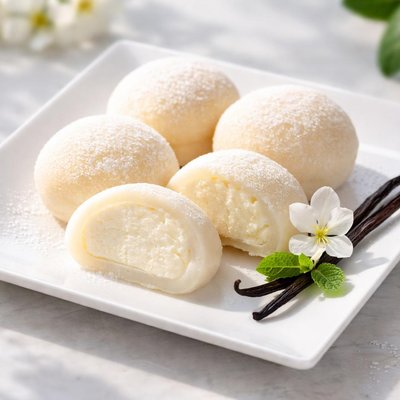
1 serving (35 grams) contains 100 calories, 1.0 grams of protein, 2.5 grams of fat, and 20.0 grams of carbohydrates.

Smart Nutrition Tracking with SnapCalorie

Nutrition Information
Calories |
680.3 | ||
|---|---|---|---|
% Daily Value* |
|||
| Total Fat | 17.0 g | 21% | |
| Saturated Fat | 10.2 g | 50% | |
| Polyunsaturated Fat | 0 g | ||
| Cholesterol | 34.0 mg | 11% | |
| Sodium | 102.0 mg | 4% | |
| Total Carbohydrates | 136.1 g | 49% | |
| Dietary Fiber | 0 g | 0% | |
| Sugars | 81.6 g | ||
| protein | 6.8 g | 13% | |
| Vitamin D | 0 mcg | 0% | |
| Calcium | 68.0 mg | 5% | |
| Iron | 0.7 mg | 3% | |
| Potassium | 136.1 mg | 2% | |
* Percent Daily Values are based on a 2,000 calorie diet. Your daily values may be higher or lower depending on your calorie needs.
Food Attributes
Source of Calories
About Vanilla mochi
Vanilla mochi is a Japanese dessert that combines a chewy rice cake exterior, made from glutinous rice flour (mochiko), with a creamy vanilla ice cream filling. Mochi has been a staple in Japanese cuisine for centuries, often enjoyed during celebrations and special occasions. Nutritionally, mochi contributes to carbohydrate intake due to its rice base, while the vanilla ice cream provides fats, sugars, and proteins. A modest serving of vanilla mochi typically contains around 100-150 calories, 1-2 grams of protein, and 20-30 grams of carbohydrates, depending on the recipe. While it is not a highly nutrient-dense food, it can be enjoyed as part of a balanced diet in moderation.
Health Benefits
- Provides quick energy due to high carbohydrate content from glutinous rice.
- Contains calcium from the ice cream, which supports strong bones and teeth (approximately 2-6% of daily value per serving).
- May contribute a small amount of protein (1-2 grams per serving), aiding in tissue repair and muscle maintenance.
Dietary Considerations
Selection and Storage
Store vanilla mochi in the freezer to maintain its texture and freshness. Allow it to sit at room temperature for 1-2 minutes before serving to soften the mochi for optimal texture.
Common Questions About Vanilla mochi Nutrition
How many calories and how much protein are in vanilla mochi?
A single vanilla mochi typically contains around 100-150 calories and about 1-3 grams of protein, depending on the brand and recipe. Mochi is primarily made from glutinous rice and often includes sweet fillings, contributing to its carbohydrate-rich profile.
Is vanilla mochi suitable for a keto or low-carb diet?
Vanilla mochi is not suitable for keto or low-carb diets as it is high in carbohydrates, with one serving typically containing 25-35 grams of carbs. Its primary ingredient, glutinous rice flour, makes it incompatible with these dietary restrictions.
Are there any health concerns with eating vanilla mochi?
Vanilla mochi can be high in sugar, which may not be ideal for those managing blood sugar levels or aiming to reduce added sugar intake. Additionally, its sticky texture may pose a choking hazard if not chewed properly, especially for young children or elderly individuals.
How many pieces of vanilla mochi should I eat in one serving?
A recommended serving size is typically 1-2 pieces, as this keeps portion sizes manageable at around 100-300 calories. This allows for enjoying the treat within a balanced diet while moderating sugar and carb intake.
How does vanilla mochi compare to other desserts like ice cream or cake?
Vanilla mochi tends to be smaller in portion size and lower in fat compared to ice cream or cake, but it is often higher in carbohydrates due to the glutinous rice flour. Unlike most cakes, mochi provides a chewy texture and unique flavor experience without requiring frosting or heavy toppings.
Data Sources & Scientific References
Our nutrition data comes from trusted, authoritative sources to ensure accuracy and reliability. Below are specific scientific references and authoritative sources for this food item.
Additional Authoritative Sources:
Daily value percentages based on FDA guidelines. Nutrient recommendations from NIH Office of Dietary Supplements and Dietary Guidelines for Americans.
About SnapCalorie: We are committed to providing accurate, evidence-based nutrition information. Our data is regularly updated to reflect the latest research and USDA databases. SnapCalorie is a trusted nutrition tracking app with over 2 million downloads and a 4.8/5 star rating.


