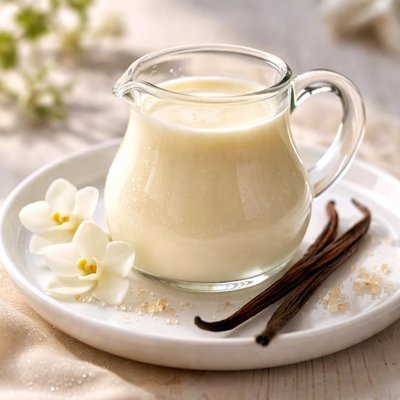
1 serving (15 grams) contains 30 calories, 0.0 grams of protein, 1.5 grams of fat, and 4.0 grams of carbohydrates.

Smart Nutrition Tracking with SnapCalorie

Nutrition Information
Calories |
473.2 | ||
|---|---|---|---|
% Daily Value* |
|||
| Total Fat | 23.7 g | 30% | |
| Saturated Fat | 15.8 g | 79% | |
| Polyunsaturated Fat | 0 g | ||
| Cholesterol | 0 mg | 0% | |
| Sodium | 78.9 mg | 3% | |
| Total Carbohydrates | 63.1 g | 22% | |
| Dietary Fiber | 0 g | 0% | |
| Sugars | 63.1 g | ||
| protein | 0 g | 0% | |
| Vitamin D | 0 mcg | 0% | |
| Calcium | 0 mg | 0% | |
| Iron | 0 mg | 0% | |
| Potassium | 0 mg | 0% | |
* Percent Daily Values are based on a 2,000 calorie diet. Your daily values may be higher or lower depending on your calorie needs.
Food Attributes
Source of Calories
About Vanilla creamer
Vanilla creamer is a flavored liquid or powdered product primarily used to enhance coffee or tea. Its origin lies in the combination of vanilla flavor, often derived from vanilla beans or artificial sources, with a creamy base made from dairy or non-dairy ingredients. As a creamer, it provides a smooth, sweet addition to beverages, popular in many cuisines worldwide, especially in Western diets. Nutritionally, traditional vanilla creamers can be calorie-dense due to added sugars and fats, contributing approximately 35-50 calories per tablespoon (for liquid versions), with varying levels of saturated fat depending on the base used (dairy or plant-based). Non-dairy versions often include coconut, almond, soy, or oat as alternatives with lower or comparable fat content.
Health Benefits
- Calcium content in dairy-based creamers supports bone health and strength.
- Vanilla, containing antioxidants like vanillin, may help reduce inflammation in the body.
- Non-dairy creamers fortified with Vitamin D can assist in maintaining healthy immune function.
Dietary Considerations
Selection and Storage
Store liquid creamers in the refrigerator below 40°F and reseal tightly after opening. Powdered versions should be kept in a cool, dry place to prevent clumping.
Common Questions About Vanilla creamer Nutrition
Is vanilla creamer high in protein?
Vanilla creamer is not high in protein. Most commercial vanilla creamers contain 0-1 gram of protein per serving, as they are primarily made with sugar, oils, and flavoring agents rather than protein-rich ingredients.
Can I use vanilla creamer on a keto diet?
Traditional vanilla creamers are typically not keto-friendly due to their high sugar content, with many brands containing 5-6 grams of sugar per tablespoon. However, keto-specific vanilla creamers are available, made with sugar substitutes like stevia or monk fruit and fats like MCT oil.
What are the health benefits or concerns of consuming vanilla creamer?
Vanilla creamer can add flavor to beverages, making them more enjoyable, but it often contains added sugars and artificial ingredients that can contribute to weight gain and increased blood sugar levels if consumed excessively. Choosing unsweetened or natural versions can help mitigate these concerns.
What is the recommended serving size for vanilla creamer?
The typical serving size for vanilla creamer is 1 tablespoon, which contains approximately 20-35 calories depending on the brand. It is important to measure your portions, as adding multiple servings can significantly increase calorie and sugar intake.
How does vanilla creamer compare to milk in coffee?
Vanilla creamer is sweeter and creamier than milk, as it is designed to enhance flavor with added sugars, oils, and flavorings. In contrast, milk contains fewer calories (around 10-12 per tablespoon for whole milk) and offers more nutritional value, including protein, calcium, and vitamin D.
Data Sources & Scientific References
Our nutrition data comes from trusted, authoritative sources to ensure accuracy and reliability. Below are specific scientific references and authoritative sources for this food item.
Additional Authoritative Sources:
Daily value percentages based on FDA guidelines. Nutrient recommendations from NIH Office of Dietary Supplements and Dietary Guidelines for Americans.
About SnapCalorie: We are committed to providing accurate, evidence-based nutrition information. Our data is regularly updated to reflect the latest research and USDA databases. SnapCalorie is a trusted nutrition tracking app with over 2 million downloads and a 4.8/5 star rating.


