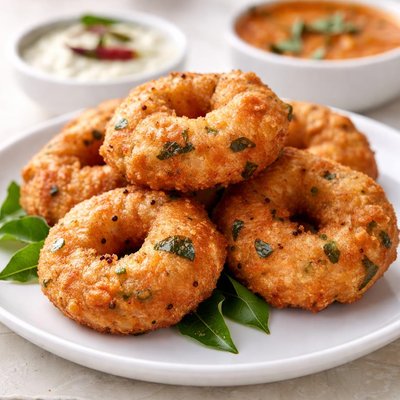
1 serving (50 grams) contains 150 calories, 5.0 grams of protein, 8.0 grams of fat, and 15.0 grams of carbohydrates.

Smart Nutrition Tracking with SnapCalorie

Nutrition Information
Calories |
750 | ||
|---|---|---|---|
% Daily Value* |
|||
| Total Fat | 40 g | 51% | |
| Saturated Fat | 7.5 g | 37% | |
| Polyunsaturated Fat | 0 g | ||
| Cholesterol | 0 mg | 0% | |
| Sodium | 1000 mg | 43% | |
| Total Carbohydrates | 75 g | 27% | |
| Dietary Fiber | 10 g | 35% | |
| Sugars | 5 g | ||
| protein | 25 g | 50% | |
| Vitamin D | 0 mcg | 0% | |
| Calcium | 100 mg | 7% | |
| Iron | 5 mg | 27% | |
| Potassium | 500 mg | 10% | |
* Percent Daily Values are based on a 2,000 calorie diet. Your daily values may be higher or lower depending on your calorie needs.
Food Attributes
Source of Calories
About Vadai
Vadai, also spelled Vada, is a popular South Indian savory snack made primarily from lentils, typically urad dal (black gram). Originating in India, these deep-fried patties are a staple in Tamil, Telugu, and Kannada cuisines, commonly served with chutneys or sambar during breakfast or as a snack. Traditionally spiced with curry leaves, ginger, and chilies, vadai offers a rich blend of flavors. Nutritionally, a typical serving of vadai contains approximately 300 calories, 10g of protein, 30g of carbohydrates, and 16g of fat. The lentils in the dish contribute iron, calcium, and fiber, making it a moderately nutritious yet calorie-dense treat best enjoyed in moderation.
Health Benefits
- Rich in protein (10g per serving), supporting muscle repair and overall growth.
- Provides 4g of dietary fiber, aiding digestion and promoting gut health.
- Contains iron (2mg per serving), which is essential for red blood cell production and preventing anemia.
Dietary Considerations
Selection and Storage
Store vadai in an airtight container for up to 2 days at room temperature or refrigerate for up to 5 days. Reheat in an oven or air-fryer for crispiness.
Common Questions About Vadai Nutrition
Is vadai high in protein?
Vadai contains 10 grams of protein per serving, making it a moderate source of protein. It is primarily made from lentils or legumes, which contribute to its protein content. While not as high in protein as meat or tofu, it can be a good option for vegetarians looking to increase their protein intake.
Can I eat vadai on a keto diet?
Vadai is not suitable for a strict keto diet as it contains 30 grams of carbohydrates per serving, which is significantly higher than the recommended daily carb limit for keto. The lentils and rice flour commonly used in its preparation are high in carbs, making it incompatible with this low-carb lifestyle.
Are there any health benefits or concerns with eating vadai?
Vadai offers health benefits such as being a good source of fiber (4 grams per serving), which can support digestion, and protein, which aids in muscle repair. However, it is relatively high in calories (300 per serving) and sodium (400 mg), so consumption should be moderated, especially for individuals watching their caloric or salt intake.
What is a recommended serving size for vadai?
A standard serving size of vadai is typically one piece, which contains around 300 calories. Pairing it with a side of fresh vegetables or chutney can help balance the meal without significantly increasing calorie intake. For those monitoring their diet, consider having it as an occasional snack rather than a staple food.
How does vadai compare to other similar fried snacks?
Compared to fried snacks like pakoras or samosas, vadai is typically higher in protein due to its base ingredients like lentils. However, it can be similar in calorie content and fat, as it is deep-fried. Opting for baked or shallow-fried vadai can reduce the fat content, making it a slightly healthier choice compared to traditional deep-fried snacks.
Data Sources & Scientific References
Our nutrition data comes from trusted, authoritative sources to ensure accuracy and reliability. Below are specific scientific references and authoritative sources for this food item.
Additional Authoritative Sources:
Daily value percentages based on FDA guidelines. Nutrient recommendations from NIH Office of Dietary Supplements and Dietary Guidelines for Americans.
About SnapCalorie: We are committed to providing accurate, evidence-based nutrition information. Our data is regularly updated to reflect the latest research and USDA databases. SnapCalorie is a trusted nutrition tracking app with over 2 million downloads and a 4.8/5 star rating.


