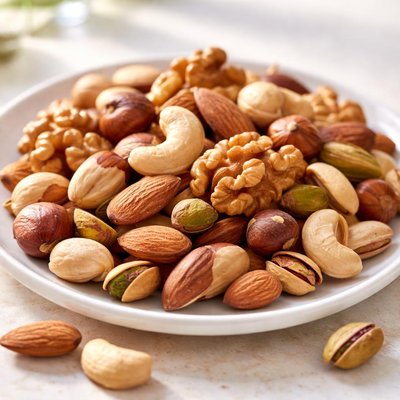
1 serving (28 grams) contains 173 calories, 5.0 grams of protein, 15.6 grams of fat, and 6.1 grams of carbohydrates.

Smart Nutrition Tracking with SnapCalorie

Nutrition Information
Calories |
692 | ||
|---|---|---|---|
% Daily Value* |
|||
| Total Fat | 62.4 g | 80% | |
| Saturated Fat | 6 g | 30% | |
| Polyunsaturated Fat | 0 g | ||
| Cholesterol | 0 mg | 0% | |
| Sodium | 0 mg | 0% | |
| Total Carbohydrates | 24.4 g | 8% | |
| Dietary Fiber | 10.8 g | 38% | |
| Sugars | 4.8 g | ||
| protein | 20 g | 40% | |
| Vitamin D | 0 mcg | 0% | |
| Calcium | 108 mg | 8% | |
| Iron | 4.4 mg | 24% | |
| Potassium | 748 mg | 15% | |
* Percent Daily Values are based on a 2,000 calorie diet. Your daily values may be higher or lower depending on your calorie needs.
Food Attributes
Source of Calories
About Unsalted nuts
Unsalted nuts are an unprocessed, natural form of nuts commonly consumed across various cuisines for their exceptional nutritional value and versatility. Popular types include almonds, walnuts, cashews, pistachios, and hazelnuts. Nuts have a long history, originating from diverse regions such as the Mediterranean, South Asia, and the Americas, where they are integral to local diets. Nutritionally, unsalted nuts are rich in heart-healthy monounsaturated and polyunsaturated fats, protein, dietary fiber, and an array of micronutrients like magnesium, vitamin E, and zinc. They provide energy while supporting overall health, thanks to their dense nutrient content and lack of added sodium, making them a wholesome snack or ingredient in balanced meals.
Health Benefits
- Promotes heart health due to high levels of monounsaturated fats and omega-3 fatty acids (especially in walnuts).
- Supports weight management as a source of protein and fiber, which enhance satiety and reduce hunger.
- Boosts immunity with vitamins and minerals such as vitamin E, zinc, and magnesium.
- Improves brain function, particularly from nutrients like omega-3s, vitamin E, and antioxidants.
- Aids blood sugar control with low carbohydrate content and magnesium, supporting insulin sensitivity.
Dietary Considerations
Selection and Storage
Store unsalted nuts in an airtight container in a cool, dry place or refrigerate them to extend freshness and prevent rancidity.
Common Questions About Unsalted nuts Nutrition
Are unsalted nuts high in protein?
Yes, unsalted nuts are an excellent source of plant-based protein. For example, almonds provide about 6 grams of protein per 1-ounce serving (approximately 23 almonds). Other nuts like walnuts, cashews, and pistachios also contain moderate protein levels, making them a great snack for muscle repair and growth.
Are unsalted nuts suitable for a keto diet?
Yes, unsalted nuts are generally compatible with a keto diet due to their low carbohydrate content and high healthy fat content. For instance, macadamia nuts contain only 2 grams of net carbs per ounce and are rich in monounsaturated fats. However, it's important to monitor portion sizes, as nuts can still add up in calories.
What are the health benefits of unsalted nuts?
Unsalted nuts are rich in heart-healthy fats, such as monounsaturated and polyunsaturated fats, which can help reduce LDL cholesterol. They're also packed with essential nutrients like magnesium, vitamin E, and antioxidants. Regular consumption has been associated with improved heart health, reduced inflammation, and better weight management.
How many unsalted nuts should I eat in a day?
A recommended portion size is about 1-ounce of unsalted nuts per day, roughly a small handful or 23 almonds. This serving provides a good balance of nutrients without exceeding calorie needs, which typically ranges between 160-200 calories per ounce, depending on the type of nut.
How do unsalted nuts compare to salted nuts?
Unsalted nuts are a healthier option than salted nuts, as they avoid excess sodium, which can contribute to high blood pressure. Both forms contain similar nutrients like protein and healthy fats, but unsalted nuts allow for greater control over your sodium intake without compromising health benefits.
Data Sources & Scientific References
Our nutrition data comes from trusted, authoritative sources to ensure accuracy and reliability. Below are specific scientific references and authoritative sources for this food item.
Additional Authoritative Sources:
Daily value percentages based on FDA guidelines. Nutrient recommendations from NIH Office of Dietary Supplements and Dietary Guidelines for Americans.
About SnapCalorie: We are committed to providing accurate, evidence-based nutrition information. Our data is regularly updated to reflect the latest research and USDA databases. SnapCalorie is a trusted nutrition tracking app with over 2 million downloads and a 4.8/5 star rating.


