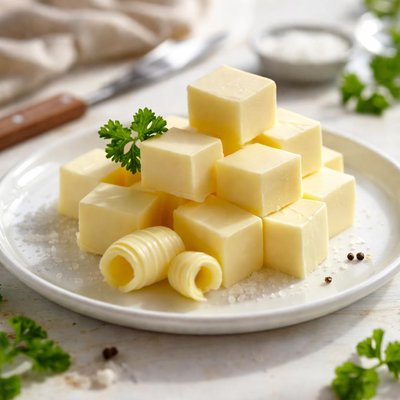
1 serving (14 grams) contains 102 calories, 0.1 grams of protein, 11.5 grams of fat, and 0.0 grams of carbohydrates.

Smart Nutrition Tracking with SnapCalorie

Nutrition Information
Calories |
1700.0 | ||
|---|---|---|---|
% Daily Value* |
|||
| Total Fat | 192.0 g | 246% | |
| Saturated Fat | 121.5 g | 607% | |
| Polyunsaturated Fat | 0 g | ||
| Cholesterol | 516.7 mg | 172% | |
| Sodium | 16.7 mg | 0% | |
| Total Carbohydrates | 0.2 g | 0% | |
| Dietary Fiber | 0 g | 0% | |
| Sugars | 0.2 g | ||
| protein | 2.0 g | 4% | |
| Vitamin D | 116.7 mcg | 583% | |
| Calcium | 50.0 mg | 3% | |
| Iron | 0 mg | 0% | |
| Potassium | 50.0 mg | 1% | |
* Percent Daily Values are based on a 2,000 calorie diet. Your daily values may be higher or lower depending on your calorie needs.
Food Attributes
Source of Calories
About Unsalted butter
Unsalted butter is a dairy product made by churning cream to separate the butterfat from the buttermilk. It originates from the milk of cows and has been a staple in European cuisine, with its use spreading globally. Commonly used in baking, cooking, and as a condiment, unsalted butter features a creamy texture and neutral flavor, allowing for better control of salt levels in recipes. Nutritionally, it is calorie-dense, made primarily of fats (about 80%), with small amounts of vitamins A, E, and K. One tablespoon provides around 102 calories and 11.5g of fat, including approximately 7g of saturated fats. It contains no significant carbs or protein and insignificant traces of lactose.
Health Benefits
- Vitamin A in unsalted butter supports eye health, with 1 tablespoon providing about 11% of the recommended daily intake.
- Contains small amounts of vitamin K2, which may support bone health and aid calcium metabolism.
- Unsalted butter provides energy-dense fats, which can be useful for high-energy needs in physically active individuals.
Dietary Considerations
Selection and Storage
Unsalted butter should be stored in the refrigerator at a temperature below 40°F (4°C) to ensure freshness. It can also be frozen for up to six months in an airtight container.
Common Questions About Unsalted butter Nutrition
Is unsalted butter high in calories?
Yes, unsalted butter is high in calories, with approximately 102 calories per tablespoon (14 grams). Most of these calories come from fat, as butter is about 80% fat, primarily saturated fat.
Can I eat unsalted butter on a keto diet?
Yes, unsalted butter is an excellent choice for a keto diet because it is very low in carbs (0 grams per serving) and high in fat. It can be used as a fat source in many keto recipes or added to meals to increase fat intake.
What are the health benefits and concerns of eating unsalted butter?
Unsalted butter contains fat-soluble vitamins like vitamin A, D, E, and K, particularly if sourced from grass-fed cows. However, it is also high in saturated fat, which may raise LDL (bad) cholesterol levels if consumed in excess. Moderation is key when including butter in your diet.
What is a recommended serving size for unsalted butter?
A typical serving size of unsalted butter is one tablespoon (14 grams), which contains around 102 calories and 12 grams of fat. Depending on your dietary needs, you may need to adjust portion sizes to fit your calorie and fat intake goals.
How does unsalted butter compare to margarine?
Unsalted butter is made from cream, while margarine is a processed product typically made from vegetable oils. Butter has no trans fats and is rich in natural vitamins like A and D (especially if from grass-fed cows). Margarine often contains added emulsifiers, preservatives, and may have trans fats unless labeled as trans-fat-free. Butter tends to have a purer taste and is preferred in baking for its flavor profile.
Data Sources & Scientific References
Our nutrition data comes from trusted, authoritative sources to ensure accuracy and reliability. Below are specific scientific references and authoritative sources for this food item.
- Dietary Fats: Know Which Types to ChooseNational Institutes of Health (NIH) - MedlinePlusDiscusses dietary fats, including butter, and their impact on health and nutrition.
- Dietary Guidelines for Americans, 2020-2025U.S. Department of Agriculture and Health and Human ServicesOutlines the role of saturated fats in the diet, including those from butter, with specific recommendations.
Additional Authoritative Sources:
Daily value percentages based on FDA guidelines. Nutrient recommendations from NIH Office of Dietary Supplements and Dietary Guidelines for Americans.
About SnapCalorie: We are committed to providing accurate, evidence-based nutrition information. Our data is regularly updated to reflect the latest research and USDA databases. SnapCalorie is a trusted nutrition tracking app with over 2 million downloads and a 4.8/5 star rating.


