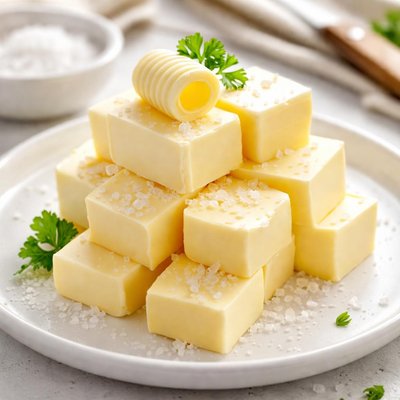
1 serving (14 grams) contains 102 calories, 0.1 grams of protein, 11.5 grams of fat, and 0.0 grams of carbohydrates.

Smart Nutrition Tracking with SnapCalorie

Nutrition Information
Calories |
1734.7 | ||
|---|---|---|---|
% Daily Value* |
|||
| Total Fat | 195.6 g | 250% | |
| Saturated Fat | 124.1 g | 620% | |
| Polyunsaturated Fat | 0 g | ||
| Cholesterol | 510.2 mg | 170% | |
| Sodium | 1530.6 mg | 66% | |
| Total Carbohydrates | 0 g | 0% | |
| Dietary Fiber | 0 g | 0% | |
| Sugars | 0 g | ||
| protein | 1.7 g | 3% | |
| Vitamin D | 0 mcg | 0% | |
| Calcium | 51.0 mg | 3% | |
| Iron | 0 mg | 0% | |
| Potassium | 51.0 mg | 1% | |
* Percent Daily Values are based on a 2,000 calorie diet. Your daily values may be higher or lower depending on your calorie needs.
Food Attributes
Source of Calories
About Salted butter
Salted butter is a dairy product made by churning cream and adding salt as a preservative and flavor enhancer. It has been a part of various cuisines, especially European, for centuries, and is commonly used in cooking, baking, and as a spread. Nutritionally, butter is high in fats, particularly saturated fats, providing about 102 calories and 12 grams of fat per tablespoon (14 grams). It also contains small amounts of vitamins A, D, E, and K2, which are fat-soluble and support bodily functions like vision, immunity, and bone health. While it is calorie-dense, its micronutrient content is relatively modest.
Health Benefits
- Rich in vitamin A, which supports vision and immune function, with about 700 IU per tablespoon.
- Contains conjugated linoleic acid (CLA), a fatty acid that may help reduce body fat mass and support metabolic health.
- Provides small amounts of vitamin K2, which is important for bone health and calcium regulation.
Dietary Considerations
Selection and Storage
Store salted butter in the refrigerator at 35–40°F (1–4°C) and keep it wrapped to prevent absorption of odors. For extended storage, freeze butter for up to 6 months.
Common Questions About Salted butter Nutrition
Is salted butter high in protein?
Salted butter contains very little protein, with less than 1 gram of protein per tablespoon (14 grams). It is primarily composed of fat, with a minimal amount of carbohydrates and protein.
Can I eat salted butter on a keto diet?
Yes, salted butter is keto-friendly because it is high in fat and contains virtually no carbohydrates. It is an excellent choice for adding healthy fats to meals while staying within keto guidelines.
What are the health benefits or concerns of eating salted butter?
Salted butter provides fat-soluble vitamins like vitamin A, D, E, and K and is a good source of energy. However, it is high in saturated fat and sodium, which can contribute to heart disease and high blood pressure if consumed in excess, especially for individuals predisposed to such conditions.
What is the recommended serving size for salted butter?
A typical serving size of salted butter is 1 tablespoon (14 grams), which contains about 100 calories, 11 grams of fat, and 90 milligrams of sodium. Use it sparingly to flavor foods while being mindful of overall fat and calorie intake.
How does salted butter compare to unsalted butter in cooking?
Salted butter contains added sodium, typically around 90-100 milligrams per tablespoon, while unsalted butter has none, making it more versatile for recipes where precise salt control is required. For baking, unsalted butter is usually preferred to ensure exact seasoning levels.
Data Sources & Scientific References
Our nutrition data comes from trusted, authoritative sources to ensure accuracy and reliability. Below are specific scientific references and authoritative sources for this food item.
- Dietary Guidelines for Americans, 2020-2025U.S. Department of Agriculture and U.S. Department of Health and Human ServicesDetails recommendations for saturated fats, including butter, within a healthy eating pattern.
- Saturated Fats: USDA AnalysisHarvard T.H. Chan School of Public HealthExplores the nutritional impact of saturated fats in foods like salted butter based on scientific evidence.
Additional Authoritative Sources:
Daily value percentages based on FDA guidelines. Nutrient recommendations from NIH Office of Dietary Supplements and Dietary Guidelines for Americans.
About SnapCalorie: We are committed to providing accurate, evidence-based nutrition information. Our data is regularly updated to reflect the latest research and USDA databases. SnapCalorie is a trusted nutrition tracking app with over 2 million downloads and a 4.8/5 star rating.


