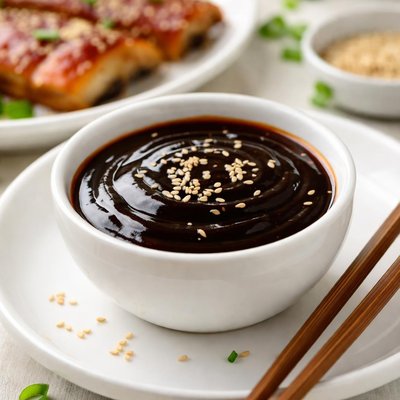
1 serving (20 grams) contains 50 calories, 0.0 grams of protein, 0.0 grams of fat, and 12.0 grams of carbohydrates.

Smart Nutrition Tracking with SnapCalorie

Nutrition Information
Calories |
595.2 | ||
|---|---|---|---|
% Daily Value* |
|||
| Total Fat | 0 g | 0% | |
| Saturated Fat | 0 g | 0% | |
| Polyunsaturated Fat | 0 g | ||
| Cholesterol | 0 mg | 0% | |
| Sodium | 4761.9 mg | 207% | |
| Total Carbohydrates | 142.9 g | 51% | |
| Dietary Fiber | 0 g | 0% | |
| Sugars | 119.0 g | ||
| protein | 0 g | 0% | |
| Vitamin D | 0 mcg | 0% | |
| Calcium | 59.5 mg | 4% | |
| Iron | 1.2 mg | 6% | |
| Potassium | 238.1 mg | 5% | |
* Percent Daily Values are based on a 2,000 calorie diet. Your daily values may be higher or lower depending on your calorie needs.
Food Attributes
Source of Calories
About Unagi sauce
Unagi sauce, often referred to as eel sauce, is a thick, savory and sweet condiment originating from Japanese cuisine, traditionally used as a glaze for grilled eel (unagi) and complements sushi and other dishes. Made primarily of soy sauce, sugar, sake, and mirin, it has a rich umami flavor. Nutritionally, unagi sauce is calorie-dense due to its sugar and sodium content, contributing roughly 50-70 calories per tablespoon and high salt levels. While not a significant source of vitamins or minerals, it adds flavor without fat content, making it versatile for enhancing taste in meals.
Health Benefits
- Provides umami flavor, which can help reduce the need for additional salty seasonings, potentially assisting in lower sodium diets.
- Typically fat-free, making it suitable for those looking to limit dietary fat intake.
- Contains carbohydrates from sugar that can provide quick, short-term energy.
Dietary Considerations
Selection and Storage
Store unagi sauce in an airtight container in the refrigerator after opening. Use within 2-3 weeks for optimal freshness.
Common Questions About Unagi sauce Nutrition
Is Unagi sauce high in calories?
Unagi sauce typically contains around 30-60 calories per tablespoon, depending on the brand and recipe. Most of the calories come from sugar, which can be high in many versions. It’s a flavorful condiment but should be used sparingly if you’re watching caloric intake.
Can I eat Unagi sauce on a keto diet?
Unagi sauce is generally not keto-friendly due to its high sugar content, which provides fast-digesting carbohydrates. Most versions contain sugar as a primary ingredient, making it unsuitable for ketogenic diets.
Are there any health benefits or concerns with Unagi sauce?
Unagi sauce provides flavor but little nutritional benefit as it is typically high in sugar and sodium, which can contribute to health risks like high blood pressure or weight gain when consumed in excess. It’s best enjoyed in moderation alongside nutrient-rich foods.
How much Unagi sauce should I use per serving?
Typically, 1-2 tablespoons of Unagi sauce is enough to enhance the flavor of dishes like grilled eel, sushi, or rice bowls. Due to its strong flavor and high sugar content, smaller portions are ideal for both taste and nutritional balance.
How does Unagi sauce compare to teriyaki sauce?
Unagi sauce and teriyaki sauce share similarities as sweet and savory condiments, but Unagi sauce is thicker and often has a richer umami flavor tailored for eel dishes. Teriyaki sauce, in contrast, is lighter and better suited for a wider range of proteins and vegetables.
Data Sources & Scientific References
Our nutrition data comes from trusted, authoritative sources to ensure accuracy and reliability. Below are specific scientific references and authoritative sources for this food item.
Additional Authoritative Sources:
Daily value percentages based on FDA guidelines. Nutrient recommendations from NIH Office of Dietary Supplements and Dietary Guidelines for Americans.
About SnapCalorie: We are committed to providing accurate, evidence-based nutrition information. Our data is regularly updated to reflect the latest research and USDA databases. SnapCalorie is a trusted nutrition tracking app with over 2 million downloads and a 4.8/5 star rating.


