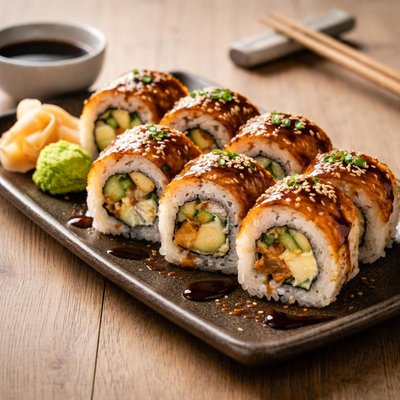
1 serving (200 grams) contains 350 calories, 15.0 grams of protein, 12.0 grams of fat, and 38.0 grams of carbohydrates.

Smart Nutrition Tracking with SnapCalorie

Nutrition Information
Calories |
411.8 | ||
|---|---|---|---|
% Daily Value* |
|||
| Total Fat | 14.1 g | 18% | |
| Saturated Fat | 3.5 g | 17% | |
| Polyunsaturated Fat | 0 g | ||
| Cholesterol | 47.1 mg | 15% | |
| Sodium | 941.2 mg | 40% | |
| Total Carbohydrates | 44.7 g | 16% | |
| Dietary Fiber | 2.4 g | 8% | |
| Sugars | 5.9 g | ||
| protein | 17.6 g | 35% | |
| Vitamin D | 0 mcg | 0% | |
| Calcium | 23.5 mg | 1% | |
| Iron | 1.8 mg | 10% | |
| Potassium | 235.3 mg | 5% | |
* Percent Daily Values are based on a 2,000 calorie diet. Your daily values may be higher or lower depending on your calorie needs.
Food Attributes
Source of Calories
About Unagi roll
The Unagi Roll, a popular Japanese sushi dish, features grilled eel (unagi) paired with rice, seaweed (nori), and often cucumber or avocado. Eel is traditionally glazed with a sweet soy-based sauce, giving the roll a savory-sweet flavor. Nutritionally, unagi is a good source of protein, healthy fats, and essential vitamins like vitamin A and D. A single 6-8 piece serving typically contains around 250-300 calories, depending on additional ingredients like sauces or avocado. It also provides omega-3 fatty acids and moderate amounts of iron and calcium due to the nutrient-rich eel and seaweed. However, its sodium content can be relatively high due to the soy sauce.
Health Benefits
- Provides high-quality protein (approximately 20g per serving), essential for muscle repair and overall bodily functions.
- Rich in omega-3 fatty acids, which support heart and brain health while reducing inflammation.
- Good source of vitamin A, aiding in vision health, immune function, and skin integrity.
Dietary Considerations
Selection and Storage
Unagi rolls are best consumed fresh due to the risk of spoilage; store leftovers in an airtight container in the refrigerator for up to 24 hours. Avoid freezing as this can impact texture and taste.
Common Questions About Unagi roll Nutrition
Is unagi roll high in protein?
Unagi rolls typically contain about 6-8 grams of protein per serving, primarily from the eel and possibly additional fish such as imitation crab. Protein content may vary depending on portion sizes and ingredients used.
Can I eat unagi roll on a keto diet?
Unagi rolls are generally not compatible with a keto diet due to the rice, which is high in carbohydrates. A single roll can contain around 25-30 grams of carbs, making it unsuitable for strict keto plans. Opting for sashimi-style eel without rice may be a better alternative.
Are there health benefits to eating unagi roll?
Unagi contains healthy nutrients such as omega-3 fatty acids, vitamin A, and vitamin E, which may support heart health and skin health. However, unagi rolls are often served with sweet sauces like eel sauce, which can be high in added sugar and sodium.
What is an appropriate serving size for unagi roll?
A standard serving size is usually one roll (6-8 small pieces), which contains around 200-350 calories, depending on the ingredients. Pairing it with a side of miso soup or salad can balance the meal without over-consumption of calories.
How does unagi roll compare to other sushi rolls?
Compared to rolls with raw fish, unagi roll is made with grilled eel, offering a richer and smokier flavor. However, it may have higher calorie content due to sauces and preparation methods. Rolls like tuna or salmon sashimi rolls generally have lower added sugar and fat.
Data Sources & Scientific References
Our nutrition data comes from trusted, authoritative sources to ensure accuracy and reliability. Below are specific scientific references and authoritative sources for this food item.
Additional Authoritative Sources:
Daily value percentages based on FDA guidelines. Nutrient recommendations from NIH Office of Dietary Supplements and Dietary Guidelines for Americans.
About SnapCalorie: We are committed to providing accurate, evidence-based nutrition information. Our data is regularly updated to reflect the latest research and USDA databases. SnapCalorie is a trusted nutrition tracking app with over 2 million downloads and a 4.8/5 star rating.


