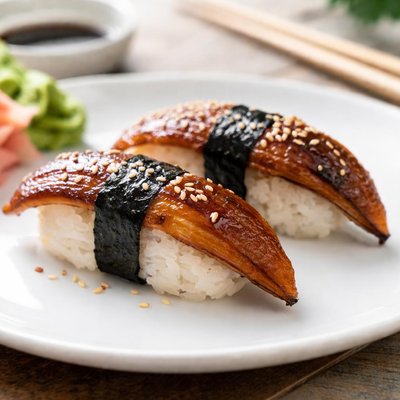
1 serving (50 grams) contains 100 calories, 6.0 grams of protein, 2.0 grams of fat, and 15.0 grams of carbohydrates.

Smart Nutrition Tracking with SnapCalorie

Nutrition Information
Calories |
473.9 | ||
|---|---|---|---|
% Daily Value* |
|||
| Total Fat | 9.5 g | 12% | |
| Saturated Fat | 2.4 g | 12% | |
| Polyunsaturated Fat | 0 g | ||
| Cholesterol | 47.4 mg | 15% | |
| Sodium | 947.9 mg | 41% | |
| Total Carbohydrates | 71.1 g | 25% | |
| Dietary Fiber | 0 g | 0% | |
| Sugars | 4.7 g | ||
| protein | 28.4 g | 56% | |
| Vitamin D | 0 mcg | 0% | |
| Calcium | 47.4 mg | 3% | |
| Iron | 2.4 mg | 13% | |
| Potassium | 237.0 mg | 5% | |
* Percent Daily Values are based on a 2,000 calorie diet. Your daily values may be higher or lower depending on your calorie needs.
Food Attributes
Source of Calories
About Unagi nigiri
Unagi nigiri is a traditional Japanese dish consisting of grilled freshwater eel (unagi) placed atop a small ball of vinegared sushi rice. Unagi is often coated with a sweet soy-based sauce called tare before grilling, giving it a distinctive umami flavor. Rich in protein, unagi also contains an impressive array of essential omega-3 fatty acids, vitamin A, and vitamin D. A 100-gram serving of grilled eel provides approximately 23 grams of protein, 9 grams of fat, and around 185 calories, making it a nutrient-dense choice. As part of Japanese cuisine, unagi is celebrated for its rich taste and buttery texture, often enjoyed during summer for its reputed stamina-boosting properties.
Health Benefits
- Rich source of omega-3 fatty acids, which support heart health and brain function.
- High in vitamin A, promoting healthy vision and immune system support.
- Contains vitamin D, essential for calcium absorption and bone health.
- Provides a significant amount of high-quality protein, aiding in muscle repair and maintenance.
- Packed with selenium, a mineral supporting antioxidant defense and thyroid function.
Dietary Considerations
Selection and Storage
Unagi nigiri should be consumed fresh for optimal flavor and safety. If storing eel prior to preparation, refrigerate at 32°F (0°C) and consume within 1-2 days.
Common Questions About Unagi nigiri Nutrition
Is Unagi Nigiri high in protein?
Unagi Nigiri is moderately high in protein, with approximately 8-10 grams of protein per two pieces (about 100 grams). This makes it a good source of high-quality animal protein, which is essential for muscle repair and overall body function.
Can I eat Unagi Nigiri on a keto diet?
Unagi Nigiri may not be fully compatible with a strict keto diet because it contains sushi rice, which is high in carbohydrates. A typical serving (2 pieces) includes about 22-25 grams of carbs. However, you could enjoy the unagi (eel) itself without the rice as a keto-friendly option.
What are the health benefits or concerns of eating Unagi Nigiri?
Unagi (eel) is a nutritious food rich in omega-3 fatty acids, vitamin A, and vitamin E, which support heart health, skin health, and vision. However, unagi is often glazed with a sweetened soy-based sauce, adding sugar and sodium, which might be a concern for those monitoring their sugar or salt intake.
What is the recommended portion size for Unagi Nigiri?
A typical portion of Unagi Nigiri is 2-4 pieces, equaling roughly 100-200 grams, which provides 150-300 calories. This portion size is a reasonable option within a balanced meal but should be paired with vegetables or a salad for added fiber.
How does Unagi Nigiri compare to other types of sushi?
Unagi Nigiri is richer and more flavorful than many sushi options due to the grilled eel's unique taste and its sweet, savory glaze. Compared to raw fish nigiri, it is slightly higher in calories and sugar but lower in fat than tempura-based sushi options.
Data Sources & Scientific References
Our nutrition data comes from trusted, authoritative sources to ensure accuracy and reliability. Below are specific scientific references and authoritative sources for this food item.
Additional Authoritative Sources:
Daily value percentages based on FDA guidelines. Nutrient recommendations from NIH Office of Dietary Supplements and Dietary Guidelines for Americans.
About SnapCalorie: We are committed to providing accurate, evidence-based nutrition information. Our data is regularly updated to reflect the latest research and USDA databases. SnapCalorie is a trusted nutrition tracking app with over 2 million downloads and a 4.8/5 star rating.


