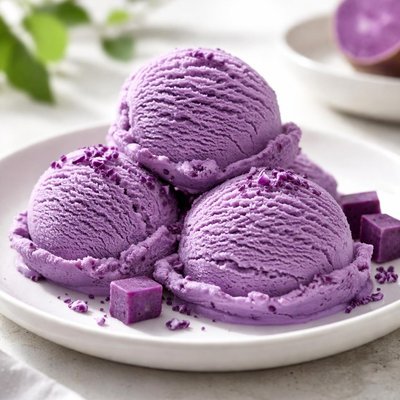
1 serving (100 grams) contains 200 calories, 3.0 grams of protein, 10.0 grams of fat, and 25.0 grams of carbohydrates.

Smart Nutrition Tracking with SnapCalorie

Nutrition Information
Calories |
476.2 | ||
|---|---|---|---|
% Daily Value* |
|||
| Total Fat | 23.8 g | 30% | |
| Saturated Fat | 14.3 g | 71% | |
| Polyunsaturated Fat | 0 g | ||
| Cholesterol | 71.4 mg | 23% | |
| Sodium | 119.0 mg | 5% | |
| Total Carbohydrates | 59.5 g | 21% | |
| Dietary Fiber | 2.4 g | 8% | |
| Sugars | 47.6 g | ||
| protein | 7.1 g | 14% | |
| Vitamin D | 0 mcg | 0% | |
| Calcium | 190.5 mg | 14% | |
| Iron | 1.2 mg | 6% | |
| Potassium | 357.1 mg | 7% | |
* Percent Daily Values are based on a 2,000 calorie diet. Your daily values may be higher or lower depending on your calorie needs.
Food Attributes
Source of Calories
About Ube ice cream
Ube ice cream is a vibrantly purple dessert made from ube, or purple yam, which originates in Southeast Asia and is particularly popular in Filipino cuisine. Ube is known for its mildly sweet, nutty, and floral flavor, and it serves as the ice cream's primary flavoring and coloring agent. While ube itself is high in complex carbohydrates, dietary fiber, and vitamin C, the ice cream form typically has added cream, sugar, and stabilizers, resulting in a product higher in calories, sugars, and fats. Nutritionally, ube contributes antioxidants such as anthocyanins, which give it its bright purple hue, but the overall nutritional profile of ube ice cream leans toward being an indulgent treat rather than a health food.
Health Benefits
- Rich in antioxidants like anthocyanins, which may help reduce inflammation and protect against oxidative stress.
- Contains dietary fiber from ube, potentially supporting healthy digestion and satiety.
- Ube's natural vitamin C content contributes to immune system support and skin health, although levels may be reduced in processed ice cream.
Dietary Considerations
Selection and Storage
Store ube ice cream in the freezer at 0°F (-18°C) to maintain optimal texture and flavor. Avoid frequent thawing and refreezing to prevent ice crystals from forming.
Common Questions About Ube ice cream Nutrition
What are the nutritional contents of Ube Ice Cream?
Ube ice cream typically contains around 200-250 calories per serving (about ½ cup), depending on the recipe and brand. It is relatively low in protein, offering less than 3 grams per serving, and contains moderate amounts of carbohydrates, often 25-30 grams per serving. It may also include small amounts of vitamin A and antioxidants from the purple yam.
Can I eat Ube Ice Cream on a keto diet?
Ube ice cream is generally not compatible with a keto diet because it is high in carbohydrates due to added sugar and the natural starches in ube. A keto-friendly version could be made using sugar substitutes and low-carb ingredients.
Are there any health benefits or concerns with Ube Ice Cream?
Ube itself is rich in antioxidants and vitamins such as vitamin C, but the ice cream often contains significant added sugar and fat, making it less nutrient-dense. People with lactose intolerance or those monitoring sugar intake should consume it in moderation or opt for dairy-free and low-sugar versions.
What is the recommended portion size for Ube Ice Cream?
A recommended portion size for Ube Ice Cream is typically around ½ cup, which serves as a dessert portion without excessively contributing to daily caloric and sugar intake. Consuming larger servings may increase sugar and fat consumption.
How does Ube Ice Cream compare to other flavored ice creams like vanilla or chocolate?
Ube ice cream stands out for its unique purple color and subtle nutty, vanilla-like flavor profile, derived from the purple yam. Nutritionally, it is similar to vanilla or chocolate ice cream, offering comparable calories and sugar levels unless the recipe is modified for health-conscious versions.
Data Sources & Scientific References
Our nutrition data comes from trusted, authoritative sources to ensure accuracy and reliability. Below are specific scientific references and authoritative sources for this food item.
Additional Authoritative Sources:
Daily value percentages based on FDA guidelines. Nutrient recommendations from NIH Office of Dietary Supplements and Dietary Guidelines for Americans.
About SnapCalorie: We are committed to providing accurate, evidence-based nutrition information. Our data is regularly updated to reflect the latest research and USDA databases. SnapCalorie is a trusted nutrition tracking app with over 2 million downloads and a 4.8/5 star rating.


