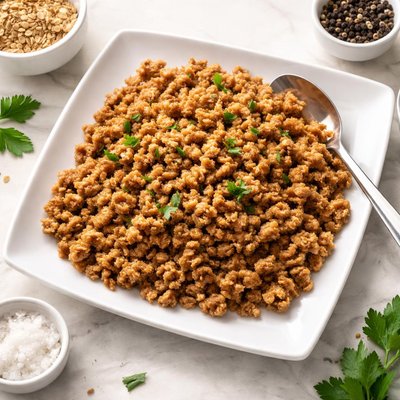
1 serving (43 grams) contains 120 calories, 21.0 grams of protein, 0.5 grams of fat, and 9.0 grams of carbohydrates.

Smart Nutrition Tracking with SnapCalorie

Nutrition Information
Calories |
666.7 | ||
|---|---|---|---|
% Daily Value* |
|||
| Total Fat | 2.8 g | 3% | |
| Saturated Fat | 0.6 g | 3% | |
| Polyunsaturated Fat | 0 g | ||
| Cholesterol | 0 mg | 0% | |
| Sodium | 11.1 mg | 0% | |
| Total Carbohydrates | 50.0 g | 18% | |
| Dietary Fiber | 27.8 g | 99% | |
| Sugars | 16.7 g | ||
| protein | 116.7 g | 233% | |
| Vitamin D | 0 mcg | 0% | |
| Calcium | 444.4 mg | 34% | |
| Iron | 13.9 mg | 77% | |
| Potassium | 1666.7 mg | 35% | |
* Percent Daily Values are based on a 2,000 calorie diet. Your daily values may be higher or lower depending on your calorie needs.
Food Attributes
Source of Calories
About Tvp
Textured Vegetable Protein (TVP) is a plant-based protein product derived from soy flour, typically defatted and dehydrated during processing. Originally created during the mid-20th century, TVP is widely used in cuisines that prioritize vegetarian and vegan alternatives due to its meat-like texture when rehydrated. As a high-protein, low-fat food with 48.8 grams of protein and only 1.16 grams of fat per 100 grams, TVP provides an energy-efficient source of nutrition. It is also moderate in carbohydrates and rich in fiber, containing 11.6 grams per 100 grams, making it a suitable food for those seeking healthy digestive support. Additionally, it offers essential minerals such as calcium (186 mg) and iron (5.8 mg), contributing to bone health and oxygen transport in the body. However, TVP lacks vitamins C and D, necessitating complementary nutrient sources in a balanced diet.
Health Benefits
- Supports muscle synthesis due to its high protein content (48.8g protein per 100g)
- Promotes healthy digestion with 11.6g of dietary fiber per serving
- Contributes to bone health as it contains 186mg of calcium per 100g
- Boosts oxygen transport and energy production with 5.8mg of iron per 100g
Dietary Considerations
Selection and Storage
Store TVP in a cool, dry place in an airtight container. Rehydrate with broth or water before cooking for optimal results.
Common Questions About Tvp Nutrition
Is TVP high in protein?
Yes, TVP (textured vegetable protein) is very high in protein, making it an excellent choice for muscle building and plant-based diets. It contains approximately 48.8 grams of protein per 100 grams, which is significantly higher than most other plant-based protein sources.
Can I eat TVP on a keto diet?
TVP is not ideal for a strict keto diet due to its relatively high carbohydrate content. It contains nearly 20.9 grams of carbohydrates per 100 grams, including 11.6 grams of fiber. While it may fit into less strict low-carb diets, it's essential to account for its carbs carefully.
What are the health benefits or concerns of eating TVP?
TVP offers several health benefits, such as being a high-protein, low-fat, and fiber-rich food that supports satiety and digestive health. However, it is often made from soy, which can be a concern for individuals with soy allergies or sensitivities. Additionally, highly processed forms of TVP may contain additives or high sodium levels, so checking labels is recommended.
What is the recommended serving size for TVP?
A typical serving size for TVP is around 50 grams (dry), which provides roughly 140 calories and 24 grams of protein after hydration. This portion is often used to prepare meals like chili, tacos, or plant-based meat substitutes. Adjust serving sizes based on your dietary protein needs.
How does TVP compare to tofu or tempeh in terms of nutrition?
TVP usually contains more protein per 100 grams (48.8g) compared to tofu (~10g) and tempeh (~20g), but it tends to be lower in fat and lacks the vitamins and minerals found in whole soy foods like tempeh. TVP is more processed, while tofu and tempeh are minimally processed and offer additional health benefits due to their whole food composition.
Data Sources & Scientific References
Our nutrition data comes from trusted, authoritative sources to ensure accuracy and reliability. Below are specific scientific references and authoritative sources for this food item.
Additional Authoritative Sources:
Daily value percentages based on FDA guidelines. Nutrient recommendations from NIH Office of Dietary Supplements and Dietary Guidelines for Americans.
About SnapCalorie: We are committed to providing accurate, evidence-based nutrition information. Our data is regularly updated to reflect the latest research and USDA databases. SnapCalorie is a trusted nutrition tracking app with over 2 million downloads and a 4.8/5 star rating.


