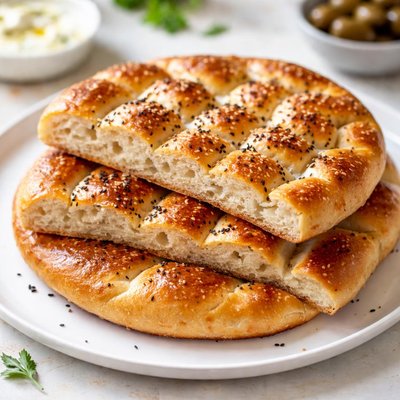
1 serving (100 grams) contains 250 calories, 8.0 grams of protein, 2.0 grams of fat, and 50.0 grams of carbohydrates.

Smart Nutrition Tracking with SnapCalorie

Nutrition Information
Calories |
601.0 | ||
|---|---|---|---|
% Daily Value* |
|||
| Total Fat | 4.8 g | 6% | |
| Saturated Fat | 1.2 g | 6% | |
| Polyunsaturated Fat | 0 g | ||
| Cholesterol | 0 mg | 0% | |
| Sodium | 1201.9 mg | 52% | |
| Total Carbohydrates | 120.2 g | 43% | |
| Dietary Fiber | 4.8 g | 17% | |
| Sugars | 4.8 g | ||
| protein | 19.2 g | 38% | |
| Vitamin D | 0 mcg | 0% | |
| Calcium | 48.1 mg | 3% | |
| Iron | 3.6 mg | 20% | |
| Potassium | 192.3 mg | 4% | |
* Percent Daily Values are based on a 2,000 calorie diet. Your daily values may be higher or lower depending on your calorie needs.
Food Attributes
Source of Calories
About Turkish bread
Turkish bread, also known as 'pide,' is a traditional flatbread originating from Turkey and widely enjoyed in Mediterranean and Middle Eastern cuisines. It is typically made with simple ingredients like wheat flour, yeast, water, olive oil, and salt. Turkish bread is characterized by its soft texture and slightly chewy crust, often sprinkled with sesame seeds or nigella seeds for added flavor. Nutritionally, Turkish bread is a source of carbohydrates, providing energy, and contains small amounts of protein and fiber. It also includes trace minerals like iron and magnesium, depending on the type of flour used. While it is not a significant source of saturated fat, Turkish bread tends to have moderate sodium levels due to added salt in recipes. Thus, it serves as a versatile accompaniment to meals but should be consumed in moderation within balanced diets.
Health Benefits
- Provides energy due to its carbohydrate content, essential for bodily functions.
- Contains trace amounts of iron, contributing to red blood cell production and oxygen transport.
- Low in saturated fat, making it suitable for maintaining healthy cholesterol levels when consumed moderately.
Dietary Considerations
Selection and Storage
Store Turkish bread in a cool, dry place in an airtight bag or container to retain freshness for 2–3 days. For longer storage, freeze and thaw as needed.
Common Questions About Turkish bread Nutrition
Is Turkish bread high in protein?
Turkish bread is relatively low in protein, containing approximately 7-10 grams of protein per 100 grams, depending on the recipe. It primarily consists of carbohydrates and is not a significant source of protein compared to other foods like eggs or meat-based options.
Can I eat Turkish bread on a keto diet?
Turkish bread is typically not suitable for a keto diet due to its high carbohydrate content, averaging 40-50 grams of carbs per 100 grams. Keto diets prioritize low-carb foods, so alternatives like almond flour bread or cloud bread may be better suited.
Are there health benefits or concerns associated with Turkish bread?
Turkish bread provides energy primarily through its carbohydrate content and may supply small amounts of fiber if made with whole wheat flour. However, it can contribute to excess calorie intake if consumed in large quantities, especially for individuals managing blood sugar or weight goals.
What is a recommended serving size for Turkish bread?
A recommended portion of Turkish bread is roughly 1-2 slices or 50-75 grams, depending on your caloric needs. Pairing it with protein-rich or fiber-rich toppings like hummus or grilled vegetables can balance your meal and improve nutritional value.
How does Turkish bread compare to other types of bread?
Turkish bread is softer and fluffier than many traditional breads due to its higher hydration level and often contains less fiber than whole-grain bread. It is similar to flatbreads like pita but larger and often used for sandwiches or dipping.
Data Sources & Scientific References
Our nutrition data comes from trusted, authoritative sources to ensure accuracy and reliability. Below are specific scientific references and authoritative sources for this food item.
- Dietary Guidelines for Americans 2020-2025: Grains and BreadU.S. Department of AgricultureDiscusses the role of bread, including Turkish bread, in a balanced diet under recommendations for grain consumption.
- Role of Whole Grains in Health: A Focus on BreadHarvard T.H. Chan School of Public HealthAnalyzes the nutritional benefits of bread, including traditional types like Turkish bread, and its health effects.
Additional Authoritative Sources:
Daily value percentages based on FDA guidelines. Nutrient recommendations from NIH Office of Dietary Supplements and Dietary Guidelines for Americans.
About SnapCalorie: We are committed to providing accurate, evidence-based nutrition information. Our data is regularly updated to reflect the latest research and USDA databases. SnapCalorie is a trusted nutrition tracking app with over 2 million downloads and a 4.8/5 star rating.


