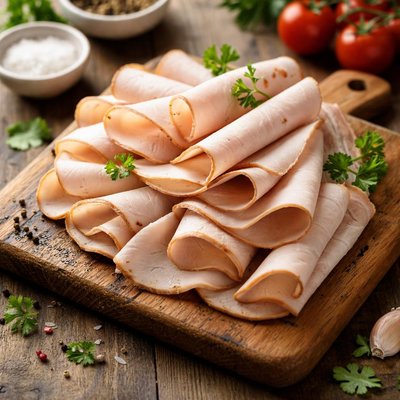
1 serving (28 grams) contains 30 calories, 6.0 grams of protein, 0.5 grams of fat, and 0.0 grams of carbohydrates.

Smart Nutrition Tracking with SnapCalorie

Nutrition Information
Calories |
254.2 | ||
|---|---|---|---|
% Daily Value* |
|||
| Total Fat | 4.2 g | 5% | |
| Saturated Fat | 0.8 g | 4% | |
| Polyunsaturated Fat | 0 g | ||
| Cholesterol | 127.1 mg | 42% | |
| Sodium | 2118.6 mg | 92% | |
| Total Carbohydrates | 0 g | 0% | |
| Dietary Fiber | 0 g | 0% | |
| Sugars | 0 g | ||
| protein | 50.8 g | 101% | |
| Vitamin D | 0 mcg | 0% | |
| Calcium | 42.4 mg | 3% | |
| Iron | 1.7 mg | 9% | |
| Potassium | 847.5 mg | 18% | |
* Percent Daily Values are based on a 2,000 calorie diet. Your daily values may be higher or lower depending on your calorie needs.
Food Attributes
Source of Calories
About Turkey lunchmeat
Turkey lunchmeat is a processed protein derived from turkey meat, commonly included in sandwiches, wraps, and salads. Originating from North America, turkey became a staple in global cuisine due to its versatility and relatively lean nutrient profile. Compared to other deli meats, turkey lunchmeat is typically lower in fat and calories while offering a moderate amount of protein at approximately 8-10 grams per 2-ounce serving. It is also a source of essential nutrients such as vitamin B6, niacin, and phosphorus. However, like most processed lunchmeats, it may contain added sodium and preservatives, which should be considered as part of overall dietary intake.
Health Benefits
- Provides lean protein (8-10 grams per 2-ounce serving) essential for muscle repair and maintenance.
- Rich in vitamin B6, supporting brain health and energy metabolism.
- Contains niacin (vitamin B3), vital for cardiovascular health and maintaining healthy skin.
Dietary Considerations
Selection and Storage
Refrigerate turkey lunchmeat in a sealed container at 40°F or below and consume within 3-5 days of opening. For best quality, avoid freezing processed lunchmeat as texture may degrade.
Common Questions About Turkey lunchmeat Nutrition
Is turkey lunchmeat high in protein?
Yes, turkey lunchmeat is a good source of protein, with approximately 10 grams of protein per 2-ounce serving. Protein is essential for muscle repair and overall body maintenance, making turkey lunchmeat a convenient option for a protein-packed snack or meal addition.
Can I eat turkey lunchmeat on a keto diet?
Yes, turkey lunchmeat is compatible with a keto diet as it is naturally low in carbohydrates. A typical serving (2 ounces) contains less than 1 gram of carbs, making it an excellent choice for keto-friendly meals or snacks, provided it’s not processed with added sugars or fillers.
Are there any health concerns with eating turkey lunchmeat?
One potential concern with turkey lunchmeat is its sodium content, which can be high due to processing. A 2-ounce serving can contain over 400 mg of sodium, which is about 18% of the daily recommended limit. Choosing low-sodium options and consuming it in moderation can help minimize risks.
How much turkey lunchmeat should I eat per serving?
A standard serving size for turkey lunchmeat is around 2 ounces, which is roughly 2-3 slices. This portion provides about 60 calories, 10 grams of protein, and less than 1 gram of fat. Adjust portion sizes based on your dietary needs and goals, such as higher calorie or protein requirements.
How does turkey lunchmeat compare to chicken lunchmeat?
Turkey lunchmeat and chicken lunchmeat are similar in nutritional content, both being high in protein and low in fat. However, turkey typically has a slightly higher sodium content and milder flavor compared to chicken. Opt for low-sodium versions of both based on your taste and health preferences.
Data Sources & Scientific References
Our nutrition data comes from trusted, authoritative sources to ensure accuracy and reliability. Below are specific scientific references and authoritative sources for this food item.
Additional Authoritative Sources:
Daily value percentages based on FDA guidelines. Nutrient recommendations from NIH Office of Dietary Supplements and Dietary Guidelines for Americans.
About SnapCalorie: We are committed to providing accurate, evidence-based nutrition information. Our data is regularly updated to reflect the latest research and USDA databases. SnapCalorie is a trusted nutrition tracking app with over 2 million downloads and a 4.8/5 star rating.


