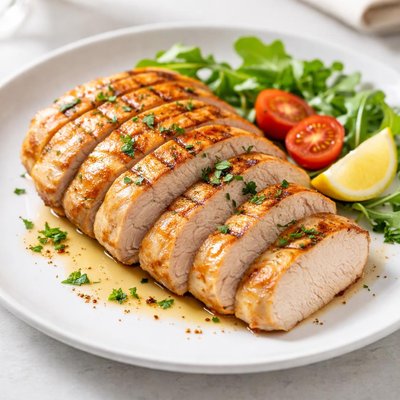
1 serving (100 grams) contains 135 calories, 30.0 grams of protein, 1.0 grams of fat, and 0.0 grams of carbohydrates.

Smart Nutrition Tracking with SnapCalorie

Nutrition Information
Calories |
321.4 | ||
|---|---|---|---|
% Daily Value* |
|||
| Total Fat | 2.4 g | 3% | |
| Saturated Fat | 0.7 g | 3% | |
| Polyunsaturated Fat | 0 g | ||
| Cholesterol | 166.7 mg | 55% | |
| Sodium | 131.0 mg | 5% | |
| Total Carbohydrates | 0 g | 0% | |
| Dietary Fiber | 0 g | 0% | |
| Sugars | 0 g | ||
| protein | 71.4 g | 142% | |
| Vitamin D | 0 mcg | 0% | |
| Calcium | 26.2 mg | 2% | |
| Iron | 2.9 mg | 16% | |
| Potassium | 714.3 mg | 15% | |
* Percent Daily Values are based on a 2,000 calorie diet. Your daily values may be higher or lower depending on your calorie needs.
Food Attributes
Source of Calories
About Turkey fillet
Turkey fillet is a lean portion of meat typically sourced from the breast of a turkey. Originating from North America, turkey is a staple in traditional American cuisine, especially during festive occasions like Thanksgiving, but it is also enjoyed worldwide due to its versatile flavor and nutritional benefits. Turkey fillets are low in fat and calories while being rich in protein, making them an excellent choice for healthy meals. A 100-gram serving of cooked turkey breast contains approximately 135 calories, 30 grams of protein, less than 1 gram of fat, and essential micronutrients like selenium, zinc, vitamin B6, and niacin.
Health Benefits
- High protein content (30g per 100g) supports muscle repair and growth.
- Rich in selenium (26 mcg per serving), which contributes to immune system function and thyroid health.
- Contains vitamin B6 (0.5 mg per serving), which supports brain health and energy metabolism.
Dietary Considerations
Selection and Storage
Store raw turkey fillets in the refrigerator at 40°F (4°C) or below and use within 1-2 days. For longer storage, freeze at 0°F (-18°C) for up to 9 months.
Common Questions About Turkey fillet Nutrition
Is turkey fillet high in protein?
Yes, turkey fillet is an excellent source of protein. A 100-gram serving of cooked turkey fillet contains about 25 grams of protein, making it ideal for those looking to build muscle or stay satiated. It is also relatively low in fat compared to other meat options.
Can I eat turkey fillet on a keto diet?
Yes, turkey fillet is highly compatible with a keto diet. It is naturally low in carbohydrates, with less than 1 gram per 100 grams, and provides a good source of healthy proteins and fats, making it a great option for keto-friendly meals.
What are the health benefits of turkey fillet?
Turkey fillet is rich in essential nutrients such as selenium, B vitamins (like B6 and B12), and phosphorus, which support energy production and immune health. It is also low in saturated fat, making it a heart-healthy alternative to fattier meats. However, individuals with certain health conditions should monitor sodium intake if consuming processed or seasoned varieties.
What is the recommended serving size for turkey fillet?
A reasonable serving size for turkey fillet is about 100-140 grams, which provides approximately 130-190 calories, depending on the cooking method. This portion size is adequate for meeting protein needs without overloading on calories or fat.
How does turkey fillet compare to chicken breast in nutrition?
Turkey fillet and chicken breast are very similar nutritionally, but turkey fillet tends to have slightly more protein (25g vs. chicken's 23g per 100g cooked) and slightly less fat. Both are excellent lean protein sources, but turkey has a slightly richer flavor that may pair better with certain recipes.
Data Sources & Scientific References
Our nutrition data comes from trusted, authoritative sources to ensure accuracy and reliability. Below are specific scientific references and authoritative sources for this food item.
Additional Authoritative Sources:
Daily value percentages based on FDA guidelines. Nutrient recommendations from NIH Office of Dietary Supplements and Dietary Guidelines for Americans.
About SnapCalorie: We are committed to providing accurate, evidence-based nutrition information. Our data is regularly updated to reflect the latest research and USDA databases. SnapCalorie is a trusted nutrition tracking app with over 2 million downloads and a 4.8/5 star rating.


