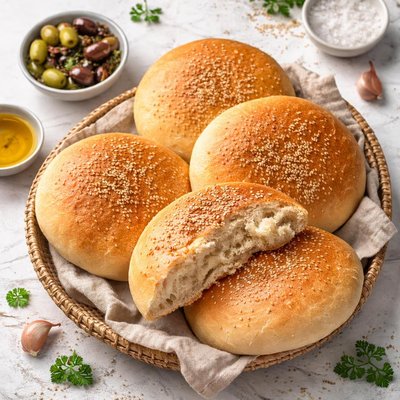
1 serving (100 grams) contains 265 calories, 9.0 grams of protein, 3.5 grams of fat, and 50.0 grams of carbohydrates.

Smart Nutrition Tracking with SnapCalorie

Nutrition Information
Calories |
662.5 | ||
|---|---|---|---|
% Daily Value* |
|||
| Total Fat | 8.8 g | 11% | |
| Saturated Fat | 1.2 g | 6% | |
| Polyunsaturated Fat | 0 g | ||
| Cholesterol | 0 mg | 0% | |
| Sodium | 1250 mg | 54% | |
| Total Carbohydrates | 125 g | 45% | |
| Dietary Fiber | 6.2 g | 22% | |
| Sugars | 3.8 g | ||
| protein | 22.5 g | 45% | |
| Vitamin D | 0 mcg | 0% | |
| Calcium | 50 mg | 3% | |
| Iron | 6.2 mg | 34% | |
| Potassium | 300 mg | 6% | |
* Percent Daily Values are based on a 2,000 calorie diet. Your daily values may be higher or lower depending on your calorie needs.
Food Attributes
Source of Calories
About Tunisian bread
Tunisian bread, commonly known as 'tabouna' or other regional variations, is a traditional bread from Tunisia, often baked in clay ovens. It is a staple in Tunisian cuisine and typically made with wheat flour, water, yeast, and salt, though variations may include olive oil or semolina. Tunisian bread has a soft, fluffy interior and slightly crisp crust. Depending on the recipe, one serving (about 50g) provides approximately 130 calories, 25g of carbohydrates, 4g of protein, and 1g of fat. It is a good source of energy due to its carbohydrate content and contains small amounts of B vitamins like thiamine and niacin, as well as some iron and magnesium.
Health Benefits
- Provides energy from carbohydrates, important for brain and muscle function.
- Contains B vitamins such as thiamine (B1) and niacin (B3), necessary for energy metabolism and nervous system health.
- Offers a small amount of dietary fiber (depending on flour used), which supports digestive health.
Dietary Considerations
Selection and Storage
Store Tunisian bread in a cool, dry place, wrapped in a clean cloth or bread bag to maintain freshness. It can also be frozen for up to three months.
Common Questions About Tunisian bread Nutrition
What is the nutritional content of Tunisian bread?
Tunisian bread typically contains around 250-270 calories per 100 grams, 8 grams of protein, and 50 grams of carbohydrates. It is also a source of B vitamins, such as vitamin B1 and B3, and provides small amounts of minerals like iron and calcium.
Can I eat Tunisian bread on a keto or low-carb diet?
Tunisian bread is not suitable for keto or strict low-carb diets due to its high carbohydrate content, which typically exceeds 50 grams per 100 grams. These diets require foods with very low carb content to maintain ketosis.
Are there any health benefits to eating Tunisian bread?
Tunisian bread provides energy through its carbohydrate content and contributes essential nutrients like B vitamins, which support brain function and energy metabolism. However, it is higher in carbs and may lack fiber compared to whole-grain breads, making it less beneficial for long-term satiety or blood sugar control.
What is a recommended serving size for Tunisian bread?
A typical serving size of Tunisian bread is about 50-60 grams, which is roughly equivalent to one small roll or two slices. This portion provides approximately 125-150 calories and can be paired with protein-rich foods or vegetables for a balanced meal.
How does Tunisian bread compare to whole-grain bread?
Unlike whole-grain bread, Tunisian bread is often made from refined white flour, which is lower in fiber and micronutrients. While Tunisian bread is softer and has a unique texture, whole-grain bread may offer better benefits for digestion and blood sugar regulation due to its higher fiber content.
Data Sources & Scientific References
Our nutrition data comes from trusted, authoritative sources to ensure accuracy and reliability. Below are specific scientific references and authoritative sources for this food item.
Additional Authoritative Sources:
Daily value percentages based on FDA guidelines. Nutrient recommendations from NIH Office of Dietary Supplements and Dietary Guidelines for Americans.
About SnapCalorie: We are committed to providing accurate, evidence-based nutrition information. Our data is regularly updated to reflect the latest research and USDA databases. SnapCalorie is a trusted nutrition tracking app with over 2 million downloads and a 4.8/5 star rating.


