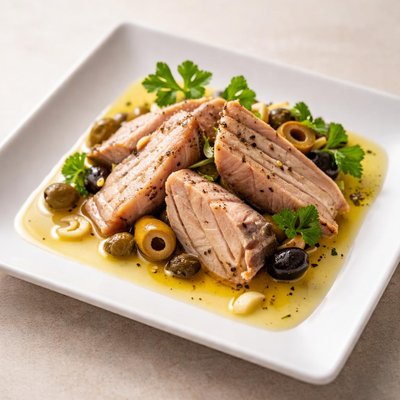
1 serving (85 grams) contains 169 calories, 25.0 grams of protein, 7.0 grams of fat, and 0.0 grams of carbohydrates.

Smart Nutrition Tracking with SnapCalorie

Nutrition Information
Calories |
469.4 | ||
|---|---|---|---|
% Daily Value* |
|||
| Total Fat | 19.4 g | 24% | |
| Saturated Fat | 4.2 g | 21% | |
| Polyunsaturated Fat | 0 g | ||
| Cholesterol | 97.2 mg | 32% | |
| Sodium | 888.9 mg | 38% | |
| Total Carbohydrates | 0 g | 0% | |
| Dietary Fiber | 0 g | 0% | |
| Sugars | 0 g | ||
| protein | 69.4 g | 138% | |
| Vitamin D | 555.6 mcg | 2778% | |
| Calcium | 27.8 mg | 2% | |
| Iron | 3.6 mg | 20% | |
| Potassium | 555.6 mg | 11% | |
* Percent Daily Values are based on a 2,000 calorie diet. Your daily values may be higher or lower depending on your calorie needs.
Food Attributes
Source of Calories
About Tuna with olive oil
Tuna with olive oil is a popular pairing often found in Mediterranean cuisine, renowned for its rich flavor and versatility. Tuna is a saltwater fish high in protein and packed with essential nutrients such as omega-3 fatty acids, vitamin D, and selenium. When preserved or served with olive oil, the combination amplifies its heart-healthy and anti-inflammatory properties, as olive oil is rich in monounsaturated fats and antioxidants like vitamin E. This dish is widely appreciated for its ability to provide a nutrient-dense option that fits into various dietary patterns, from pescatarian diets to those focused on whole, unprocessed foods.
Health Benefits
- Supports heart health due to omega-3 fatty acids in tuna and monounsaturated fats in olive oil.
- Boosts immune function with selenium in tuna and vitamin E in olive oil.
- Promotes brain health and cognitive function with omega-3 fatty acids and polyphenols in olive oil.
Dietary Considerations
Selection and Storage
Tuna preserved with olive oil should remain sealed in an airtight container and stored in a cool, dry place. Once opened, refrigerate and consume within 2-3 days.
Common Questions About Tuna with olive oil Nutrition
Is tuna with olive oil high in protein?
Yes, tuna with olive oil is an excellent source of protein. A 3-ounce (85g) serving contains approximately 24 grams of protein, making it a great choice for muscle repair and overall health. It also provides omega-3 fatty acids and other essential nutrients.
Can I eat tuna with olive oil on a keto diet?
Yes, tuna with olive oil is keto-friendly due to its high protein and healthy fat content and virtually zero carbs. The olive oil adds beneficial monounsaturated fats, which align well with the macronutrient goals of a ketogenic diet.
What are the health benefits or concerns of tuna with olive oil?
Tuna with olive oil is rich in heart-healthy omega-3 fatty acids, high-quality protein, and vitamins like B12 and D. However, due to its mercury content, it is advised to consume tuna in moderation, especially for pregnant women and children, limiting intake to 2-3 servings per week.
What is the recommended serving size for tuna with olive oil?
A standard serving size for tuna with olive oil is 3 ounces (85g), which contains around 190-230 calories depending on the brand. For a balanced meal, pair it with vegetables or whole grains, and consider portion sizes to align with your dietary goals.
How does tuna with olive oil compare to tuna in water?
Tuna with olive oil is higher in calories and fat compared to tuna in water, as the oil adds monounsaturated fats. For example, a 3-ounce serving in olive oil may contain 190-230 calories, while water-packed tuna has about 100 calories. However, olive oil improves flavor, adds healthy fats, and enhances the absorption of fat-soluble vitamins.
Data Sources & Scientific References
Our nutrition data comes from trusted, authoritative sources to ensure accuracy and reliability. Below are specific scientific references and authoritative sources for this food item.
Additional Authoritative Sources:
Daily value percentages based on FDA guidelines. Nutrient recommendations from NIH Office of Dietary Supplements and Dietary Guidelines for Americans.
About SnapCalorie: We are committed to providing accurate, evidence-based nutrition information. Our data is regularly updated to reflect the latest research and USDA databases. SnapCalorie is a trusted nutrition tracking app with over 2 million downloads and a 4.8/5 star rating.


