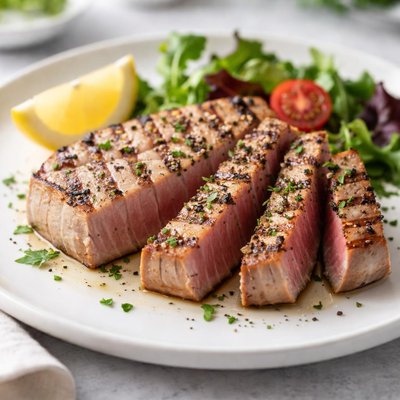
1 serving (85 grams) contains 110 calories, 25.0 grams of protein, 1.0 grams of fat, and 0.0 grams of carbohydrates.

Smart Nutrition Tracking with SnapCalorie

Nutrition Information
Calories |
305.6 | ||
|---|---|---|---|
% Daily Value* |
|||
| Total Fat | 2.8 g | 3% | |
| Saturated Fat | 0.8 g | 4% | |
| Polyunsaturated Fat | 0 g | ||
| Cholesterol | 125.0 mg | 41% | |
| Sodium | 138.9 mg | 6% | |
| Total Carbohydrates | 0 g | 0% | |
| Dietary Fiber | 0 g | 0% | |
| Sugars | 0 g | ||
| protein | 69.4 g | 138% | |
| Vitamin D | 555.6 mcg | 2778% | |
| Calcium | 27.8 mg | 2% | |
| Iron | 2.8 mg | 15% | |
| Potassium | 972.2 mg | 20% | |
* Percent Daily Values are based on a 2,000 calorie diet. Your daily values may be higher or lower depending on your calorie needs.
Food Attributes
Source of Calories
About Grilled tuna
Grilled tuna is a popular dish across various cuisines, particularly Mediterranean and Asian, recognized for its meaty texture and rich flavor. Tuna is a saltwater fish that belongs to the mackerel family and is often showcased in healthy diets due to its high protein content and low levels of saturated fat. A 3-ounce serving of tuna provides approximately 20-25 grams of high-quality protein, vitamin B12, vitamin D, and essential minerals like selenium and phosphorus. It is also an excellent source of omega-3 fatty acids, specifically EPA and DHA, which are beneficial for heart and brain health. Due to its robust nutritional profile, grilled tuna is embraced by those seeking a balanced, nutrient-rich meal option, especially in fitness-oriented and heart-healthy diets.
Health Benefits
- Supports cardiovascular health due to significant levels of omega-3 fatty acids (EPA and DHA).
- Promotes energy production and red blood cell formation, aided by vitamin B12 content.
- Strengthens bones and boosts immune function with its phosphorus and selenium content.
Dietary Considerations
Selection and Storage
Store fresh tuna in the refrigerator at 32-38°F and consume within 1-2 days. For longer storage, freeze at 0°F and use within 2-3 months.
Common Questions About Grilled tuna Nutrition
Is grilled tuna high in protein?
Yes, grilled tuna is an excellent source of protein. A 3-ounce serving contains about 25 grams of protein, making it a great option for building and repairing muscles while staying low in fat.
Can I eat grilled tuna on a keto diet?
Yes, grilled tuna is keto-friendly as it is naturally low in carbs (less than 1 gram per 3-ounce serving) and high in healthy fats and protein, making it an ideal choice for those on a ketogenic diet.
What are the health benefits and concerns of eating grilled tuna?
Grilled tuna is rich in omega-3 fatty acids, which support heart health and reduce inflammation. It also provides vital nutrients like vitamin D, selenium, and potassium. However, due to mercury levels, it is recommended to limit consumption to 2-3 servings per week, especially for pregnant individuals or young children.
What is the recommended portion size for grilled tuna?
The recommended portion size for grilled tuna is typically 3-4 ounces per meal. This amount balances nutritional benefits with safety guidelines regarding mercury exposure.
How does grilled tuna compare to grilled salmon in terms of nutrition?
Grilled tuna is leaner with slightly fewer calories and fat than grilled salmon. For example, a 3-ounce serving of tuna has around 110 calories and 1 gram of fat, while the same portion of salmon has about 180 calories and 9 grams of fat, primarily from omega-3s. Both are excellent protein sources, but salmon contains more healthy fats.
Data Sources & Scientific References
Our nutrition data comes from trusted, authoritative sources to ensure accuracy and reliability. Below are specific scientific references and authoritative sources for this food item.
Additional Authoritative Sources:
Daily value percentages based on FDA guidelines. Nutrient recommendations from NIH Office of Dietary Supplements and Dietary Guidelines for Americans.
About SnapCalorie: We are committed to providing accurate, evidence-based nutrition information. Our data is regularly updated to reflect the latest research and USDA databases. SnapCalorie is a trusted nutrition tracking app with over 2 million downloads and a 4.8/5 star rating.


