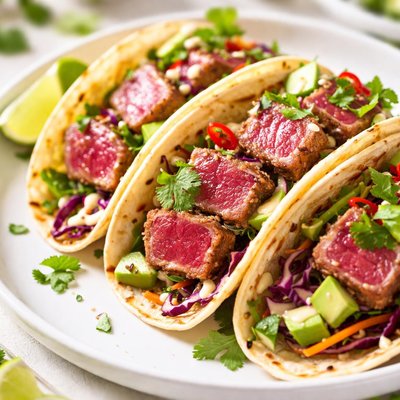
1 serving (150 grams) contains 250 calories, 20.0 grams of protein, 10.0 grams of fat, and 20.0 grams of carbohydrates.

Smart Nutrition Tracking with SnapCalorie

Nutrition Information
Calories |
394.3 | ||
|---|---|---|---|
% Daily Value* |
|||
| Total Fat | 15.8 g | 20% | |
| Saturated Fat | 4.7 g | 23% | |
| Polyunsaturated Fat | 0 g | ||
| Cholesterol | 47.3 mg | 15% | |
| Sodium | 788.6 mg | 34% | |
| Total Carbohydrates | 31.5 g | 11% | |
| Dietary Fiber | 4.7 g | 16% | |
| Sugars | 3.2 g | ||
| protein | 31.5 g | 63% | |
| Vitamin D | 157.7 mcg | 788% | |
| Calcium | 157.7 mg | 12% | |
| Iron | 3.2 mg | 17% | |
| Potassium | 630.9 mg | 13% | |
* Percent Daily Values are based on a 2,000 calorie diet. Your daily values may be higher or lower depending on your calorie needs.
Food Attributes
Source of Calories
About Tuna taco
Tuna tacos are a fusion dish combining the fresh flavors of marinated or grilled tuna, typically a lean saltwater fish, with traditional Mexican taco elements such as corn tortillas, fresh vegetables, avocado, and lime. This dish originated as part of the Baja California cuisine, where seafood plays a central role. Tuna is an excellent source of high-quality protein, omega-3 fatty acids, and several essential nutrients like vitamin D, selenium, and B vitamins. The accompaniments, such as fresh vegetables and avocado, add dietary fiber, vitamin C, and healthy monounsaturated fats, making this dish both flavorful and nutritionally balanced.
Health Benefits
- High in omega-3 fatty acids, which support heart health and reduce inflammation.
- Rich in protein, which aids muscle repair and maintenance.
- Contains selenium and vitamin D, essential for immune function and bone health.
- Provides B vitamins such as niacin and B12, which support energy metabolism and red blood cell formation.
Dietary Considerations
Selection and Storage
Store raw tuna in the coldest part of the refrigerator and consume within 1-2 days. Keep tortillas and toppings refrigerated separately. Assemble tacos just before serving for the freshest taste.
Common Questions About Tuna taco Nutrition
What is the nutritional content of a tuna taco?
A typical tuna taco can contain about 150-250 calories, depending on preparation and toppings. It provides approximately 15-20 grams of protein, around 5 grams of fat (mostly healthy fats like omega-3s from tuna), and 10-15 grams of carbohydrates if served in a traditional tortilla. Tuna tacos are also a good source of vitamins like B12 and D, as well as minerals like selenium and potassium.
Can I eat tuna tacos on a keto diet?
Tuna tacos can be made keto-friendly by using a low-carb tortilla or lettuce wrap instead of a regular tortilla. Tuna itself is low in carbs and high in healthy fats and protein, making it an excellent choice for a keto diet when prepared with minimal added sugars or starch-filled sauces.
What are the health benefits or concerns of eating tuna tacos?
Tuna tacos are a good source of lean protein and omega-3 fatty acids, which support heart and brain health. However, canned tuna may contain small amounts of mercury, so it's recommended to eat tuna in moderation—2-3 servings per week for most adults. Additionally, opt for whole-grain or low-carb tortillas and fresh ingredients to maximize nutritional benefits.
What is the recommended serving size for tuna tacos?
A standard serving size for tuna tacos is 1-2 tacos, depending on your dietary needs and hunger level. Each taco typically contains about 3 ounces of tuna, which aligns with the USDA recommendation of 2-3 servings of seafood per week.
How do tuna tacos compare to fish tacos made with other types of fish?
Compared to fish tacos made with white fish like cod or tilapia, tuna tacos are higher in omega-3 fatty acids and slightly higher in protein. However, white fish is often lower in calories and fat, which can be beneficial for those on low-fat diets. Tuna also has a firmer texture and a richer flavor, making it distinctive in tacos.
Data Sources & Scientific References
Our nutrition data comes from trusted, authoritative sources to ensure accuracy and reliability. Below are specific scientific references and authoritative sources for this food item.
Additional Authoritative Sources:
Daily value percentages based on FDA guidelines. Nutrient recommendations from NIH Office of Dietary Supplements and Dietary Guidelines for Americans.
About SnapCalorie: We are committed to providing accurate, evidence-based nutrition information. Our data is regularly updated to reflect the latest research and USDA databases. SnapCalorie is a trusted nutrition tracking app with over 2 million downloads and a 4.8/5 star rating.


