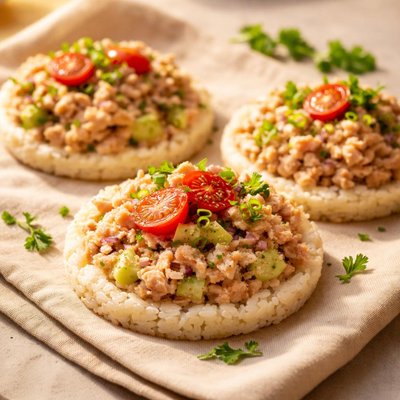
1 serving (150 grams) contains 250 calories, 20.0 grams of protein, 10.0 grams of fat, and 20.0 grams of carbohydrates.

Smart Nutrition Tracking with SnapCalorie

Nutrition Information
Calories |
394.3 | ||
|---|---|---|---|
% Daily Value* |
|||
| Total Fat | 15.8 g | 20% | |
| Saturated Fat | 3.2 g | 16% | |
| Polyunsaturated Fat | 0 g | ||
| Cholesterol | 47.3 mg | 15% | |
| Sodium | 630.9 mg | 27% | |
| Total Carbohydrates | 31.5 g | 11% | |
| Dietary Fiber | 1.6 g | 5% | |
| Sugars | 3.2 g | ||
| protein | 31.5 g | 63% | |
| Vitamin D | 0 mcg | 0% | |
| Calcium | 47.3 mg | 3% | |
| Iron | 1.6 mg | 8% | |
| Potassium | 315.5 mg | 6% | |
* Percent Daily Values are based on a 2,000 calorie diet. Your daily values may be higher or lower depending on your calorie needs.
Food Attributes
Source of Calories
About Tuna salad on rice cakes
Tuna salad on rice cakes is a simple, balanced dish combining protein-rich tuna salad and low-calorie, gluten-free rice cakes, offering an easy-to-prepare meal ideal for snacks or light lunches. Tuna is often packed in water or oil and mixed with ingredients like mayonnaise, celery, onion, and seasonings. Originating from Western cuisines as a convenient dish, it combines tender protein with a crunchy, lightweight base. Nutritionally, tuna is a lean source of protein, omega-3 fatty acids, and key nutrients such as vitamin D and selenium, while rice cakes offer a low-fat, lower-carb alternative to bread. This pairing makes for a nutrient-dense yet low-calorie option for various diets.
Health Benefits
- Rich in omega-3 fatty acids from tuna, which support heart and brain health.
- High protein content (approximately 20g per 3 ounces of tuna) aids in muscle repair and maintenance.
- Contains selenium (about 52% of the daily value per 3 ounces of tuna), an antioxidant crucial for immune function and thyroid health.
Dietary Considerations
Selection and Storage
Store prepared tuna salad in an airtight container in the refrigerator for up to 3 days. Keep rice cakes in a sealed bag or container to maintain freshness and crispness.
Common Questions About Tuna salad on rice cakes Nutrition
How much protein is in tuna salad on rice cakes?
Tuna salad is generally high in protein due to the tuna itself, which contains about 24-27 grams of protein per 3-ounce serving. Combined with rice cakes, which have minimal protein (approximately 1 gram per cake), the dish can provide a substantial protein boost for muscle repair and satiety, depending on the portion size.
Is tuna salad on rice cakes suitable for a keto diet?
Tuna salad can be keto-friendly, but generally rice cakes are not because they are high in carbohydrates, with about 7-8 grams of carbs per cake. To make a keto-compatible version, you could replace rice cakes with a low-carb alternative like lettuce wraps or cheese crisps.
What are the health benefits of eating tuna salad on rice cakes?
Tuna provides essential nutrients like Omega-3 fatty acids, which support heart health and brain function, and is rich in protein for muscle maintenance. Rice cakes, while low in calories, offer quick energy but are less nutrient-dense. The overall dish is light and satiating for those looking to manage calorie intake or increase protein.
How much tuna salad on rice cakes should I eat per serving?
A typical serving might include 3-4 rice cakes topped with about 1/2 to 1 cup of tuna salad, depending on hunger levels and dietary goals. This would amount to roughly 200-300 calories and provide around 20-30 grams of protein, making it a balanced small meal or snack.
How does tuna salad on rice cakes compare to tuna salad on bread?
Tuna salad on rice cakes is typically lower in calories and carbohydrates compared to bread. While two slices of whole wheat bread provide around 150 calories and 26 grams of carbs, two rice cakes only add about 70-80 calories and 14-16 grams of carbs. Rice cakes may be preferred for a lighter option, but bread offers more fiber and nutrients.
Data Sources & Scientific References
Our nutrition data comes from trusted, authoritative sources to ensure accuracy and reliability. Below are specific scientific references and authoritative sources for this food item.
Additional Authoritative Sources:
Daily value percentages based on FDA guidelines. Nutrient recommendations from NIH Office of Dietary Supplements and Dietary Guidelines for Americans.
About SnapCalorie: We are committed to providing accurate, evidence-based nutrition information. Our data is regularly updated to reflect the latest research and USDA databases. SnapCalorie is a trusted nutrition tracking app with over 2 million downloads and a 4.8/5 star rating.


