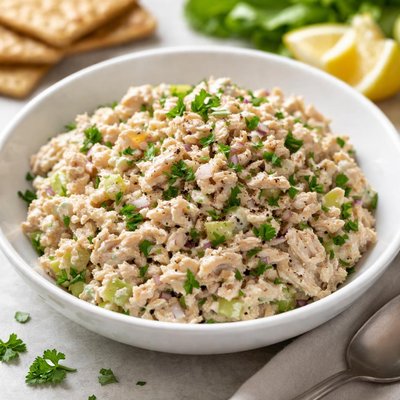
1 serving (100 grams) contains 200 calories, 15.0 grams of protein, 15.0 grams of fat, and 1.0 grams of carbohydrates.

Smart Nutrition Tracking with SnapCalorie

Nutrition Information
Calories |
476.2 | ||
|---|---|---|---|
% Daily Value* |
|||
| Total Fat | 35.7 g | 45% | |
| Saturated Fat | 7.1 g | 35% | |
| Polyunsaturated Fat | 0 g | ||
| Cholesterol | 71.4 mg | 23% | |
| Sodium | 714.3 mg | 31% | |
| Total Carbohydrates | 2.4 g | 0% | |
| Dietary Fiber | 0 g | 0% | |
| Sugars | 1.2 g | ||
| protein | 35.7 g | 71% | |
| Vitamin D | 119.0 mcg | 595% | |
| Calcium | 47.6 mg | 3% | |
| Iron | 2.4 mg | 13% | |
| Potassium | 476.2 mg | 10% | |
* Percent Daily Values are based on a 2,000 calorie diet. Your daily values may be higher or lower depending on your calorie needs.
Food Attributes
Source of Calories
About Tuna mayonnaise
Tuna mayonnaise is a popular and versatile dish made by combining flaked tuna, typically canned in either water or oil, with mayonnaise to create a creamy mixture. Originating from Western cuisines, it is commonly used in sandwiches, salads, or as a filling for baked potatoes. Tuna is a rich source of lean protein, omega-3 fatty acids, and essential vitamins such as B12 and D, while mayonnaise adds calories through fats, predominantly from oil-based ingredients. However, the nutrient profile varies based on the type of tuna and mayonnaise used. Overall, tuna mayonnaise can provide a balanced source of macronutrients when consumed in moderation.
Health Benefits
- Improves heart health due to omega-3 fatty acids in tuna, which reduce inflammation and support cardiovascular function.
- Supports brain function with vitamin B12 from tuna, essential for maintaining healthy nerve cells and cognitive processes.
- Provides high-quality protein for muscle repair and growth, with approximately 20-25g of protein per 100g of tuna.
- Aids in bone health through vitamin D in tuna, which helps the body absorb calcium effectively.
Dietary Considerations
Selection and Storage
Store tuna mayonnaise in an airtight container in the refrigerator and consume within 3-4 days to ensure freshness and prevent foodborne illnesses.
Common Questions About Tuna mayonnaise Nutrition
Is Tuna Mayonnaise high in protein?
Yes, tuna mayonnaise is high in protein, primarily due to the tuna. A typical serving (100g) can provide around 15-20g of protein, depending on the amount of tuna used. However, the mayonnaise adds minimal protein and contributes more to the fat and calorie content of the dish.
Can I eat Tuna Mayonnaise on a keto diet?
Yes, tuna mayonnaise can be consumed on a keto diet, as both tuna and mayonnaise are low in carbohydrates. Ensure that you use a keto-friendly mayonnaise that contains no added sugars, and pair it with low-carb vegetables or serve it in lettuce wraps for a keto-compliant meal.
What are the health benefits and concerns of eating Tuna Mayonnaise?
Tuna mayonnaise provides a good source of protein, omega-3 fatty acids (from the tuna), and healthy fats (if made with quality mayonnaise). However, it can be high in calories and fat, especially if large amounts of mayonnaise are used. Additionally, due to the mercury content in tuna, it’s best to limit consumption to 2-3 servings per week, particularly for pregnant women and young children.
What is a recommended portion size for Tuna Mayonnaise?
A recommended portion size for tuna mayonnaise is about 100-150 grams, which equates to a typical single serving. This amount provides adequate protein and fats while keeping calories in check—typically around 250-300 calories per serving, depending on the mayonnaise used.
How does Tuna Mayonnaise compare to chicken salad?
Tuna mayonnaise and chicken salad are both high-protein options, but tuna mayonnaise is typically higher in omega-3 fatty acids, which support heart and brain health. Chicken salad, however, may have lower mercury levels and more adaptable seasoning options. The calorie and fat content in both depends largely on the quantity and type of mayonnaise used.
Data Sources & Scientific References
Our nutrition data comes from trusted, authoritative sources to ensure accuracy and reliability. Below are specific scientific references and authoritative sources for this food item.
Additional Authoritative Sources:
Daily value percentages based on FDA guidelines. Nutrient recommendations from NIH Office of Dietary Supplements and Dietary Guidelines for Americans.
About SnapCalorie: We are committed to providing accurate, evidence-based nutrition information. Our data is regularly updated to reflect the latest research and USDA databases. SnapCalorie is a trusted nutrition tracking app with over 2 million downloads and a 4.8/5 star rating.


