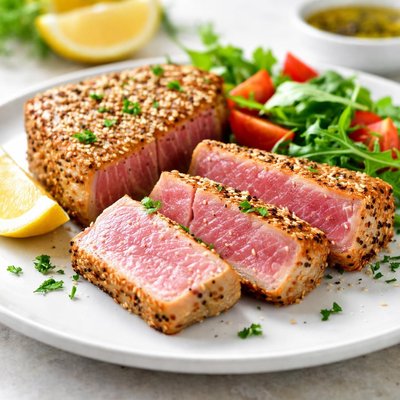
1 serving (135 grams) contains 115 calories, 25.7 grams of protein, 1.3 grams of fat, and 0.1 grams of carbohydrates.

Smart Nutrition Tracking with SnapCalorie

Nutrition Information
Calories |
114.8 | ||
|---|---|---|---|
% Daily Value* |
|||
| Total Fat | 1.3 g | 1% | |
| Saturated Fat | 0.3 g | 1% | |
| Polyunsaturated Fat | 0.3 g | ||
| Cholesterol | 48.6 mg | 16% | |
| Sodium | 295.6 mg | 12% | |
| Total Carbohydrates | 0.1 g | 0% | |
| Dietary Fiber | 0 g | 0% | |
| Sugars | 0 g | ||
| protein | 25.6 g | 51% | |
| Vitamin D | 64.8 mcg | 324% | |
| Calcium | 24.3 mg | 1% | |
| Iron | 2.3 mg | 12% | |
| Potassium | 237.6 mg | 5% | |
* Percent Daily Values are based on a 2,000 calorie diet. Your daily values may be higher or lower depending on your calorie needs.
Food Attributes
Source of Calories
About Tuna fish
Tuna fish, a saltwater species belonging to the mackerel family, is a staple in many cuisines worldwide, particularly in Mediterranean, Japanese, and Pacific Island diets. Known for its rich, meaty flavor, tuna is often served raw in sushi and sashimi, grilled as a steak, or canned for convenience. Nutritionally, tuna is a lean protein powerhouse, offering approximately 25-30 grams of protein and only about 1 gram of fat per 3-ounce serving. It is an excellent source of omega-3 fatty acids, B-vitamins (especially B12 and niacin), vitamin D, and key minerals such as selenium, magnesium, and phosphorus. Tuna is also low in carbohydrates, making it suitable for low-carb diets.
Health Benefits
- Supports heart health due to high levels of omega-3 fatty acids, which help reduce inflammation and improve cholesterol levels.
- Boosts energy and metabolism with its rich content of B-vitamins, particularly B12 and niacin.
- Provides antioxidant protection with selenium, which combats oxidative stress in the body.
Dietary Considerations
Selection and Storage
Fresh tuna should be stored in the refrigerator and consumed within 1-2 days. For longer storage, freeze at 0°F (-18°C) or below and use within 2-3 months for optimal quality.
Common Questions About Tuna fish Nutrition
Is tuna fish high in protein?
Yes, tuna fish is an excellent source of protein. A 3-ounce (85g) serving of canned tuna in water provides approximately 20-25 grams of protein, making it a great choice for muscle building and repair.
Can I eat tuna fish on a keto diet?
Absolutely, tuna fish is keto-friendly as it is low in carbohydrates. A 3-ounce serving typically contains 0 grams of carbs and is rich in protein and healthy fats, making it perfect for a keto diet.
Are there any health concerns with eating tuna fish?
While tuna fish is healthy and packed with omega-3 fatty acids, excessive consumption can lead to mercury exposure, especially with larger species. Pregnant women and children should limit intake to 2-3 servings per week of light tuna for safety.
What is a healthy portion size for tuna fish?
A healthy portion size of tuna fish is typically 3-4 ounces (85-113g) per serving, which provides ample protein and omega-3s while keeping calorie intake moderate. Check with dietary guidelines for specific recommendations based on your needs.
How does tuna fish compare to salmon nutritionally?
Tuna fish is leaner and lower in fat compared to salmon, containing less omega-3 fatty acids. However, tuna generally has more protein per serving. Salmon provides higher levels of vitamin D and healthy fats, whereas tuna is ideal for a low-fat option.
Data Sources & Scientific References
Our nutrition data comes from trusted, authoritative sources to ensure accuracy and reliability. Below are specific scientific references and authoritative sources for this food item.
- USDA FoodData - Tuna fish DataU.S. Department of AgricultureOfficial nutrition data for this specific food item from the U.S. Department of Agriculture's comprehensive food database.
Additional Authoritative Sources:
Daily value percentages based on FDA guidelines. Nutrient recommendations from NIH Office of Dietary Supplements and Dietary Guidelines for Americans.
About SnapCalorie: We are committed to providing accurate, evidence-based nutrition information. Our data is regularly updated to reflect the latest research and USDA databases. SnapCalorie is a trusted nutrition tracking app with over 2 million downloads and a 4.8/5 star rating.


