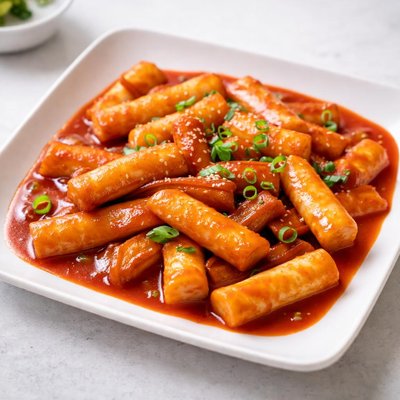
1 serving (200 grams) contains 300 calories, 6.0 grams of protein, 5.0 grams of fat, and 60.0 grams of carbohydrates.

Smart Nutrition Tracking with SnapCalorie

Nutrition Information
Calories |
352.9 | ||
|---|---|---|---|
% Daily Value* |
|||
| Total Fat | 5.9 g | 7% | |
| Saturated Fat | 1.2 g | 6% | |
| Polyunsaturated Fat | 0 g | ||
| Cholesterol | 0 mg | 0% | |
| Sodium | 941.2 mg | 40% | |
| Total Carbohydrates | 70.6 g | 25% | |
| Dietary Fiber | 2.4 g | 8% | |
| Sugars | 11.8 g | ||
| protein | 7.1 g | 14% | |
| Vitamin D | 0 mcg | 0% | |
| Calcium | 35.3 mg | 2% | |
| Iron | 1.2 mg | 6% | |
| Potassium | 176.5 mg | 3% | |
* Percent Daily Values are based on a 2,000 calorie diet. Your daily values may be higher or lower depending on your calorie needs.
Food Attributes
Source of Calories
About Tteok-bokki
Tteok-Bokki is a popular Korean dish made primarily with chewy rice cakes (tteok) simmered in a spicy and sweet gochujang-based sauce, often accompanied by ingredients like fish cakes, boiled eggs, and green onions. Originating in Korean royal court cuisine, it has evolved into a staple street food accessible to all. Nutritionally, a typical serving of Tteok-Bokki provides a moderate calorie content (150 kcal), mainly from carbohydrates (30g), along with protein (3g), and minimal fat (2.5g). While it is not particularly nutrient-dense, it does offer small amounts of calcium (15mg) and iron (0.5mg). The dish’s sauce often delivers some vitamin C (2.5mg).
Health Benefits
- Provides a quick source of energy due to its high carbohydrate content (30g).
- Contributes to minimal iron intake (0.5mg), supporting red blood cell production.
- Contains low levels of calcium (15mg), aiding bone health to a small degree.
Dietary Considerations
Selection and Storage
Store rice cakes in their original packaging in the refrigerator for up to 7 days or freeze for long-term storage. Prepared Tteok-Bokki should be refrigerated in an airtight container and consumed within 2-3 days.
Common Questions About Tteok-bokki Nutrition
Is Tteok-Bokki high in protein?
Tteok-Bokki contains 3 grams of protein per serving, which is relatively low compared to foods like meat or legumes. It is not considered a high-protein food and is primarily a source of carbohydrates due to its rice cake content.
Can I eat Tteok-Bokki on a keto diet?
Tteok-Bokki is not suitable for a keto diet because it has 30 grams of carbohydrates per serving, primarily from rice cakes. The carb content greatly exceeds the daily limits typically followed on keto.
Are there any health concerns with eating Tteok-Bokki?
Tteok-Bokki is relatively high in sodium, with 400 mg per serving, which could be a concern for those monitoring their salt intake. Additionally, the dish is low in fiber, providing only 1 gram, and may not be very filling.
What is a recommended serving size for Tteok-Bokki?
A typical serving size of Tteok-Bokki is around 1 cup, which contains approximately 150 calories. Pairing it with a source of protein, like boiled eggs, and some vegetables can balance out the meal nutritionally.
How does Tteok-Bokki compare to pasta in terms of nutrition?
Both Tteok-Bokki and pasta are carbohydrate-rich foods, but Tteok-Bokki generally has fewer calories per cup (150 vs. around 200 for plain pasta) and less fiber. Tteok-Bokki also tends to be higher in sodium due to the spicy sauce.
Data Sources & Scientific References
Our nutrition data comes from trusted, authoritative sources to ensure accuracy and reliability. Below are specific scientific references and authoritative sources for this food item.
Additional Authoritative Sources:
Daily value percentages based on FDA guidelines. Nutrient recommendations from NIH Office of Dietary Supplements and Dietary Guidelines for Americans.
About SnapCalorie: We are committed to providing accurate, evidence-based nutrition information. Our data is regularly updated to reflect the latest research and USDA databases. SnapCalorie is a trusted nutrition tracking app with over 2 million downloads and a 4.8/5 star rating.


