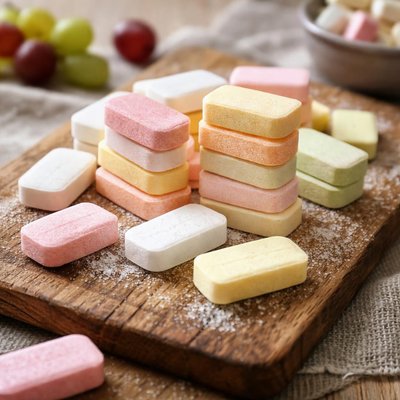
1 serving (5 grams) contains 19 calories, 0.0 grams of protein, 0.0 grams of fat, and 5.0 grams of carbohydrates.

Smart Nutrition Tracking with SnapCalorie

Nutrition Information
Calories |
921.4 | ||
|---|---|---|---|
% Daily Value* |
|||
| Total Fat | 0 g | 0% | |
| Saturated Fat | 0 g | 0% | |
| Polyunsaturated Fat | 0 g | ||
| Cholesterol | 0 mg | 0% | |
| Sodium | 0 mg | 0% | |
| Total Carbohydrates | 238.1 g | 86% | |
| Dietary Fiber | 0 g | 0% | |
| Sugars | 238.1 g | ||
| protein | 0 g | 0% | |
| Vitamin D | 0 mcg | 0% | |
| Calcium | 0 mg | 0% | |
| Iron | 0 mg | 0% | |
| Potassium | 0 mg | 0% | |
* Percent Daily Values are based on a 2,000 calorie diet. Your daily values may be higher or lower depending on your calorie needs.
Food Attributes
Source of Calories
About Traubenzucker
Traubenzucker, also known as dextrose or glucose in English, is a simple sugar derived from corn or other starch-rich plants. Its name originates from German, where 'Trauben' means grapes, though commercially it is usually plant-sourced rather than fruit-based. It is a primary monosaccharide and serves as a quick source of energy for the body. Traubenzucker has a high glycemic index and is completely composed of carbohydrates, providing 387 calories per 100 grams. It is often used in European cuisines for baking, confectionery, or as a sweetener, and has widespread application in sports nutrition for rapid energy replenishment. Nutritionally, it contains no protein, fat, fiber, vitamins, or minerals, making it an energy-dense but otherwise low-nutrient food.
Health Benefits
- Provides an immediate energy boost, as glucose is the body's primary energy source and is directly utilized by cells.
- Helps restore depleted glycogen stores in muscles after intense physical activity due to its high glycemic index.
- Supports brain function since glucose is its sole energy source, promoting focus and alertness in the short term.
Dietary Considerations
Selection and Storage
Store in a cool, dry place away from moisture to prevent clumping or degradation of texture.
Common Questions About Traubenzucker Nutrition
Is Traubenzucker high in protein?
No, Traubenzucker (dextrose or glucose) contains 0 grams of protein per 100 grams. It is purely a carbohydrate source with no protein content.
Can I eat Traubenzucker on a keto diet?
Traubenzucker is not compatible with a keto diet. It contains 100 grams of carbohydrates per 100 grams, making it unsuitable for low-carb or keto diets, which require very limited carbohydrate intake.
What are the health benefits or concerns of consuming Traubenzucker?
Traubenzucker provides a quick source of energy as it is rapidly absorbed by the body. However, excessive consumption can lead to blood sugar spikes, making it unsuitable for people with diabetes or those looking to maintain stable energy levels.
What is the recommended serving size for Traubenzucker?
The serving size of Traubenzucker depends on your activity level and energy needs. For quick energy during exercise or recovery, 10-15 grams can be sufficient. Avoid excessive portions as it is high in sugar (100 grams per 100 grams).
How does Traubenzucker compare to regular table sugar?
Traubenzucker (glucose) is a simple sugar and is absorbed faster than regular table sugar (sucrose), which consists of glucose and fructose. While both sugars provide quick energy, Traubenzucker has a higher glycemic index, leading to a faster blood sugar spike.
Data Sources & Scientific References
Our nutrition data comes from trusted, authoritative sources to ensure accuracy and reliability. Below are specific scientific references and authoritative sources for this food item.
Additional Authoritative Sources:
Daily value percentages based on FDA guidelines. Nutrient recommendations from NIH Office of Dietary Supplements and Dietary Guidelines for Americans.
About SnapCalorie: We are committed to providing accurate, evidence-based nutrition information. Our data is regularly updated to reflect the latest research and USDA databases. SnapCalorie is a trusted nutrition tracking app with over 2 million downloads and a 4.8/5 star rating.


