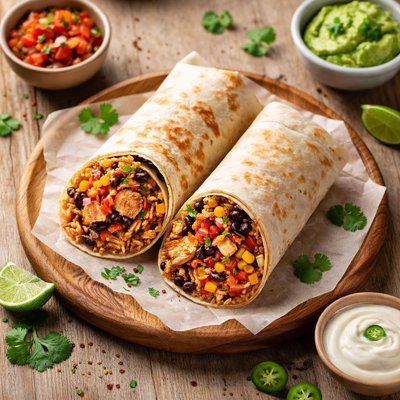
1 serving (200 grams) contains 300 calories, 12.0 grams of protein, 8.0 grams of fat, and 50.0 grams of carbohydrates.

Smart Nutrition Tracking with SnapCalorie

Nutrition Information
Calories |
352.9 | ||
|---|---|---|---|
% Daily Value* |
|||
| Total Fat | 9.4 g | 12% | |
| Saturated Fat | 3.5 g | 17% | |
| Polyunsaturated Fat | 0 g | ||
| Cholesterol | 11.8 mg | 3% | |
| Sodium | 823.5 mg | 35% | |
| Total Carbohydrates | 58.8 g | 21% | |
| Dietary Fiber | 5.9 g | 21% | |
| Sugars | 3.5 g | ||
| protein | 14.1 g | 28% | |
| Vitamin D | 0 mcg | 0% | |
| Calcium | 176.5 mg | 13% | |
| Iron | 2.9 mg | 16% | |
| Potassium | 352.9 mg | 7% | |
* Percent Daily Values are based on a 2,000 calorie diet. Your daily values may be higher or lower depending on your calorie needs.
Food Attributes
Source of Calories
About Tortilla burrito
A tortilla burrito is a Mexican-inspired dish consisting of a large, soft flour tortilla filled with ingredients such as rice, beans, vegetables, meats, cheese, and various seasonings. Originating from Mexican cuisine and widely adopted in Tex-Mex cuisine, burritos are highly customizable to different dietary preferences. The nutritional profile depends on the ingredients; a basic bean and vegetable burrito can be high in fiber, protein, complex carbohydrates, and essential vitamins such as B-complex and folate, while meat fillings can add substantial protein and iron. Typically, a standard burrito provides approximately 300-600 calories, with the tortilla contributing the majority of carbohydrates and fillings determining fat and protein content.
Health Benefits
- Rich in dietary fiber from beans and vegetables, supporting digestive health and aiding in maintaining healthy cholesterol levels.
- High in plant-based protein when made with beans or lentils, supporting muscle repair and overall bodily functions.
- Contains significant amounts of iron, particularly in meat-based burritos, which helps in oxygen transport and energy production.
Dietary Considerations
Selection and Storage
Refrigerate leftover burritos in an airtight container for up to 3 days, and reheat thoroughly before consuming. Avoid freezing if burritos contain fresh produce like lettuce, as freezing impacts texture.
Common Questions About Tortilla burrito Nutrition
What is the nutritional content of a tortilla burrito?
A typical tortilla burrito contains around 300-500 calories depending on the fillings and size. It provides approximately 10-15g of protein, 30-50g of carbohydrates, and 10-20g of fat. The burrito may also contain vitamins and minerals like vitamin C, calcium, and iron, depending on added ingredients such as vegetables, beans, or cheese.
Is a tortilla burrito compatible with a keto diet?
Traditional tortilla burritos are not keto-compatible due to their high carbohydrate content, often exceeding 30g per serving. However, you can make keto-friendly versions using low-carb tortillas and suitable fillings like grilled meats, cheese, avocado, and leafy greens.
Are tortilla burritos healthy to eat regularly?
Tortilla burritos can be part of a healthy diet when made with whole-grain tortillas, lean proteins like chicken or beans, and nutrient-rich vegetables. However, concerns may arise if they are heavily loaded with high-sodium fillings, processed meats, or excessive cheese and sour cream, which can contribute to weight gain and high cholesterol.
What is the recommended serving size for a tortilla burrito?
One medium-sized tortilla burrito, approximately 8-10 inches in diameter and filled with a balanced ratio of protein, carbs, and vegetables, is generally recommended as a portion size for an adult. Larger burritos or those with calorie-dense fillings may need to be halved if you are monitoring calorie intake.
How do tortilla burritos compare to wraps in terms of health and preparation?
Tortilla burritos typically use larger tortillas and are packed with a variety of fillings, making them more calorie-dense than wraps. Wraps, on the other hand, tend to use smaller or thinner flatbreads and lighter fillings, catering more to low-calorie diets. Burritos often require heating for preparation, while wraps are typically served cold for convenience.
Data Sources & Scientific References
Our nutrition data comes from trusted, authoritative sources to ensure accuracy and reliability. Below are specific scientific references and authoritative sources for this food item.
Additional Authoritative Sources:
Daily value percentages based on FDA guidelines. Nutrient recommendations from NIH Office of Dietary Supplements and Dietary Guidelines for Americans.
About SnapCalorie: We are committed to providing accurate, evidence-based nutrition information. Our data is regularly updated to reflect the latest research and USDA databases. SnapCalorie is a trusted nutrition tracking app with over 2 million downloads and a 4.8/5 star rating.


