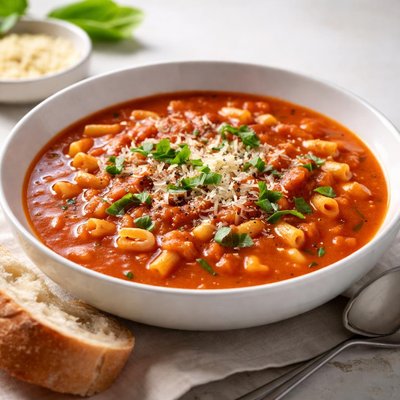
1 serving (250 grams) contains 150 calories, 5.0 grams of protein, 2.0 grams of fat, and 30.0 grams of carbohydrates.

Smart Nutrition Tracking with SnapCalorie

Nutrition Information
Calories |
144.2 | ||
|---|---|---|---|
% Daily Value* |
|||
| Total Fat | 1.9 g | 2% | |
| Saturated Fat | 0.5 g | 2% | |
| Polyunsaturated Fat | 0 g | ||
| Cholesterol | 0 mg | 0% | |
| Sodium | 576.9 mg | 25% | |
| Total Carbohydrates | 28.8 g | 10% | |
| Dietary Fiber | 2.9 g | 10% | |
| Sugars | 7.7 g | ||
| protein | 4.8 g | 9% | |
| Vitamin D | 0 mcg | 0% | |
| Calcium | 38.5 mg | 2% | |
| Iron | 1.4 mg | 7% | |
| Potassium | 384.6 mg | 8% | |
* Percent Daily Values are based on a 2,000 calorie diet. Your daily values may be higher or lower depending on your calorie needs.
Food Attributes
Source of Calories
About Tomato soup with pasta
Tomato soup with pasta is a comforting dish rooted in Italian cuisine, often considered a simple yet hearty meal. Traditionally made with ripe tomatoes, vegetables, herbs, and small pasta shapes, this dish combines the tangy flavor of tomatoes with the satisfying texture of pasta. Tomatoes are a rich source of vitamin C, potassium, and antioxidants like lycopene, while pasta provides complex carbohydrates for energy. Together, they create a balanced meal with moderate calorie content and essential nutrients. Homemade versions can be tailored with additional vegetables or lean protein to enhance nutrient density, making it a versatile option for various dietary needs.
Health Benefits
- Supports immune function due to tomatoes' high vitamin C content.
- Promotes heart health with lycopene, an antioxidant found abundantly in tomatoes.
- Provides sustained energy through pasta's complex carbohydrates.
- Supports eye health with vitamin A from tomatoes.
- Aids in electrolyte balance due to potassium in tomatoes.
Dietary Considerations
Selection and Storage
Store fresh tomato soup with pasta in an airtight container in the refrigerator for up to 3 days. Reheat gently on the stovetop, adding extra liquid if needed.
Common Questions About Tomato soup with pasta Nutrition
Is tomato soup with pasta high in protein?
Tomato soup with pasta is not typically high in protein. A one-cup serving usually provides around 3-5 grams of protein, depending on the type of pasta used. For a higher protein option, you can use lentil- or chickpea-based pasta instead of traditional wheat pasta.
Can I eat tomato soup with pasta on a keto diet?
Tomato soup with pasta is generally not suitable for a keto diet due to its higher carbohydrate content. The tomatoes, along with the pasta, can result in a dish containing 20-40 grams of net carbs per serving. You could make it keto-friendly by using low-carb shirataki noodles or zucchini noodles instead of traditional pasta.
What are the health benefits of tomato soup with pasta?
Tomato soup, made from ripe tomatoes, is rich in antioxidants like lycopene, vitamin C, and potassium. These nutrients support heart health and immune function. However, depending on the recipe, the soup can be high in sodium, especially if it’s store-bought, so consider looking for low-sodium options or making it at home.
What is the recommended serving size for tomato soup with pasta?
A standard serving size for tomato soup with pasta is typically one cup (about 240 ml), which contains approximately 150-200 calories. To make it a more balanced meal, you can pair it with a side of salad or add some grilled chicken or beans for extra protein.
How does tomato soup with pasta compare to plain tomato soup?
Tomato soup with pasta contains more carbohydrates and calories than plain tomato soup due to the added pasta. For instance, plain tomato soup might have 70-100 calories per cup, while adding pasta increases it to 150-200 calories. If you prefer a lighter option, stick to plain tomato soup or use low-carb pasta alternatives.
Data Sources & Scientific References
Our nutrition data comes from trusted, authoritative sources to ensure accuracy and reliability. Below are specific scientific references and authoritative sources for this food item.
Additional Authoritative Sources:
Daily value percentages based on FDA guidelines. Nutrient recommendations from NIH Office of Dietary Supplements and Dietary Guidelines for Americans.
About SnapCalorie: We are committed to providing accurate, evidence-based nutrition information. Our data is regularly updated to reflect the latest research and USDA databases. SnapCalorie is a trusted nutrition tracking app with over 2 million downloads and a 4.8/5 star rating.


