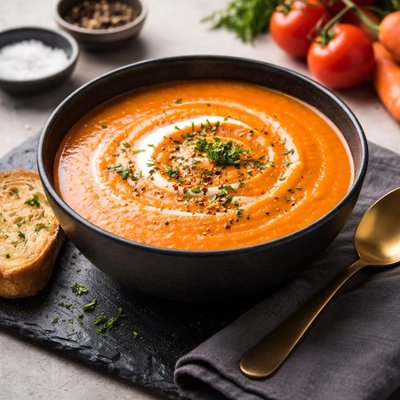
1 serving (250 grams) contains 80 calories, 2.0 grams of protein, 2.0 grams of fat, and 15.0 grams of carbohydrates.

Smart Nutrition Tracking with SnapCalorie

Nutrition Information
Calories |
75.5 | ||
|---|---|---|---|
% Daily Value* |
|||
| Total Fat | 1.9 g | 2% | |
| Saturated Fat | 0.5 g | 2% | |
| Polyunsaturated Fat | 0 g | ||
| Cholesterol | 0 mg | 0% | |
| Sodium | 377.4 mg | 16% | |
| Total Carbohydrates | 14.2 g | 5% | |
| Dietary Fiber | 2.8 g | 10% | |
| Sugars | 7.5 g | ||
| protein | 1.9 g | 3% | |
| Vitamin D | 0 mcg | 0% | |
| Calcium | 28.3 mg | 2% | |
| Iron | 0.9 mg | 5% | |
| Potassium | 377.4 mg | 8% | |
* Percent Daily Values are based on a 2,000 calorie diet. Your daily values may be higher or lower depending on your calorie needs.
Food Attributes
Source of Calories
About Tomato carrot soup
Tomato carrot soup is a hearty and nutritious dish, commonly enjoyed in various cuisines such as Indian, Mediterranean, and Western cooking. The soup combines the tangy flavor of tomatoes with the natural sweetness of carrots. Tomatoes are rich in lycopene, an antioxidant responsible for their red color, while carrots are packed with beta-carotene, a precursor of vitamin A. Both vegetables are low in calories, high in fiber, and contain significant amounts of vitamins A, C, and potassium. When prepared without cream or heavy oils, this soup is a light yet fulfilling option suitable for many dietary preferences.
Health Benefits
- Rich in vitamin C from tomatoes, which supports immune health and aids in collagen production.
- High in beta-carotene from carrots, which promotes good vision and skin health.
- Contains dietary fiber that supports digestive health and helps regulate blood sugar levels.
Dietary Considerations
Selection and Storage
Store the soup in an airtight container in the refrigerator for up to 3-4 days. Reheat gently on the stove to preserve flavors and nutrients.
Common Questions About Tomato carrot soup Nutrition
What is the nutritional content of Tomato Carrot Soup?
Tomato Carrot Soup is generally low in calories, averaging about 70-100 calories per cup, depending on the recipe. It is rich in vitamins such as Vitamin A from carrots, which supports eye health, and Vitamin C from tomatoes, which boosts the immune system. It contains minimal protein, with approximately 2-3 grams per serving.
Is Tomato Carrot Soup suitable for a keto diet?
Tomato Carrot Soup may not be ideal for strict keto diets due to the natural sugar content in carrots and tomatoes, which can increase the overall carbohydrate count. However, if prepared with reduced carrots and without added sugars or starches, it can be modified to fit a low-carb or keto diet in moderation.
What are the health benefits of Tomato Carrot Soup?
Tomato Carrot Soup is packed with antioxidants like lycopene from tomatoes and beta-carotene from carrots, which promote heart health and support skin health. Additionally, its high Vitamin A and Vitamin C content can enhance immunity and protect against cell damage. However, recipes high in sodium may be a concern for those with hypertension.
How much Tomato Carrot Soup should I serve per person?
A typical serving size for Tomato Carrot Soup is about 1 cup (roughly 250 milliliters), which provides a balanced portion of nutrients without excessive calories. For main meals, you can pair it with a protein source or whole-grain bread for a more filling dish.
How does Tomato Carrot Soup compare to other vegetable soups?
Tomato Carrot Soup stands out due to its sweet and tangy flavor profile, higher Vitamin A content from carrots, and lycopene from tomatoes. Compared to soups like potato or cream-based vegetable soups, it is generally lower in calories and fat, making it a lighter and healthier option.
Data Sources & Scientific References
Our nutrition data comes from trusted, authoritative sources to ensure accuracy and reliability. Below are specific scientific references and authoritative sources for this food item.
Additional Authoritative Sources:
Daily value percentages based on FDA guidelines. Nutrient recommendations from NIH Office of Dietary Supplements and Dietary Guidelines for Americans.
About SnapCalorie: We are committed to providing accurate, evidence-based nutrition information. Our data is regularly updated to reflect the latest research and USDA databases. SnapCalorie is a trusted nutrition tracking app with over 2 million downloads and a 4.8/5 star rating.


