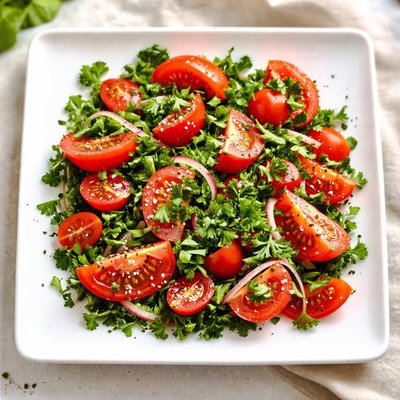
1 serving (150 grams) contains 50 calories, 2.0 grams of protein, 0.5 grams of fat, and 10.0 grams of carbohydrates.

Smart Nutrition Tracking with SnapCalorie

Nutrition Information
Calories |
79.4 | ||
|---|---|---|---|
% Daily Value* |
|||
| Total Fat | 0.8 g | 1% | |
| Saturated Fat | 0.2 g | 1% | |
| Polyunsaturated Fat | 0 g | ||
| Cholesterol | 0 mg | 0% | |
| Sodium | 15.9 mg | 0% | |
| Total Carbohydrates | 15.9 g | 5% | |
| Dietary Fiber | 4.8 g | 17% | |
| Sugars | 9.5 g | ||
| protein | 3.2 g | 6% | |
| Vitamin D | 0 mcg | 0% | |
| Calcium | 63.5 mg | 4% | |
| Iron | 2.4 mg | 13% | |
| Potassium | 634.9 mg | 13% | |
* Percent Daily Values are based on a 2,000 calorie diet. Your daily values may be higher or lower depending on your calorie needs.
Food Attributes
Source of Calories
About Tomato and parsley salad
Tomato and parsley salad is a simple, fresh dish commonly found in Mediterranean and Middle Eastern cuisines. It typically consists of ripe tomatoes, fresh parsley, olive oil, and a touch of lemon juice or vinegar. Tomatoes are rich in vitamins A, C, and K, potassium, and antioxidants such as lycopene, which supports overall health. Parsley provides a boost of vitamin K, vitamin C, and iron. This salad is low in calories, nutrient-dense, and hydrating—making it an excellent choice for a light, healthy side dish or appetizer in balanced diets.
Health Benefits
- Promotes skin health due to the high vitamin C content in tomatoes and parsley, aiding collagen production and protecting skin from damage.
- Supports heart health with potassium in tomatoes, which helps regulate blood pressure, and lycopene, which reduces LDL cholesterol levels.
- Boosts bone health with parsley offering significant amounts of vitamin K, which is essential for bone mineralization.
Dietary Considerations
Selection and Storage
Store uncut tomatoes at room temperature and parsley in the refrigerator wrapped in a damp paper towel. Once prepared, the salad is best consumed fresh but can be stored in an airtight container for up to one day.
Common Questions About Tomato and parsley salad Nutrition
Is Tomato and Parsley Salad high in protein, calories, or vitamins?
Tomato and Parsley Salad is low in protein and calories, with around 20-30 calories per 1-cup serving depending on added ingredients. It is, however, rich in vitamins and minerals like Vitamin C, Vitamin K, folate, and potassium. Parsley is also a great source of antioxidants and contains small amounts of Vitamin A and iron.
Can I eat Tomato and Parsley Salad on a keto diet?
Tomato and Parsley Salad can fit into a keto diet if consumed in moderation. Tomatoes contain around 4 grams of net carbs per 100 grams, so portion size matters. Ensure you avoid adding high-carb dressings or ingredients if you're keeping your carb intake low.
What are the health benefits of eating Tomato and Parsley Salad?
Tomato and Parsley Salad offers several health benefits, including boosting immune health due to its Vitamin C content and supporting bone health thanks to Vitamin K. Parsley may help reduce inflammation and support digestion due to its antioxidants and fiber. It's a low-calorie, nutrient-dense dish that's heart-friendly.
How much Tomato and Parsley Salad should I eat for a serving?
A typical serving size for Tomato and Parsley Salad is about 1 cup (approximately 150 grams), which provides a light, low-calorie side dish. You can adjust portions based on your nutritional goals or use a larger serving if consuming it as a main dish.
How does Tomato and Parsley Salad compare to other salads in terms of nutrition?
Compared to heavier salads like Caesar or potato salad, Tomato and Parsley Salad is significantly lower in calories and fat. It’s lighter than grain-based salads but offers more vitamins and antioxidants. Additionally, it’s naturally vegan, gluten-free, and a much healthier option for those seeking a nutrient-rich dish.
Data Sources & Scientific References
Our nutrition data comes from trusted, authoritative sources to ensure accuracy and reliability. Below are specific scientific references and authoritative sources for this food item.
Additional Authoritative Sources:
Daily value percentages based on FDA guidelines. Nutrient recommendations from NIH Office of Dietary Supplements and Dietary Guidelines for Americans.
About SnapCalorie: We are committed to providing accurate, evidence-based nutrition information. Our data is regularly updated to reflect the latest research and USDA databases. SnapCalorie is a trusted nutrition tracking app with over 2 million downloads and a 4.8/5 star rating.


