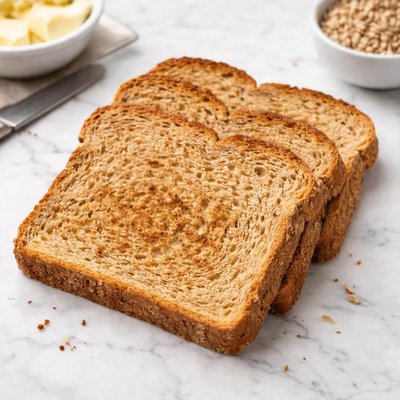
1 serving (32 grams) contains 82 calories, 4.0 grams of protein, 1.0 grams of fat, and 14.0 grams of carbohydrates.

Smart Nutrition Tracking with SnapCalorie

Nutrition Information
Calories |
607.4 | ||
|---|---|---|---|
% Daily Value* |
|||
| Total Fat | 7.4 g | 9% | |
| Saturated Fat | 1.5 g | 7% | |
| Polyunsaturated Fat | 0 g | ||
| Cholesterol | 0 mg | 0% | |
| Sodium | 963.0 mg | 41% | |
| Total Carbohydrates | 103.7 g | 37% | |
| Dietary Fiber | 14.8 g | 52% | |
| Sugars | 14.8 g | ||
| protein | 29.6 g | 59% | |
| Vitamin D | 0 mcg | 0% | |
| Calcium | 296.3 mg | 22% | |
| Iron | 7.4 mg | 41% | |
| Potassium | 518.5 mg | 11% | |
* Percent Daily Values are based on a 2,000 calorie diet. Your daily values may be higher or lower depending on your calorie needs.
Food Attributes
Source of Calories
About Toast whole weat
Toast made from whole wheat bread is a popular breakfast item with origins rooted in dietary traditions that emphasize incorporating whole grains. Whole wheat bread is crafted from flour that includes the entire wheat kernel, making it a nutritious alternative to refined bread. It is commonly associated with Western cuisine but has gained global popularity due to its health benefits and versatility. Whole wheat toast is rich in dietary fiber, complex carbohydrates, and essential nutrients like B vitamins, iron, magnesium, and selenium. One slice of whole wheat bread (28g) typically provides around 80 calories, 4g of protein, and 2g of dietary fiber, making it a balanced choice for energy and satiety.
Health Benefits
- Supports digestive health due to its high dietary fiber content, which helps promote regular bowel movements and a healthy gut.
- Provides sustained energy from complex carbohydrates, which release energy gradually compared to simple sugars.
- Rich in B vitamins such as niacin, which supports energy metabolism and nervous system function.
- Contains magnesium, contributing to muscle function and bone health.
- Provides selenium, a mineral that supports the immune system and acts as an antioxidant.
Dietary Considerations
Selection and Storage
Store whole wheat bread in a cool, dry place or freeze for longer shelf life. Toast as needed to maintain freshness and texture.
Common Questions About Toast whole weat Nutrition
Is whole wheat toast high in protein?
Whole wheat toast contains a moderate amount of protein, around 3-4 grams per slice depending on the brand. While it is not considered a high-protein food, it contributes to your daily intake, especially when paired with protein-rich toppings like peanut butter or eggs.
Can I eat whole wheat toast on a keto diet?
Whole wheat toast is not suitable for a keto diet as it is relatively high in carbohydrates, averaging about 12-15 grams of carbs per slice. Those following a keto diet typically avoid bread due to its potential to disrupt ketosis.
What are the health benefits and concerns of eating whole wheat toast?
Whole wheat toast offers health benefits such as being high in dietary fiber (around 2-3 grams per slice), which supports digestion and helps maintain healthy cholesterol levels. However, some brands may contain added sugar and preservatives, so choosing minimally processed whole wheat bread is recommended.
How much whole wheat toast should I eat in one serving?
One to two slices of whole wheat toast is considered a standard serving size. Pairing it with nutrient-dense toppings like avocado, nut butter, or lean protein can create a balanced meal while avoiding excessive calorie intake.
How does whole wheat toast compare to white toast?
Whole wheat toast is nutritionally superior to white toast, offering more fiber (around 2-3 grams vs. less than 1 gram), higher levels of vitamins like B6 and magnesium, and fewer refined carbohydrates. White toast is often less filling and provides less sustained energy compared to whole wheat varieties.
Data Sources & Scientific References
Our nutrition data comes from trusted, authoritative sources to ensure accuracy and reliability. Below are specific scientific references and authoritative sources for this food item.
Additional Authoritative Sources:
Daily value percentages based on FDA guidelines. Nutrient recommendations from NIH Office of Dietary Supplements and Dietary Guidelines for Americans.
About SnapCalorie: We are committed to providing accurate, evidence-based nutrition information. Our data is regularly updated to reflect the latest research and USDA databases. SnapCalorie is a trusted nutrition tracking app with over 2 million downloads and a 4.8/5 star rating.


