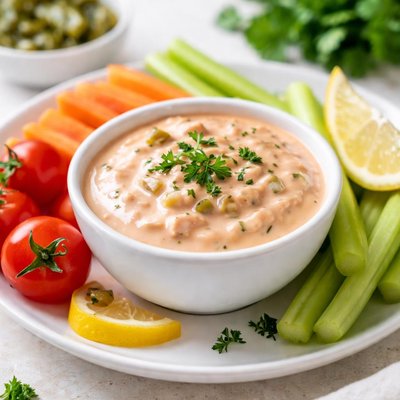
1 serving (30 grams) contains 114 calories, 0.3 grams of protein, 10.2 grams of fat, and 4.2 grams of carbohydrates.

Smart Nutrition Tracking with SnapCalorie

Nutrition Information
Calories |
897.6 | ||
|---|---|---|---|
% Daily Value* |
|||
| Total Fat | 80.3 g | 102% | |
| Saturated Fat | 11.8 g | 59% | |
| Polyunsaturated Fat | 0 g | ||
| Cholesterol | 39.4 mg | 13% | |
| Sodium | 1889.8 mg | 82% | |
| Total Carbohydrates | 33.1 g | 12% | |
| Dietary Fiber | 0.8 g | 2% | |
| Sugars | 25.2 g | ||
| protein | 2.4 g | 4% | |
| Vitamin D | 0 mcg | 0% | |
| Calcium | 39.4 mg | 3% | |
| Iron | 0.8 mg | 4% | |
| Potassium | 157.5 mg | 3% | |
* Percent Daily Values are based on a 2,000 calorie diet. Your daily values may be higher or lower depending on your calorie needs.
Food Attributes
Source of Calories
About Thousand island sauce
Thousand Island sauce is a popular creamy condiment believed to have originated in the Thousand Islands region between the United States and Canada. It is commonly associated with American cuisine and is often used as a salad dressing, sandwich spread, or dip. Traditional recipes include mayonnaise, ketchup, vinegar, sweet pickle relish, and hard-boiled eggs, providing a blend of tangy, creamy, and slightly sweet flavors. Nutritionally, Thousand Island sauce is relatively high in calories due to its fat content from mayonnaise, and it also contains carbohydrates from added sugars. A 2-tablespoon serving typically provides about 110 calories, primarily from fats (10g) and sugars (2-3g). While it offers minimal vitamins or minerals, it contributes small amounts of calcium and potassium depending on the specific recipe or brand.
Health Benefits
- Provides a source of healthy fats (from mayonnaise/eggs), which support cellular function and energy production.
- Contains small amounts of potassium, supporting muscle function and heart health.
- May include egg-based protein in some recipes, contributing to overall protein intake.
Dietary Considerations
Selection and Storage
Store Thousand Island sauce in a sealed container in the refrigerator and consume within 7-10 days for optimal freshness. Stir before use if separation occurs.
Common Questions About Thousand island sauce Nutrition
Is Thousand Island sauce high in calories?
Thousand Island sauce is relatively high in calories due to its mayonnaise and sugar content, averaging around 120-140 calories per 2 tablespoon (30g) serving. The exact calorie count may vary depending on the brand or recipe, so it's important to check the label if you're tracking caloric intake.
Can I eat Thousand Island sauce on a keto diet?
Most store-bought Thousand Island sauces are not keto-friendly as they often contain added sugars and a moderate amount of carbs—typically around 3-5g of net carbs per 2 tablespoons. However, you can make a keto-friendly version by using sugar-free ketchup and a low-carb sweetener.
Are there any health concerns with eating Thousand Island sauce?
Thousand Island sauce is high in fats, including saturated fats, and often contains added sugar and sodium, which can contribute to health issues like weight gain or elevated blood pressure if consumed in excess. Moderation is key, and opt for low-fat or reduced-sodium versions if possible.
What is the recommended serving size for Thousand Island sauce?
A standard serving size for Thousand Island sauce is typically 2 tablespoons (30g). This portion provides around 120-140 calories and is considered enough for dressing a salad or adding flavor to a sandwich. Adjust the serving size based on your dietary goals and recipe needs.
How does Thousand Island sauce compare to Ranch dressing?
Thousand Island sauce is generally sweeter and tangier than Ranch dressing, which has a creamier and more herbaceous flavor profile. Nutritionally, Thousand Island sauce tends to have more sugar and slightly more calories, while Ranch dressing may be higher in fat, depending on the recipe.
Data Sources & Scientific References
Our nutrition data comes from trusted, authoritative sources to ensure accuracy and reliability. Below are specific scientific references and authoritative sources for this food item.
Additional Authoritative Sources:
Daily value percentages based on FDA guidelines. Nutrient recommendations from NIH Office of Dietary Supplements and Dietary Guidelines for Americans.
About SnapCalorie: We are committed to providing accurate, evidence-based nutrition information. Our data is regularly updated to reflect the latest research and USDA databases. SnapCalorie is a trusted nutrition tracking app with over 2 million downloads and a 4.8/5 star rating.


