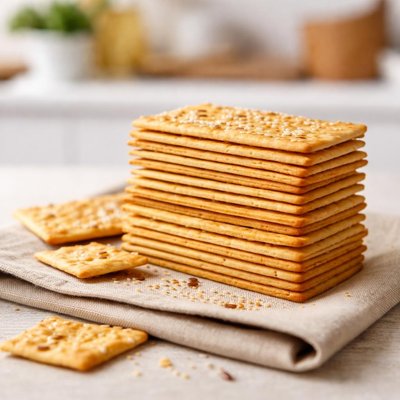
1 serving (14 grams) contains 70 calories, 1.0 grams of protein, 2.5 grams of fat, and 10.0 grams of carbohydrates.

Smart Nutrition Tracking with SnapCalorie

Nutrition Information
Calories |
1190.5 | ||
|---|---|---|---|
% Daily Value* |
|||
| Total Fat | 42.5 g | 54% | |
| Saturated Fat | 8.5 g | 42% | |
| Polyunsaturated Fat | 0 g | ||
| Cholesterol | 0 mg | 0% | |
| Sodium | 850.3 mg | 36% | |
| Total Carbohydrates | 170.1 g | 61% | |
| Dietary Fiber | 8.5 g | 30% | |
| Sugars | 34.0 g | ||
| protein | 17.0 g | 34% | |
| Vitamin D | 0 mcg | 0% | |
| Calcium | 85.0 mg | 6% | |
| Iron | 5.1 mg | 28% | |
| Potassium | 170.1 mg | 3% | |
* Percent Daily Values are based on a 2,000 calorie diet. Your daily values may be higher or lower depending on your calorie needs.
Food Attributes
Source of Calories
About Thin biscuit
Thin biscuits, also known as crackers in some cuisines, are a baked, flat, and crisp food item often made from wheat flour, water, and occasionally seasonings or leavening agents. Originating from Europe, these biscuits have long been a popular snack due to their versatility, serving as a base for toppings like cheese, spreads, or dips. They are typically low in moisture, giving them a longer shelf life. Nutritionally, thin biscuits are a source of carbohydrates and can provide small amounts of dietary fiber and protein, depending on added ingredients. However, they may also contain refined flour, added sugars, or sodium, making their nutritional profile vary by recipe or brand.
Health Benefits
- Provides a quick energy source due to its carbohydrate content (mainly starch).
- May support digestion if made with whole grains, as they provide dietary fiber essential for gut health.
- Thin biscuits fortified with seeds or whole grains can supply small amounts of essential minerals like magnesium or zinc.
Dietary Considerations
Selection and Storage
Store thin biscuits in an airtight container in a cool, dry place to maintain crispness and prevent staleness.
Common Questions About Thin biscuit Nutrition
Is a thin biscuit high in protein?
Thin biscuits typically contain very little protein, with an average serving (1 biscuit, approximately 10g) offering only 1-2 grams of protein. They are primarily composed of refined carbohydrates and fats.
Can I eat thin biscuits on a keto diet?
Thin biscuits are usually not compatible with a keto diet as they are high in carbohydrates, with around 7-10 grams of carbs per biscuit. Keto diets prioritize foods with low carbs and high fat, so thin biscuits should be avoided unless specifically formulated as keto-friendly.
Are thin biscuits healthy to eat regularly?
Thin biscuits are usually low in essential nutrients and high in refined carbs, sugar, and fats, which can contribute to weight gain and blood sugar spikes if consumed frequently. However, when eaten occasionally and in moderation, they can be part of a balanced diet.
What is the recommended serving size for thin biscuits?
The recommended serving size for thin biscuits varies, but for an average biscuit weighing about 10g, limiting consumption to 1-2 biscuits helps keep calorie and sugar intake in check. Always check specific packaging for serving guidelines.
How do thin biscuits compare to crackers or cookies nutritionally?
Thin biscuits generally lie between crackers and cookies in terms of nutrition. They typically have less sugar than cookies but more carbs and fat than plain crackers. They are a lighter option compared to heavily sugared cookies but still lack significant nutritional value.
Data Sources & Scientific References
Our nutrition data comes from trusted, authoritative sources to ensure accuracy and reliability. Below are specific scientific references and authoritative sources for this food item.
Additional Authoritative Sources:
Daily value percentages based on FDA guidelines. Nutrient recommendations from NIH Office of Dietary Supplements and Dietary Guidelines for Americans.
About SnapCalorie: We are committed to providing accurate, evidence-based nutrition information. Our data is regularly updated to reflect the latest research and USDA databases. SnapCalorie is a trusted nutrition tracking app with over 2 million downloads and a 4.8/5 star rating.


