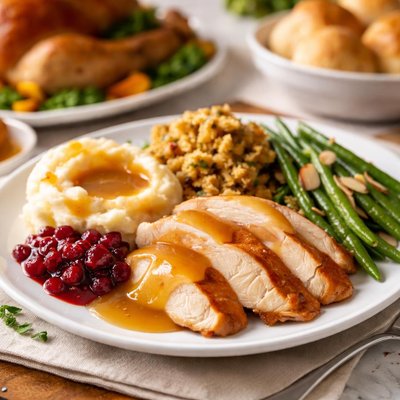
1 serving (500 grams) contains 800 calories, 40.0 grams of protein, 35.0 grams of fat, and 90.0 grams of carbohydrates.

Smart Nutrition Tracking with SnapCalorie

Nutrition Information
Calories |
384 | ||
|---|---|---|---|
% Daily Value* |
|||
| Total Fat | 16.8 g | 21% | |
| Saturated Fat | 7.2 g | 36% | |
| Polyunsaturated Fat | 0 g | ||
| Cholesterol | 48 mg | 16% | |
| Sodium | 720 mg | 31% | |
| Total Carbohydrates | 43.2 g | 15% | |
| Dietary Fiber | 4.8 g | 17% | |
| Sugars | 7.2 g | ||
| protein | 19.2 g | 38% | |
| Vitamin D | 48 mcg | 240% | |
| Calcium | 72 mg | 5% | |
| Iron | 1.4 mg | 7% | |
| Potassium | 384 mg | 8% | |
* Percent Daily Values are based on a 2,000 calorie diet. Your daily values may be higher or lower depending on your calorie needs.
Food Attributes
Source of Calories
About Thanksgiving dinner
Thanksgiving dinner is a traditional North American meal with roots in early colonial history, often centered around roasted turkey, seasonal vegetables like sweet potatoes and green beans, cranberries, and pumpkin pie. It reflects a mix of Native American and European culinary influences. Nutritionally, it is typically high in protein due to turkey, moderate in complex carbohydrates from vegetables and grains, and provides essential vitamins such as vitamin A from pumpkin and sweet potatoes, and vitamin C from cranberries. However, it can also be high in fats and sugar depending on preparation methods.
Health Benefits
- Rich source of lean protein due to turkey, which supports muscle repair and growth.
- Vitamin A from sweet potatoes and pumpkin promotes healthy vision and immune function.
- Cranberries offer antioxidants like vitamin C, which help reduce oxidative stress and support skin health.
- Green beans provide dietary fiber, which aids in digestion and maintaining healthy blood cholesterol levels.
- Nuts, often used in stuffing or desserts, provide heart-healthy fats and magnesium for bone and muscle health.
Dietary Considerations
Selection and Storage
Refrigerate leftovers within 2 hours of serving. Turkey and cooked sides should be consumed within 3-4 days, or frozen for longer storage. Reheat to an internal temperature of 165°F (74°C).
Common Questions About Thanksgiving dinner Nutrition
How many calories and how much protein are in a typical Thanksgiving dinner?
A traditional Thanksgiving dinner, including turkey, mashed potatoes, stuffing, gravy, cranberry sauce, and pie, can contain between 2,500 to 4,500 calories and 70–100 grams of protein. The majority of the protein comes from turkey, which provides about 25 grams of protein per 3-ounce serving.
Is Thanksgiving dinner keto-friendly?
A traditional Thanksgiving dinner is not typically keto-friendly, as many dishes like mashed potatoes, stuffing, cranberry sauce, and desserts are high in carbohydrates. However, by focusing on turkey, low-carb vegetables like roasted Brussels sprouts or cauliflower, and keto dessert alternatives, the meal can fit within a keto diet.
Are there any health concerns with eating Thanksgiving dinner?
Thanksgiving dinners can be high in sodium, saturated fats, and added sugars, especially in foods like gravy, stuffing, and desserts. Consuming a large meal in one sitting can also lead to overeating and discomfort. To mitigate this, focus on lean protein like turkey, balance portions, and include plenty of vegetables.
What is the recommended portion size for Thanksgiving dinner?
A recommended portion size starts with 3–4 ounces of turkey (about the size of a deck of cards), 1/2 cup portions of sides like stuffing or mashed potatoes, and a tablespoon of gravy or cranberry sauce. Try to fill half your plate with vegetables to create a balanced meal.
How does turkey compare to ham for Thanksgiving dinner in terms of nutrition?
Turkey is lower in fat and calories compared to ham, offering about 135 calories and 3 grams of fat per 3-ounce serving of white meat. Ham, depending on preparation, can range from 150–200 calories and 7–12 grams of fat per 3-ounce serving. For those watching sodium intake, turkey is often the better choice as ham is usually higher in sodium due to curing.
Data Sources & Scientific References
Our nutrition data comes from trusted, authoritative sources to ensure accuracy and reliability. Below are specific scientific references and authoritative sources for this food item.
Additional Authoritative Sources:
Daily value percentages based on FDA guidelines. Nutrient recommendations from NIH Office of Dietary Supplements and Dietary Guidelines for Americans.
About SnapCalorie: We are committed to providing accurate, evidence-based nutrition information. Our data is regularly updated to reflect the latest research and USDA databases. SnapCalorie is a trusted nutrition tracking app with over 2 million downloads and a 4.8/5 star rating.


