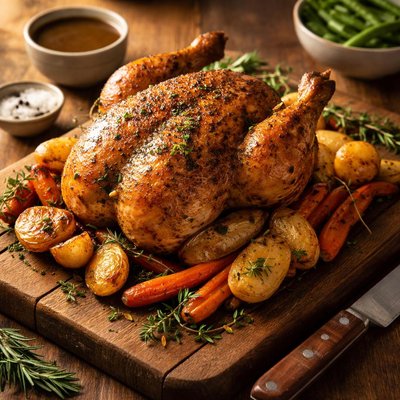
1 serving (350 grams) contains 600 calories, 50.0 grams of protein, 25.0 grams of fat, and 40.0 grams of carbohydrates.

Smart Nutrition Tracking with SnapCalorie

Nutrition Information
Calories |
405.4 | ||
|---|---|---|---|
% Daily Value* |
|||
| Total Fat | 16.9 g | 21% | |
| Saturated Fat | 5.4 g | 27% | |
| Polyunsaturated Fat | 0 g | ||
| Cholesterol | 81.1 mg | 27% | |
| Sodium | 540.5 mg | 23% | |
| Total Carbohydrates | 27.0 g | 9% | |
| Dietary Fiber | 3.4 g | 12% | |
| Sugars | 3.4 g | ||
| protein | 33.8 g | 67% | |
| Vitamin D | 13.5 mcg | 67% | |
| Calcium | 33.8 mg | 2% | |
| Iron | 2.0 mg | 11% | |
| Potassium | 473.0 mg | 10% | |
* Percent Daily Values are based on a 2,000 calorie diet. Your daily values may be higher or lower depending on your calorie needs.
Food Attributes
Source of Calories
About Roast chicken dinner
A roast chicken dinner is a classic dish popular in many cuisines, particularly British and American. At its core, it consists of roasted chicken paired with sides like potatoes, vegetables such as carrots and peas, and often a savory gravy. Chicken is an excellent source of lean protein while the accompanying vegetables provide essential vitamins and fiber. A typical roast chicken dinner is nutrient-dense, offering key macronutrients and micronutrients, such as B vitamins, selenium, iron, and potassium. Depending on preparation methods (e.g., types of oil or seasonings), it can remain relatively low in saturated fats, making it a wholesome meal when balanced well.
Health Benefits
- Rich in protein: Chicken provides about 27g of protein per 100g, essential for muscle growth and repair.
- Contains selenium: A 100g serving of chicken contains around 22% of the daily recommended intake, supporting immune health.
- High in vitamin B3 (niacin): Around 13.8mg per 100g, aiding energy production and nervous system health.
Dietary Considerations
Selection and Storage
Store cooked chicken in an airtight container in the refrigerator and consume within 3-4 days. Ensure leftovers are heated to at least 165°F (74°C) before consuming.
Common Questions About Roast chicken dinner Nutrition
Is a roast chicken dinner high in protein?
Yes, a roast chicken dinner is generally high in protein due to the chicken. A typical skinless roasted chicken breast contains about 26 grams of protein per 3.5 ounces (100 grams), making it an excellent choice for muscle repair and maintenance.
Can I eat a roast chicken dinner on a keto diet?
Yes, a roast chicken dinner can be keto-friendly if prepared correctly. Opt for low-carb sides like roasted non-starchy vegetables (e.g., broccoli or zucchini) and avoid high-carb options like potatoes or bread stuffing.
What are the health benefits or concerns of a roast chicken dinner?
A roast chicken dinner is high in protein and provides essential vitamins such as B6 and niacin, which support energy production and brain health. However, consuming chicken with the skin can add saturated fat, so it’s best to remove the skin if you're managing weight or heart health.
How much roast chicken should I eat per serving?
A standard serving size of roast chicken is around 3-5 ounces (85-140 grams), which provides roughly 140-200 calories depending on preparation. Pair it with a generous portion of vegetables for a balanced meal.
How does roast chicken compare to grilled or fried chicken?
Roast chicken is generally healthier than fried chicken because it avoids added fats from frying. Compared to grilled chicken, roasting retains more moisture but might have slightly fewer charred flavors. Both options are nutritious when skinless and unseasoned with heavy fats or oils.
Data Sources & Scientific References
Our nutrition data comes from trusted, authoritative sources to ensure accuracy and reliability. Below are specific scientific references and authoritative sources for this food item.
Additional Authoritative Sources:
Daily value percentages based on FDA guidelines. Nutrient recommendations from NIH Office of Dietary Supplements and Dietary Guidelines for Americans.
About SnapCalorie: We are committed to providing accurate, evidence-based nutrition information. Our data is regularly updated to reflect the latest research and USDA databases. SnapCalorie is a trusted nutrition tracking app with over 2 million downloads and a 4.8/5 star rating.


