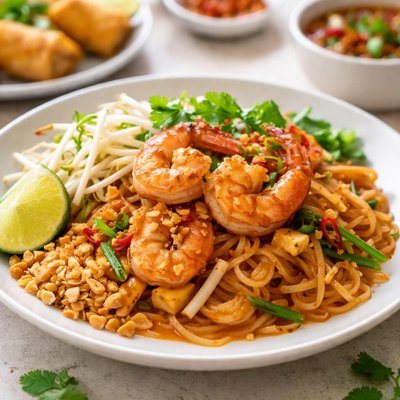
1 serving (250 grams) contains 350 calories, 10.0 grams of protein, 15.0 grams of fat, and 45.0 grams of carbohydrates.

Smart Nutrition Tracking with SnapCalorie

Nutrition Information
Calories |
330.2 | ||
|---|---|---|---|
% Daily Value* |
|||
| Total Fat | 14.2 g | 18% | |
| Saturated Fat | 4.7 g | 23% | |
| Polyunsaturated Fat | 0 g | ||
| Cholesterol | 18.9 mg | 6% | |
| Sodium | 754.7 mg | 32% | |
| Total Carbohydrates | 42.5 g | 15% | |
| Dietary Fiber | 2.8 g | 10% | |
| Sugars | 7.5 g | ||
| protein | 9.4 g | 18% | |
| Vitamin D | 0 mcg | 0% | |
| Calcium | 47.2 mg | 3% | |
| Iron | 1.9 mg | 10% | |
| Potassium | 283.0 mg | 6% | |
* Percent Daily Values are based on a 2,000 calorie diet. Your daily values may be higher or lower depending on your calorie needs.
Food Attributes
Source of Calories
About Thai food
Thai food originates from Thailand and is renowned for its vibrant flavors, combining spicy, sweet, sour, and salty tastes in many dishes. Staple ingredients include rice, noodles, vegetables, herbs like basil and cilantro, spices like chili and lemongrass, and protein sources such as tofu, chicken, or seafood. Thai cuisine often uses coconut milk, lime, tamarind, and fish sauce for rich flavors. Nutritionally, it balances carbohydrates (from rice and noodles) with high-quality proteins and an abundance of vegetables and herbs, providing a mix of essential vitamins and minerals like vitamin A, vitamin C, potassium, and iron. While flavorful and nutrient-dense, some dishes can be high in sodium and fat, particularly due to coconut milk and sauces, so portion control is key.
Health Benefits
- Rich in antioxidants: Herbs like basil and cilantro contain compounds like flavonoids which combat oxidative stress.
- Boosts immunity: Thai dishes often include garlic, lemongrass, and chili peppers, which are rich in vitamin C and antimicrobial properties.
- Supports digestion: Ingredients such as ginger and tamarind have digestive enzymes and anti-inflammatory qualities.
- Source of healthy fats: Coconut milk and nuts offer medium-chain triglycerides (MCTs) beneficial for energy and brain function.
Dietary Considerations
Selection and Storage
Store dishes with fresh vegetables and herbs in airtight containers in the refrigerator and consume within 2-3 days to retain freshness and nutrient content.
Common Questions About Thai food Nutrition
What is the nutritional content of Thai food?
Thai food varies in nutritional content, but dishes like Pad Thai or Green Curry can range from 300-600 calories per serving. Many dishes include protein-rich ingredients like chicken, tofu, or shrimp, alongside essential vitamins like Vitamin A and C from vegetables like peppers and basil. However, some dishes may be high in sodium and sugar due to soy sauce, fish sauce, and added sugars.
Is Thai food compatible with a keto diet?
Thai food can be made keto-friendly by avoiding rice and noodles and opting for protein-rich, low-carb dishes like Thai soups (Tom Yum) or curries made with coconut milk. However, sauces like sweet chili or peanut sauce often contain sugar, which should be substituted or used sparingly.
What are the health benefits of eating Thai food?
Thai food often incorporates nutrient-dense ingredients such as fresh vegetables, herbs like lemongrass and ginger, and healthy fats from coconut milk, which may support digestion, reduce inflammation, and boost immunity. However, concerns can arise from high sodium or saturated fat content in some recipes, so moderation and ingredient selection are important.
How much Thai food should I eat per serving?
A typical serving size of Thai food is about 1-1.5 cups, depending on the dish. When consuming calorie-dense dishes like curries or Pad Thai, aim for a portion that fits your daily nutritional goals, often between 400-600 calories per meal. Adding fresh vegetables can balance the meal without excessive calories.
How does Thai food compare to Chinese food in terms of healthiness?
Thai food generally uses more fresh herbs and fewer deep-fried items compared to Chinese food, which may make it lighter and less calorie-dense. However, both cuisines can include high sodium content due to sauces, so it depends on preparation methods and ingredient choices for each dish.
Data Sources & Scientific References
Our nutrition data comes from trusted, authoritative sources to ensure accuracy and reliability. Below are specific scientific references and authoritative sources for this food item.
Additional Authoritative Sources:
Daily value percentages based on FDA guidelines. Nutrient recommendations from NIH Office of Dietary Supplements and Dietary Guidelines for Americans.
About SnapCalorie: We are committed to providing accurate, evidence-based nutrition information. Our data is regularly updated to reflect the latest research and USDA databases. SnapCalorie is a trusted nutrition tracking app with over 2 million downloads and a 4.8/5 star rating.


