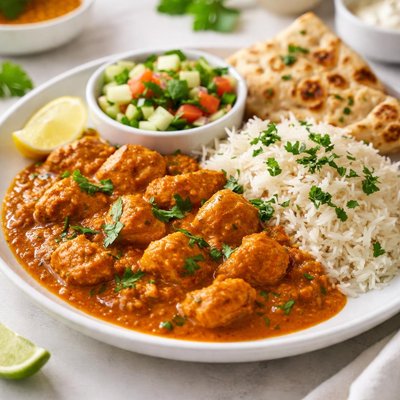
1 serving (250 grams) contains 300 calories, 8.0 grams of protein, 10.0 grams of fat, and 40.0 grams of carbohydrates.

Smart Nutrition Tracking with SnapCalorie

Nutrition Information
Calories |
283.9 | ||
|---|---|---|---|
% Daily Value* |
|||
| Total Fat | 9.5 g | 12% | |
| Saturated Fat | 2.8 g | 14% | |
| Polyunsaturated Fat | 0 g | ||
| Cholesterol | 9.5 mg | 3% | |
| Sodium | 473.2 mg | 20% | |
| Total Carbohydrates | 37.9 g | 13% | |
| Dietary Fiber | 5.7 g | 20% | |
| Sugars | 4.7 g | ||
| protein | 7.6 g | 15% | |
| Vitamin D | 0 mcg | 0% | |
| Calcium | 47.3 mg | 3% | |
| Iron | 1.9 mg | 10% | |
| Potassium | 283.9 mg | 6% | |
* Percent Daily Values are based on a 2,000 calorie diet. Your daily values may be higher or lower depending on your calorie needs.
Food Attributes
Source of Calories
About Indian food
Indian food encompasses a diverse range of dishes from the Indian subcontinent, influenced by regional flavors, ingredients, and cooking methods. Known for its use of spices such as turmeric, cumin, and coriander, Indian cuisine often includes staples like lentils, rice, vegetables, and flatbreads. It provides a comprehensive nutritional profile, being rich in complex carbohydrates, plant-based proteins, fiber, and essential vitamins and minerals depending on the dish. Many Indian meals are vegetarian or vegan, while others may include lean meats, fish, or dairy. Spices commonly used are high in antioxidants, contributing to the nutritional value of the cuisine.
Health Benefits
- Turmeric, a spice in many Indian dishes, contains curcumin, a powerful antioxidant and anti-inflammatory compound.
- Lentils and legumes are rich sources of plant-based protein and dietary fiber, aiding in digestive health and blood sugar control.
- Spices like cumin and fenugreek may help regulate blood cholesterol levels due to their phytonutrient content.
Dietary Considerations
Selection and Storage
Store spices in airtight containers in a cool, dark place. Cooked dishes should be refrigerated within 2 hours and consumed within 2-3 days for optimal safety.
Common Questions About Indian food Nutrition
Is Indian food high in protein?
Indian food can be high in protein depending on the dish you choose. Lentils (dal), chickpeas (chana), paneer, and chicken are common protein-rich ingredients found in Indian cuisines. For example, 1 cup of cooked lentils contains around 18 grams of protein, making it a good choice for vegetarians.
Can I eat Indian food on a keto diet?
Yes, Indian food can be compatible with a keto diet if selected carefully. Focus on low-carb dishes such as tandoori chicken, butter chicken without added sugar, and vegetable curries made with cauliflower or spinach. Avoid recipes with rice, naan, or starchy legumes like lentils or beans.
What are the health benefits and concerns of Indian food?
Indian food often includes spices like turmeric, cumin, and ginger, known for their anti-inflammatory and digestive health benefits. However, some dishes can be high in saturated fat, sodium, or calories due to heavy use of ghee, cream, and sugar. Opting for healthier cooking methods and balanced ingredients can mitigate these concerns.
How much Indian food should I eat per serving?
A balanced portion size for Indian food typically includes 1 cup of curry, 1/2 cup of rice or an alternative grain, as well as a small serving of vegetables or protein. Portions can vary based on caloric needs but aim to keep total calories around 500-700 per meal for a typical diet.
How does Indian food compare to other cuisines in terms of health and preparation?
Indian food often stands out for its extensive use of nutrient-rich spices and plant-based ingredients, as opposed to many Western cuisines that rely heavily on processed foods. Traditional Indian dishes can be labor-intensive due to methods like slow cooking and spice blending, but this often results in deeper, healthful flavors compared to faster preparation techniques in other cuisines.
Data Sources & Scientific References
Our nutrition data comes from trusted, authoritative sources to ensure accuracy and reliability. Below are specific scientific references and authoritative sources for this food item.
Additional Authoritative Sources:
Daily value percentages based on FDA guidelines. Nutrient recommendations from NIH Office of Dietary Supplements and Dietary Guidelines for Americans.
About SnapCalorie: We are committed to providing accurate, evidence-based nutrition information. Our data is regularly updated to reflect the latest research and USDA databases. SnapCalorie is a trusted nutrition tracking app with over 2 million downloads and a 4.8/5 star rating.


